Overview
New York, NY – Nov 03, 2026 – The global Lipid Nutrition Market is gaining importance as demand rises for specialized fats, fatty acids, and lipid-based ingredients across food, dietary supplements, pharmaceuticals, infant nutrition, and animal feed. Lipids are essential nutrients that support energy supply, cell structure, nutrient absorption, and several biological functions. Key ingredients include omega-3 and omega-6 fatty acids, medium-chain triglycerides, phospholipids, and structured lipids.
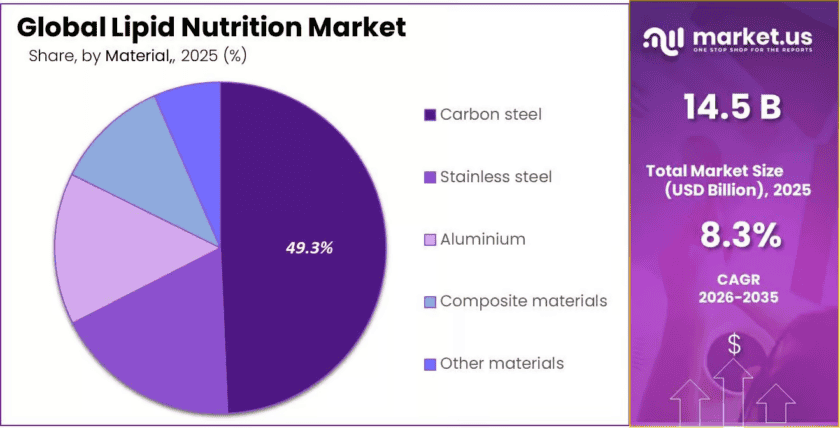
According to the Market.us report, the global Lipid Nutrition Market was valued at USD 14.5 billion in 2025 and is projected to reach USD 32.2 billion by 2035, growing at a CAGR of 8.3% during 2026–2035. These figures represent commercial market estimates from the requested report.
Key Takeaways
- Market Size (2025): USD 14.5 billion
- Projected Market Size (2035): USD 32.2 billion
- CAGR (2026–2035): 8.3%
- Major Growth Factor: Rising demand for functional foods, dietary supplements, and specialized nutrition.
Regional Analysis
The regional landscape of the Lipid Nutrition Market is influenced by food consumption patterns, healthcare development, dietary supplement demand, and investment in nutritional ingredient production. North America and Europe remain important markets because of established food processing industries, strong supplement consumption, and developed regulatory systems.
Companies in these regions are focusing on high-purity lipid ingredients, specialized formulations, and research-backed nutritional solutions. Demand is also supported by growing consumer attention toward healthy aging, heart health, and personalized nutrition.
Market Dynamics
Driver: Growing Demand for Health and Nutritional Products
Demand for lipid nutrition ingredients is increasing as consumers and food manufacturers focus more on nutritional quality and specialized health products. Omega-3 fatty acids, particularly EPA and DHA, are widely used in dietary supplements, fortified foods, and clinical nutrition formulations.
The National Institutes of Health explains that omega-3 fatty acids are important components of cell membranes and support several functions in the body. Its Office of Dietary Supplements identifies alpha-linolenic acid (ALA), EPA, and DHA as key omega-3 fatty acids. This nutritional relevance encourages manufacturers to develop lipid-enriched products for different consumer groups.
Trend: Shift Toward Algae-Based and Plant-Derived Lipids
A notable trend is the growing use of algae-based and plant-derived lipid ingredients to diversify supply sources and support sustainability goals. Algal oils can provide DHA and, in some cases, EPA without relying directly on fish oil. Plant sources such as flaxseed, soybean, canola, chia seeds, and walnuts provide ALA.
NIH notes that marine omega-3s originate from microalgae at the base of the food chain. This scientific understanding is encouraging ingredient producers to explore alternative feedstocks and develop products for vegetarian, vegan, and environmentally conscious consumers.
Restraint: Regulatory Requirements and Scientific Limitations
Strict product quality, labeling, safety, and health-claim requirements can create challenges for lipid nutrition manufacturers. Companies must ensure that ingredients meet applicable specifications and that product claims are supported by appropriate scientific evidence.
The U.S. Food and Drug Administration explains that qualified health claims require qualifying language when the evidence does not meet the standard for an authorized claim. In June 2019, the FDA described evidence concerning EPA and DHA and blood pressure as inconsistent and inconclusive. Such limitations can increase compliance costs and restrict promotional claims.
Opportunity: Expansion in Clinical and Specialized Nutrition
Clinical nutrition, infant nutrition, and targeted dietary supplements offer opportunities for lipid ingredient suppliers. DHA and other fatty acids are used in formulations designed for specific nutritional needs, while lipid-based ingredients also help deliver energy and support nutrient absorption.
The NIH Office of Dietary Supplements notes that DHA is particularly abundant in the retina and brain. These biological functions encourage research into specialized nutritional applications. Companies can explore customized blends, improved bioavailability, and dosage-specific formulations while maintaining regulatory compliance and evidence-based product development.
Emerging Trends
1. Personalized Lipid Formulations
Nutrition companies are developing lipid blends for specific age groups and dietary needs. Personalized nutrition is encouraging the use of customized fatty acid combinations, including EPA, DHA, and ALA. NIH identifies different omega-3 intake levels by age and gender, supporting the need for carefully tailored nutritional formulations.
2. Algae-Based Omega-3 Production
Algae-derived oils are gaining attention as alternative sources of DHA and EPA. Since microalgae are the original producers of marine omega-3s, manufacturers can develop lipid ingredients without depending entirely on fish-based resources. This trend also supports vegetarian and vegan nutritional products.
3. Increased Focus on Lipid Bioavailability
Manufacturers are researching lipid structures and delivery formats to improve nutrient absorption. NIH reports that dietary lipids are efficiently absorbed through the digestive system, with an estimated absorption rate of around 95%. This encourages development of formulations that maintain stability and support efficient nutrient delivery.
4. Growing Demand for Omega-3 Fortification
Food and supplement producers are adding omega-3 fatty acids to selected products to improve nutritional value. The FDA has outlined qualified health claims for EPA and DHA when products meet specific conditions, including 0.8 grams combined per serving for certain claims. This is encouraging careful formulation and transparent labeling.
5. Stronger Quality and Safety Controls
Lipid ingredients require careful management of oxidation, purity, and stability during processing and storage. Regulatory agencies emphasize that health claims must be supported by scientific evidence and presented accurately. This trend is increasing the importance of analytical testing, traceability, and standardized quality procedures across ingredient manufacturing.
Use Cases
1. Dietary Supplements
Lipid nutrition ingredients are used in omega-3 capsules, soft gels, oils, and nutritional supplements. EPA and DHA are commonly sourced from fish oil, krill oil, and algal oil. NIH notes that supplement formulations can contain different chemical forms of omega-3s, making ingredient composition and label information important for consumers.
2. Functional Foods and Fortified Beverages
Lipids can be added to selected food products and beverages to increase their nutritional content. Omega-3 fatty acids are used in fortified foods, while lipid ingredients can also support energy delivery and product formulation. Food manufacturers must ensure that added ingredients remain stable and meet labeling requirements.
3. Infant and Maternal Nutrition
DHA is an important component of specialized nutrition products for infants and pregnant or breastfeeding women. NIH identifies DHA as a structural component found in high concentrations in the brain and retina. Nutritional products containing lipids must be developed according to age-specific requirements and applicable food safety standards.
4. Clinical and Medical Nutrition
Lipid-based ingredients are used in specialized nutrition products designed to provide energy and support dietary requirements in clinical settings. Lipids deliver approximately 9 kilocalories per gram, making them energy-dense macronutrients. Formulations are designed around patient needs and must follow professional and regulatory guidance.
5. Sports and Active Lifestyle Nutrition
Sports nutrition producers use lipid ingredients in energy-focused products and specialized nutritional blends. Fatty acids contribute energy and play roles in cell structure and metabolism. Product developers may combine lipids with proteins, carbohydrates, and micronutrients to support balanced nutritional intake among active consumers.
Frequently Asked Questions
1. What is the Lipid Nutrition Market?
The Lipid Nutrition Market includes ingredients such as omega-3 fatty acids, omega-6 fatty acids, medium-chain triglycerides, phospholipids, and other specialized fats used in food, supplements, pharmaceuticals, infant nutrition, and clinical nutrition.
2. What is the global Lipid Nutrition Market size in 2025?
According to the Market.us report, the global Lipid Nutrition Market was valued at USD 14.5 billion in 2025. This figure represents the commercial market estimate provided in the report.
3. What is the projected market size by 2035?
The Market.us report projects that the Lipid Nutrition Market will reach USD 32.2 billion by 2035, supported by increasing demand for specialized nutritional ingredients and expanding applications across food and healthcare industries.
4. What is the expected CAGR of the Lipid Nutrition Market?
The market is projected to grow at a CAGR of 8.3% during 2026–2035, according to Market.us. Growth is expected to be supported by functional foods, dietary supplements, and specialized nutrition products.
5. What are the major ingredients used in lipid nutrition?
Major ingredients include omega-3 fatty acids such as EPA, DHA, and ALA, along with omega-6 fatty acids, medium-chain triglycerides, phospholipids, and structured lipids. These ingredients serve different nutritional and formulation purposes.
Conclusion
The Lipid Nutrition Market is expected to experience steady expansion as demand for specialized nutritional ingredients increases across food, dietary supplements, healthcare, and clinical nutrition. According to Market.us, the market is projected to grow from USD 14.5 billion in 2025 to USD 32.2 billion by 2035, at a CAGR of 8.3%.
Omega-3 fatty acids, algae-based oils, and customized lipid formulations are creating new avenues for product development. At the same time, manufacturers must address quality control, ingredient stability, regulatory compliance, and transparent labeling. Continued research, sustainable sourcing, and innovation in lipid delivery systems will remain important for long-term market development.
Discuss your needs with our analyst
Please share your requirements with more details so our analyst can check if they can solve your problem(s)