Overview
New York, NY – Oct 15, 2026 – The global Bioactive Ingredients and Products Market is gaining attention as food manufacturers, dietary supplement producers, and personal care companies seek ingredients that support specific nutritional and functional needs. Bioactive ingredients include probiotics, prebiotics, plant extracts, carotenoids, antioxidants, omega-3 fatty acids, and selected vitamins and minerals. They are used in functional foods, beverages, nutraceuticals, clinical nutrition, and personal care products.
According to the supplied Market.us report, the market was valued at USD 217.9 billion in 2025 and is projected to reach USD 469.7 billion by 2035, growing at a compound annual growth rate (CAGR) of 8.0%. Asia-Pacific led the market in 2025 with a reported 32.00% share, equivalent to USD 69.9 billion.
Market development is supported by interest in digestive health, immune function, and products with clearly explained nutritional benefits. Manufacturers are investing in ingredient extraction, fermentation, encapsulation, and formulation technologies to improve stability and product performance. Regulatory compliance remains important: the United States Food and Drug Administration (FDA) requires applicable dietary supplement claims to be truthful and supported by evidence, while the European Food Safety Authority (EFSA) evaluates scientific evidence for health claims.
Key Takeaways
- Market value in 2025: USD 217.9 billion.
- Projected market value by 2035: USD 469.7 billion.
- Forecast CAGR: 8.0% from 2025 to 2035.
- Leading ingredient type: Prebiotics and probiotics, with a reported 22.00% share.
- Leading source: Plant-based ingredients, with a reported 48.00% share.
- Leading form: Powder, with a reported 45.00% share.
- Leading functionality: Gut and digestive health, with a reported 31.00% share.
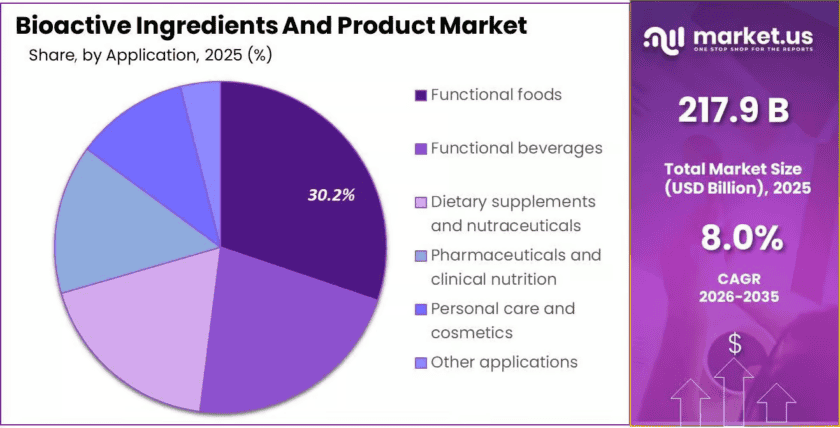
- Leading application: Functional foods, with a reported 30.00% share.
- Leading region: Asia-Pacific, with a reported 32.00% share, valued at USD 69.9 billion.
Regional Analysis
Asia-Pacific
Asia-Pacific held the leading position in 2025, accounting for a reported 32.00% market share, valued at USD 69.9 billion. Demand is supported by the large consumer base, expanding food and beverage industries, and growing availability of dietary supplements and functional products.
The region also offers opportunities for ingredients derived from plants, traditional food sources, and microbial fermentation. Manufacturers can serve different consumer needs through powders, capsules, beverages, and fortified foods. However, product claims, safety requirements, and consumer preferences vary across countries, making regulatory knowledge and local product development important for companies seeking to expand in the region.
Market Dynamics
1. Driver: Rising Demand for Functional Nutrition
Consumers are increasingly interested in foods and supplements that offer benefits beyond basic nutrition. Ingredients such as probiotics, prebiotics, plant extracts, and antioxidants are used in products designed to support digestive health and general well-being. The market report assigns 31.00% to gut and digestive health functionality, reflecting its importance within the category.
This demand encourages manufacturers to develop fortified beverages, functional snacks, and supplements. The FDA allows certain structure/function claims when they are truthful, properly supported, and meet applicable labeling requirements, helping establish clear boundaries for responsible product marketing.
2. Trend: Plant-Based and Fermentation-Derived Ingredients
Ingredient producers are exploring plant extracts, microbial fermentation, and improved processing methods to supply bioactive compounds with consistent quality. Plant-based ingredients account for a reported 48.00% share of the market, according to the supplied report.
Fermentation can support the production of selected microbial ingredients, while extraction and encapsulation can help protect sensitive compounds during storage and processing. Companies are also developing formulations that fit functional foods, beverages, and supplements. The opportunity depends on ingredient safety, reliable manufacturing, and scientific evidence supporting the intended use.
3. Restraint: Regulatory and Scientific Requirements
Bioactive ingredient manufacturers must demonstrate product safety, maintain quality, and avoid unsupported health claims. These requirements can increase testing, documentation, and formulation costs, especially when companies sell products across several countries.
In the European Union, the European Food Safety Authority has evaluated more than 2,300 health-claim applications, showing the level of scientific review involved in health-related marketing. In the United States, certain dietary supplement structure/function claims must be notified to the FDA within 30 days after first marketing. These requirements can delay launches and increase compliance work.
4. Opportunity: Innovation in Functional Foods and Beverages
Functional foods and beverages provide opportunities to incorporate bioactive ingredients into everyday products rather than relying only on tablets and capsules. The supplied report attributes 30.00% of the market to functional foods, highlighting the importance of this application.
Manufacturers can explore fortified drinks, probiotic foods, fiber-rich products, and plant-based formulations that suit different dietary preferences. Ingredient suppliers can also work with food companies to improve taste, stability, and compatibility with existing production processes. Successful launches require appropriate safety testing, clear labeling, and evidence that supports any permitted product claims.
Emerging Trends
1. Growing Use of Probiotics and Prebiotics
Probiotics and prebiotics are increasingly used in foods, beverages, and supplements designed to support digestive health. The supplied report assigns this ingredient group a 22.00% market share in 2025, reflecting its importance in product development.
2. Greater Focus on Plant-Based Ingredients
Plant extracts and plant-derived compounds are used in functional foods and supplements. Plant-based ingredients held a reported 48.00% share in 2025. Manufacturers are exploring extraction methods that preserve ingredient quality and make formulations easier to use.
3. Powder Formulations for Flexible Applications
Powders can be incorporated into drink mixes, nutrition products, and food formulations. The supplied report assigns powder products a 45.00% share in 2025. Their handling, storage, solubility, and stability remain important considerations for manufacturers.
4. Stronger Evidence for Health Claims
Companies are paying greater attention to scientific evidence supporting product claims. EFSA reports that it has evaluated more than 2,300 health-claim applications. This reinforces the importance of reliable studies and accurate wording when marketing bioactive ingredients in Europe.
5. Improved Ingredient Stability
Encapsulation and advanced formulation methods can help protect sensitive bioactive compounds from moisture, oxygen, light, and processing conditions. Manufacturers use these approaches to improve product shelf life and maintain ingredient performance across different applications, including beverages and dietary supplements.
Use Cases
1. Digestive Health Products
Probiotics, prebiotics, and specialty fibers are used in products developed for digestive health. Gut and digestive health functionality represents a reported 31.00% share of the market. Product design must consider ingredient stability, suitable amounts, and accurate claims.
2. Functional Foods
Food manufacturers incorporate bioactive ingredients into fortified foods, nutrition bars, dairy products, and other everyday items. Functional foods account for a reported 30.00% market share. Companies must ensure that added ingredients remain stable and do not compromise taste or texture.
3. Dietary Supplements
Bioactive compounds are used in capsules, tablets, powders, and liquids intended to supplement normal diets. The FDA requires applicable structure/function claims to be truthful and supported. For certain supplement claims, manufacturers must notify the agency within 30 days after first marketing.
4. Fortified Beverages
Manufacturers add selected vitamins, minerals, plant extracts, or other bioactive ingredients to beverages to meet specific product goals. Formulation teams must consider solubility, taste, shelf stability, and compatibility with other ingredients. Label claims must follow the relevant food regulations.
5. Personal Care and Cosmetics
Selected plant extracts, antioxidants, and other bioactive compounds are used in skin-care and personal-care formulations. Product developers evaluate ingredient stability, compatibility, and safety. Any claims about product benefits must be appropriate for the product category and supported by relevant evidence.
Frequently Asked Questions on Bioactive Ingredients and Products
1. What are bioactive ingredients and products?
Bioactive ingredients are compounds that can influence biological processes and are used in foods, beverages, dietary supplements, personal care products, and other formulations. Examples include probiotics, prebiotics, carotenoids, antioxidants, and plant extracts.
2. What is the size of the Bioactive Ingredients and Products Market?
According to the supplied Market.us report, the market was valued at USD 217.9 billion in 2025 and is projected to reach USD 469.7 billion by 2035, representing a reported CAGR of 8.0%.
3. Which ingredient segment leads the market?
Prebiotics and probiotics lead the ingredient categories with a reported 22.00% share in 2025. Their use in functional foods, beverages, and supplements supports demand for ingredients associated with digestive health and nutritional product development.
4. Which region dominates the market?
Asia-Pacific held the leading position in 2025, accounting for a reported 32.00% share, valued at USD 69.9 billion. Demand is supported by food manufacturing, nutrition products, and opportunities for functional ingredients across multiple consumer applications.
5. What factors are driving market growth?
Market growth is supported by interest in functional nutrition, plant-based ingredients, digestive health products, and fortified foods. Ingredient innovation and improved formulation methods also help manufacturers develop products for different applications, provided safety and labeling requirements are met.
Conclusion
The Bioactive Ingredients and Products Market is expanding through demand for functional nutrition, digestive health products, plant-based compounds, and fortified foods. Prebiotics and probiotics, plant-based ingredients, and powder formulations remain important categories, while functional foods provide a major application opportunity.
Asia-Pacific leads the market according to the supplied report. However, ingredient stability, scientific validation, production costs, and regulatory compliance remain important considerations. Companies that invest in reliable processing, product development, and evidence-based communication can strengthen their market position. The reported market values and forecasts should be checked against the original report before external publication.
Discuss your needs with our analyst
Please share your requirements with more details so our analyst can check if they can solve your problem(s)