Overview
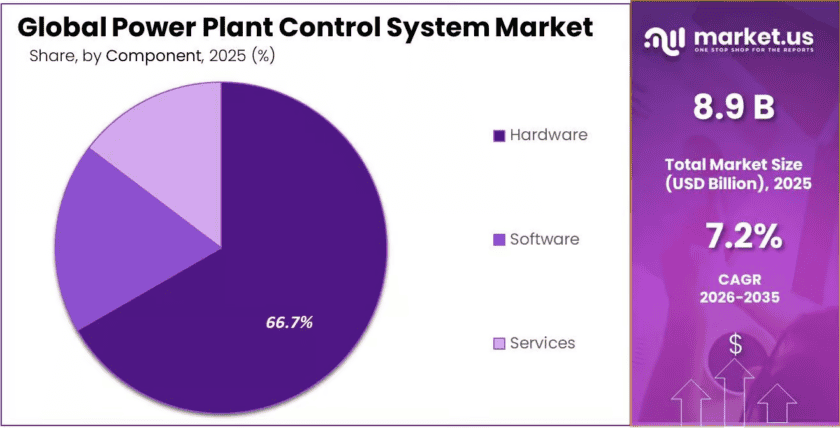
New York, NY – Nov 16, 2026 – The global Power Plant Control System market is gaining momentum as electricity consumption rises and power generation facilities focus on improving operational efficiency, safety, and reliability. According to the referenced market assessment, the global market was valued at USD 8.9 billion in 2025 and is projected to reach USD 17.8 billion by 2035, expanding at a compound annual growth rate (CAGR) of 7.2% during 2026–2035.
These systems use automation, sensors, controllers, and digital software to manage boilers, turbines, generators, and auxiliary equipment. Growing investments in thermal power plants, nuclear facilities, and renewable energy installations are increasing the need for advanced control technologies.
Supervisory Control and Data Acquisition (SCADA), Distributed Control Systems (DCS), and Programmable Logic Controllers (PLC) help operators monitor plant performance and respond to changing operating conditions. In 2025, Europe dominated the global market with a 33.11% share, valued at USD 2.9 billion. Increasing electricity demand, equipment modernisation, renewable energy integration, and digital plant operations are expected to support future market development.
Key Takeaways
- Market valuation: The global Power Plant Control System market reached USD 8.9 billion in 2025.
- Future outlook: The market is projected to reach USD 17.8 billion by 2035.
- Growth rate: The market is expected to expand at a 7.2% CAGR during 2026–2035.
- Leading solution: SCADA dominated the solution segment with a 31.23% share in 2025.
- Leading component: Hardware accounted for 66.78% of the market in 2025.
- Leading plant type: Thermal power plants held a 48.55% share.
- Leading application: Boiler and Auxiliaries Control accounted for 39.5% of the market.
- Dominating region: Europe led the market with a 33.11% share, representing USD 2.9 billion in revenue.
Regional Analysis
Europe – Dominating Region
Europe held the leading position in the Power Plant Control System market in 2025, accounting for 33.11% of the global market, with revenue of USD 2.9 billion. The region benefits from established electricity infrastructure, industrial development, and continued investment in power plant modernisation.
Germany, France, the United Kingdom, and other European countries are focusing on improving plant efficiency, reducing operating costs, and integrating renewable electricity into existing power networks.
According to Eurostat, renewable energy accounted for 47.3% of electricity generated in the European Union in 2025. Wind contributed 37.5% of renewable electricity, while solar accounted for 27.5%. This changing generation mix increases the need for flexible plant control, automated monitoring, and coordinated power generation systems.
Asia-Pacific – Important Growth Region
Asia-Pacific is an important growth region because of rising electricity consumption, industrial expansion, and the development of new power generation facilities. China, Japan, South Korea, and Southeast Asian economies are investing in thermal, nuclear, and renewable energy infrastructure.
According to the International Energy Agency (IEA), electricity demand in China increased significantly during 2025, with the country accounting for 58% of the global increase in electricity demand. The IEA also forecasts global electricity demand growth of 3.6% annually during 2026–2030. These developments are increasing the requirement for reliable control systems that can manage generation equipment, improve plant availability, and support changing electricity demand.
North America also represents an important market because of power plant upgrades, rising data centre electricity consumption, and investment in generation capacity. The United States generated approximately 4.43 trillion kilowatt-hours of electricity in 2025, representing a 2.8% increase compared with 2024.
Market Dynamics
1. Driver: Increasing Electricity Demand and Power Generation Expansion
Rising electricity consumption is a major driver of the Power Plant Control System market. Industrial facilities, data centres, electric vehicles, and residential consumers are increasing the requirement for dependable electricity generation. According to the IEA, global electricity demand increased by 3% in 2025 and is expected to grow by an average of 3.6% annually during 2026–2030.
Power producers are therefore focusing on improving plant performance and maintaining reliable electricity output. Advanced control systems help operators manage boilers, turbines, generators, and auxiliary equipment while responding to changing loads. This requirement is encouraging investment in automation and modern plant control technologies.
2. Trend: Growing Adoption of Digital and Automated Control Systems
Digitalisation is becoming an important trend as power producers introduce automated monitoring, advanced sensors, remote operation, and data-based maintenance. SCADA, DCS, and PLC technologies help operators monitor equipment conditions and control different plant operations from central control rooms.
Artificial intelligence and predictive analytics are also helping identify unusual equipment behaviour before it leads to major failures. According to the U.S. National Institute of Standards and Technology (NIST), industrial control systems include 3 major technology categories: SCADA, DCS, and PLC. Their integration supports better operating visibility, equipment coordination, and plant reliability across different electricity generation facilities.
3. Restraint: High Installation Costs and Cybersecurity Risks
High installation costs and cybersecurity concerns can restrict the adoption of advanced power plant control systems. Replacing older control equipment requires specialised hardware, software integration, engineering support, and plant shutdown planning. These requirements can increase project costs, particularly for older thermal and nuclear facilities. Connecting control networks with remote monitoring platforms also creates additional cybersecurity responsibilities.
The U.S. NIST identifies security risks affecting SCADA, DCS, and PLC environments, including unauthorised access and operational disruption. Power producers must therefore invest in network protection, access controls, regular security testing, and system maintenance. These additional expenses can delay modernisation projects, especially at smaller facilities.
4. Opportunity: Renewable Energy Integration and Advanced Plant Automation
The expansion of renewable electricity generation is creating new opportunities for advanced power plant control systems. Operators require flexible technologies to coordinate conventional generators, renewable facilities, energy storage, and changing electricity loads. According to the IEA, renewable energy sources accounted for 34% of global electricity generation in 2025, while wind and solar together represented 17%.
This changing generation mix increases the need for automated power management, improved forecasting, and flexible generation control. Manufacturers can benefit by developing integrated solutions that support renewable power plants, hybrid generation facilities, and conventional plants operating alongside variable renewable sources.
Emerging Trends in the Power Plant Control System Market
1. Artificial Intelligence-Based Plant Monitoring
Artificial intelligence is helping power producers analyse equipment data, identify abnormal operating conditions, and plan maintenance. Global electricity demand increased by 3% in 2025, encouraging operators to improve plant availability through predictive monitoring and automated decision-making.
2. Renewable and Hybrid Power Plant Control
Hybrid control platforms are gaining attention as renewable generation expands. The IEA reported that renewables supplied 34% of global electricity in 2025, increasing the need for coordinated control of conventional generation, solar, wind, and storage facilities.
3. Stronger Industrial Cybersecurity
Power producers are strengthening protection for digital control networks against cyber threats. NIST’s industrial control security guidance covers 3 key system types: SCADA, DCS, and PLC, highlighting the importance of protecting plant operations and equipment communications.
4. Advanced Digital Control and Remote Operations
Remote monitoring and digital control rooms are helping operators supervise equipment without continuous manual intervention. U.S. electricity generation reached 4.43 trillion kWh in 2025, demonstrating the scale of generation operations that require reliable monitoring and control.
5. Flexible Generation and Load Management
Power plants are adopting flexible control technologies to respond to changing electricity demand and renewable generation. The IEA forecasts global electricity demand growth of 3.6% annually during 2026–2030, supporting investment in faster and more responsive plant operations.
Use Cases of Power Plant Control Systems
1. Thermal Power Plant Automation
Control systems manage boiler temperature, steam pressure, fuel supply, and turbine operations in thermal facilities. In 2025, natural gas and coal together generated approximately 58% of U.S. utility-scale electricity, highlighting the importance of reliable thermal plant automation.
2. Nuclear Power Plant Operations
Nuclear facilities use control systems to monitor reactor conditions, cooling equipment, turbine performance, and electrical output. Nuclear power generated approximately 18% of U.S. utility-scale electricity in 2025, supporting the need for reliable instrumentation and automated plant controls.
3. Renewable Power Plant Management
Solar and wind facilities use automated systems to monitor generation, control electrical equipment, and coordinate power output. In 2025, renewable sources supplied 47.3% of EU electricity generation, increasing the importance of reliable renewable plant control technologies.
4. Turbine and Generator Control
Power producers use automated control platforms to regulate turbine speed, generator voltage, operating temperature, and electrical output. U.S. natural gas-fired plants generated approximately 41% of utility-scale electricity in 2025, supporting demand for dependable turbine control systems.
5. Equipment Monitoring and Predictive Maintenance
Power plants use sensors and digital monitoring platforms to identify equipment problems and reduce unexpected shutdowns. The United States added 56,609 MW of net summer generation capacity in 2025, increasing the importance of effective monitoring across generation assets.
Frequently Asked Questions on Power Plant Control System Market
1. What is a Power Plant Control System?
A Power Plant Control System is a combination of hardware and software used to monitor and manage electricity generation equipment. It controls boilers, turbines, generators, cooling systems, and other plant operations to maintain reliable performance.
2. What was the global market size in 2025?
According to the referenced market assessment, the global Power Plant Control System market was valued at USD 8.9 billion in 2025. Growing automation requirements and power generation infrastructure upgrades support market development.
3. What is the expected market size by 2035?
The market is projected to reach USD 17.8 billion by 2035, growing at a CAGR of 7.2% during 2026–2035. Increasing electricity consumption and investment in advanced plant automation support this outlook.
4. Which region dominates the Power Plant Control System market?
Europe dominated the market in 2025, accounting for 33.11% of global revenue, equivalent to USD 2.9 billion. Its established power infrastructure and continued investment in plant modernisation support regional demand.
5. Which solution segment holds the leading market position?
SCADA held the leading position in the solution segment in 2025, capturing 31.23% of the market. It supports centralised equipment monitoring, operating data collection, alarm management, and control room supervision.
6. Which component dominates the market?
Hardware dominated the component segment with a 66.78% share in 2025. Sensors, controllers, communication devices, control panels, and input-output modules form the physical foundation of automated power plant operations.
Conclusion
The Power Plant Control System market is expected to experience steady development as electricity demand rises and power producers invest in modern automation technologies. The market is projected to increase from USD 8.9 billion in 2025 to USD 17.8 billion by 2035, at a CAGR of 7.2%. Europe remains the leading regional market, while SCADA, hardware, thermal plants, and boiler control represent important market segments.
Although installation costs and cybersecurity risks remain challenges, digital monitoring, predictive maintenance, and renewable energy integration are creating new opportunities. Technology providers focusing on reliable, flexible, and secure control solutions are positioned to benefit from industry modernisation.
Discuss your needs with our analyst
Please share your requirements with more details so our analyst can check if they can solve your problem(s)