Overview
New York, NY – Nov 12, 2026 – The global Nutraceutical Gummies Market is gaining attention as consumers look for convenient and enjoyable ways to include nutritional supplements in their daily routines. Nutraceutical gummies contain vitamins, minerals, omega-3 fatty acids, probiotics, collagen and other functional ingredients in a chewable format.
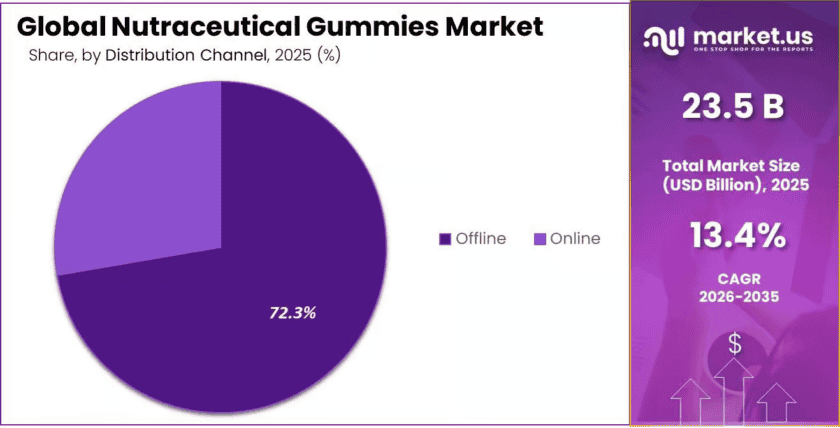
They are increasingly used for immunity support, digestive health, bone strength, healthy ageing and general wellness. According to the referenced market report, the global market was valued at USD 23.5 billion in 2025 and is projected to reach USD 82.8 billion by 2035, registering a compound annual growth rate of 13.4%.
Vitamins and multivitamins represented the leading product category, while adult consumers accounted for the largest age-group segment. Europe held the leading regional position with a 33.21% share, equivalent to USD 7.8 billion in 2025.
Growing interest in preventive nutrition, attractive flavours and easy-to-consume supplement formats is encouraging manufacturers to expand their product portfolios. However, ingredient stability, sugar content, dosage accuracy and regulatory compliance remain important considerations for producers.
Key Takeaways
- The global market was valued at USD 23.5 billion in 2025 and is projected to reach USD 82.8 billion by 2035, at a CAGR of 13.4%.
- Vitamins and multivitamins dominated the product segment with a 33.21% share.
- Adult consumers held the leading age-group position with a 42.34% share.
- Animal-source ingredients accounted for 41.21% of the source-type segment.
- Immunity and strength applications captured a leading 34.21% share.
- Offline distribution dominated with a 72.34% share.
- Europe led the regional market with a 33.21% share and USD 7.8 billion in 2025 revenue.
Regional Analysis
Europe: Dominating Region
Europe dominated the Nutraceutical Gummies Market in 2025, accounting for 33.21% of global revenue, valued at USD 7.8 billion. Demand is supported by established dietary supplement markets, broad pharmacy and retail distribution, and consumer interest in convenient nutrition products. Gummies containing vitamins, minerals, collagen and other functional ingredients are gaining visibility as alternatives to conventional tablets and capsules.
Regulatory requirements for food supplements and health-related claims also influence product formulation, labelling and quality control. The region’s established health and wellness retail network gives manufacturers access to adult and older consumers seeking convenient daily supplement formats.
Market Dynamics
Driver: Growing preference for convenient daily supplements
Consumer interest in convenient nutrition is supporting demand for chewable supplements. Gummies offer an alternative to tablets and capsules, particularly for adults who prefer flavoured products. According to the CDC, 60.2% of U.S. adults aged 20 and older used dietary supplements during August 2021–August 2023.
This broad supplement-use figure indicates an established consumer base, although it does not measure gummy use specifically. Manufacturers are responding with multivitamin, mineral and immunity-focused gummy products. The market report estimates that vitamins and multivitamins held a 33.21% share in 2025, reflecting the importance of familiar daily nutrition ingredients.
Trend: Shift towards plant-based and low-sugar formulations
Gummy manufacturers are exploring plant-based gelling agents, sugar-free recipes and cleaner ingredient lists to meet changing consumer preferences. Pectin-based gummies provide an alternative to animal-derived gelatin, while low-sugar formulations help brands address concerns about frequent sugar intake.
The U.S. FDA sets the Daily Value for added sugars at 50 grams per day on a 2,000-calorie diet and advises consumers to limit added sugars to less than 10% of daily calories. This guidance is encouraging manufacturers to review sweetener levels, flavour systems and nutritional labelling while maintaining taste and texture.
Restraint: Sugar content, dosage and product stability
Gummy manufacturers face formulation challenges because active ingredients must remain stable without affecting taste, texture or shelf life. Some nutrients also require larger doses than a conventional gummy can comfortably carry. Added sugar is another concern, as the FDA’s Daily Value is 50 grams per day for a 2,000-calorie diet.
In addition, U.S. dietary supplement manufacturing rules require at least one appropriate test or examination to verify the identity of each dietary ingredient, unless an exemption is approved. These quality and formulation requirements can increase development costs and limit product flexibility.
Opportunity: Online sales and specialised gummy products
Online retail gives gummy brands an opportunity to reach consumers beyond traditional pharmacies and supermarkets. Product pages allow manufacturers to explain ingredients, serving sizes and product characteristics, while subscription services can encourage repeat purchases.
Eurostat reported that 78% of people in the European Union bought or ordered goods or services online in 2025, compared with 62% in 2015. Although this figure covers all online purchases, it demonstrates the strength of the region’s digital retail environment. Brands can use this channel to promote specialised formulations for adults, older consumers and people seeking plant-based or low-sugar options.
Emerging Trends
1. Plant-based gummy formulations: Manufacturers are increasingly exploring pectin and other plant-based gelling ingredients as alternatives to gelatin. The market report identifies plant-source ingredients as the fastest-growing source category. This creates opportunities for vegetarian and vegan product ranges.
2. Low-sugar and sugar-free products: Brands are reviewing sweetener systems to reduce added sugar while retaining acceptable taste. The FDA sets the added-sugar Daily Value at 50 grams for a 2,000-calorie diet, supporting greater attention to sugar content and labelling.
3. Adult-focused daily nutrition: Adult consumers are an important target group for multivitamin and wellness gummies. The CDC found that 60.2% of U.S. adults aged 20 and older used dietary supplements during August 2021–August 2023, supporting demand for convenient supplement formats.
4. Online gummy subscriptions: Brands are using digital stores and repeat-order services to improve product access. Eurostat reported that 78% of EU residents bought goods or services online in 2025, creating a strong retail environment for online supplement sales.
5. Stronger quality and ingredient verification: Manufacturers are placing greater focus on ingredient identity and batch controls. FDA rules require at least one appropriate test or examination to verify each dietary ingredient’s identity, unless an exemption is approved.
Use Cases
1. Daily multivitamin intake: Multivitamin gummies provide a chewable option for adults who prefer not to swallow tablets. The CDC reported that 60.2% of U.S. adults used dietary supplements during August 2021–August 2023, showing broad supplement use.
2. Children’s nutritional products: Gummies may be formulated for age-appropriate nutrient intake, with careful attention to serving size and safe storage. The CDC found that 35.7% of U.S. youth aged 0–19 used dietary supplements during August 2021–August 2023.
3. Healthy-ageing supplements: Adult formulations may include vitamins and minerals selected for bone health and general nutritional support. CDC data showed that 75.9% of U.S. adults aged 60 and older used dietary supplements during August 2021–August 2023.
4. Immunity-focused formulations: Gummies containing selected vitamins and minerals are marketed for normal immune function and everyday nutritional support. The market report identifies immunity and strength as the leading application, with a 34.21% share in 2025.
5. Plant-based wellness products: Pectin-based gummies can serve consumers seeking alternatives to animal-derived gelatin. This format can be used for selected vitamin, botanical and other supplement ingredients, while manufacturers must verify ingredient quality, stability and accurate serving information.
Frequently Asked Questions
1. What are nutraceutical gummies?
Nutraceutical gummies are chewable dietary supplements containing ingredients such as vitamins, minerals, probiotics, collagen and botanical extracts. They offer an alternative to traditional tablets and capsules and are commonly used for daily nutritional support.
2. What is the global Nutraceutical Gummies Market value?
The global Nutraceutical Gummies Market was valued at USD 23.5 billion in 2025. It is projected to reach USD 82.8 billion by 2035, growing at a compound annual growth rate of 13.4%.
3. Which product category dominates the market?
Vitamins and multivitamins dominated the product category in 2025, accounting for 33.21% of the market. Their wide use in daily nutrition and convenient chewable formats supports demand among different adult consumer groups.
4. Which region leads the Nutraceutical Gummies Market?
Europe led the global market in 2025 with a 33.21% share, representing approximately USD 7.8 billion in revenue. Established supplement consumption and developed retail networks support its leading position.
5. What are the major challenges for gummy manufacturers?
Manufacturers face challenges involving sugar content, ingredient stability, dosage limits, texture and shelf life. They must also meet applicable quality requirements, including FDA rules for verifying the identity of dietary ingredients used in supplements.
6. Which distribution channel dominates the market?
Offline distribution dominated in 2025, accounting for 72.34% of the market. Pharmacies, supermarkets and health stores allow consumers to compare products, review labels and access supplement ranges during regular shopping.
Conclusion
The Nutraceutical Gummies Market is gaining momentum as consumers seek convenient and appealing ways to include supplements in their daily routines. Vitamins and multivitamins remain the leading product category, while adult consumers and immunity-focused applications provide important demand opportunities.
Europe continues to hold the largest regional position, supported by established supplement retail channels. However, sugar reduction, ingredient stability, dosage accuracy and regulatory compliance remain important manufacturing concerns. The market is projected to grow from USD 23.5 billion in 2025 to USD 82.8 billion by 2035. Product innovation, quality control and wider retail access will shape its future development.
Discuss your needs with our analyst
Please share your requirements with more details so our analyst can check if they can solve your problem(s)