Overview
New York, NY – Oct 21, 2026 The oilseed and grain seed market plays a central role in global food production, livestock nutrition, edible oil manufacturing, and agricultural supply chains. Oilseeds such as soybeans, sunflower seeds, and rapeseed provide vegetable oils and protein-rich meals, while grain seeds such as corn, wheat, and rice support food consumption, animal feed, and industrial processing. Demand is influenced by population growth, changing diets, livestock production, biofuel demand, and the need to improve crop productivity.
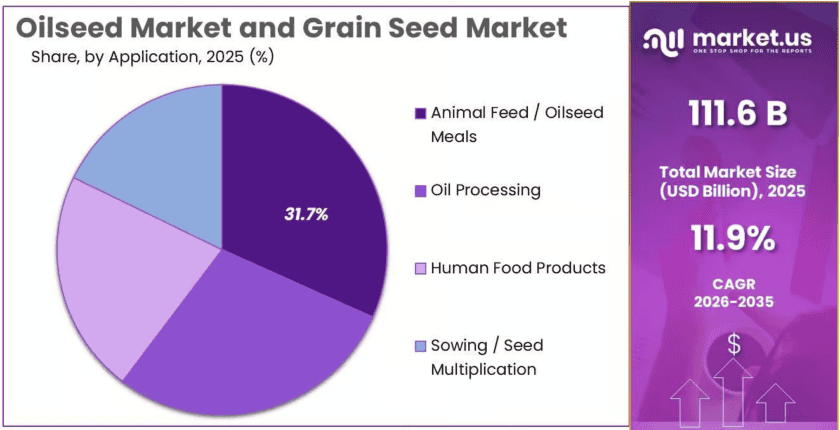
According to the referenced market report, the global oilseed and grain seed market was valued at USD 111.6 billion in 2025 and is projected to reach USD 342.6 billion by 2035, representing a compound annual growth rate (CAGR) of 11.9%. Oilseeds accounted for 43.50% of the market by product type, while hybrid seeds held 51.50% by breeding technology. Conventional and non-genetically modified seeds represented 56.70%, and animal feed and oilseed meals accounted for 31.00% of application demand. North America led the regional market with a 34.70% share, valued at USD 38.7 billion in 2025.
Agricultural production data underline the importance of reliable seed supplies. The Food and Agriculture Organization of the United Nations estimated global cereal production at 3,043 million tonnes in 2025, an increase of 6.1% over 2024. This production scale reinforces the need for quality seeds, effective crop management, and resilient agricultural supply chains.
Key Takeaways
- 2025 market value: USD 111.6 billion.
- 2035 projected value: USD 342.6 billion.
- Forecast CAGR: 11.9% for 2026–2035.
- Leading product segment: Oilseeds, with a 43.50% share.
- Leading breeding technology: Hybrids, with a 51.50% share.
- Leading biotech-trait segment: Conventional/non-GM seeds, with a 56.70% share.
- Leading application: Animal feed and oilseed meals, with a 31.00% share.
- Dominating region: North America, with a 34.70% share and USD 38.7 billion in reported 2025 revenue.
Regional Analysis
North America: Dominating Region
North America held a leading position in 2025, accounting for 34.70% of the oilseed and grain seed market, with reported revenue of USD 38.7 billion. The region benefits from large-scale farming, established seed distribution networks, agricultural research, and strong demand for corn, soybeans, wheat, and other crops.
According to the United States Department of Agriculture (USDA), farmers intended to plant 95.3 million acres of corn and 83.5 million acres of soybeans in 2025. These figures demonstrate the scale of agricultural activity supporting demand for commercial seeds, improved crop varieties, and biotechnology traits.
Market Dynamics
1. Driver: Rising Demand for Food, Edible Oils, and Animal Feed
Growing demand for food, vegetable oils, and livestock products supports the oilseed and grain seed market. Oilseeds supply edible oils and protein-rich meals, while grain crops provide food and feed ingredients. The FAO estimated global cereal production at 3,043 million tonnes in 2025, up 6.1% from 2024, showing the scale of agricultural production that depends on reliable seed supplies.
Higher output requirements encourage farmers to consider improved seed varieties, while processors and livestock producers require dependable crop supplies. Demand for seeds is also influenced by planting costs, crop prices, weather, and farmers’ expected returns.
2. Trend: Wider Adoption of Improved and Biotechnology Seeds
Seed development increasingly focuses on traits that improve weed management, insect resistance, crop performance, and adaptability. According to the USDA Economic Research Service, more than 90% of United States corn, soybean, and cotton acreage has used genetically engineered varieties since 2023. In 2025, herbicide-tolerant varieties covered 96% of United States soybean acreage.
These figures demonstrate strong adoption of biotechnology in major crops, although adoption varies by country and crop. Seed companies continue to invest in breeding and trait development, while farmers assess the benefits against seed prices, resistance management, market requirements, and local growing conditions.
3. Restraint: Weather Risks and High Seed Costs
Weather uncertainty, drought, flooding, pests, and disease can reduce crop performance even when farmers use improved seeds. Higher seed prices may also limit access for producers with restricted budgets, particularly when fertilizer, fuel, and machinery expenses rise at the same time.
The USDA’s 2025 planting outlook projected 225 million acres of combined corn, wheat, and soybean plantings, illustrating the scale of acreage decisions influenced by crop prices and farm economics. If expected returns weaken, farmers may reduce planted area or select lower-cost varieties. Seed suppliers must balance research spending with affordability and dependable performance.
4. Opportunity: Climate-Resilient Seeds and Crop Improvement
Climate-resilient seed development offers opportunities for companies seeking to improve agricultural reliability. Varieties with better drought tolerance, disease resistance, or suitability for changing growing seasons can help farmers manage production risks.
The USDA reported that the seven largest seed companies and their predecessor businesses increased crop-improvement research and development spending from less than USD 2 billion in 1990 to more than USD 6.5 billion in 2021. This investment highlights the importance of breeding innovation to the seed industry. Further opportunities include improved conventional varieties, hybrids, and biotechnology traits, subject to regulatory approval and farmer needs.
Emerging Trends
1. Climate-Resilient Seed Development
Seed companies are developing varieties intended to withstand drought, heat, pests, and disease. In 2025, global cereal production reached 3,043 million tonnes, according to the FAO, reinforcing the need to protect crop productivity as growing conditions change.
2. Growth in Hybrid Seeds
Hybrid seeds are important for crops where uniformity and improved performance are valuable. The referenced market report assigns hybrids a 51.50% share in 2025. Their adoption depends on crop suitability, seed costs, local conditions, and the potential benefits to farmers.
3. Continued Biotechnology Adoption
Biotechnology traits support weed and insect management in major crops. USDA data show that herbicide-tolerant varieties covered 96% of United States soybean acreage in 2025, demonstrating widespread adoption of this technology in a major oilseed crop.
4. Higher Investment in Crop Research
Crop improvement remains an important investment area. The USDA reported that the seven largest seed companies spent more than USD 6.5 billion on crop-improvement research and development in 2021. Research supports new varieties and traits for changing agricultural needs.
5. Digital Tools for Seed Selection
Digital farm tools help growers compare varieties, planting dates, soil conditions, and expected weather. By combining field records with crop performance data, farmers can make better-informed seed choices. The value of these tools depends on reliable local data and practical access.
Use Cases
1. Soybean Cultivation for Oil and Feed
Soybean seeds support production of edible oil and protein-rich meal for animal feed. In 2025, United States farmers intended to plant 83.5 million acres of soybeans, highlighting the crop’s importance to agricultural supply chains.
2. Corn Production for Food and Livestock
Corn seeds support food processing, livestock feed, and industrial uses. United States farmers intended to plant 95.3 million acres of corn in 2025. Hybrid and improved varieties help producers select crops suited to their fields and production goals.
3. Wheat Production for Food Supply
Wheat seeds support flour, bread, pasta, and other staple foods. The USDA projected 47.0 million acres of United States wheat plantings in 2025. Variety selection helps farmers manage growing-season conditions, disease risks, and grain quality requirements.
4. Sunflower and Rapeseed for Vegetable Oils
Sunflower and rapeseed seeds support edible oil production and can supply oilseed meals for feed. Farmers select varieties according to climate, growing duration, oil quality, disease pressure, and market demand. Improved seed performance can help processors maintain more dependable crop supplies.
5. Seed Multiplication and Commercial Distribution
Seed producers multiply selected varieties, maintain genetic quality, and supply farmers through distributors and agricultural retailers. Quality control, germination testing, and storage practices help preserve seed performance. Reliable distribution supports planting schedules and helps growers access varieties suited to local conditions.
Frequently Asked Questions
1. What is the oilseed and grain seed market?
The market covers seeds used to grow oilseed crops, including soybeans and sunflower, and grain crops such as corn and wheat. These crops supply food, edible oils, animal feed, and industrial raw materials.
2. What was the market value in 2025?
The referenced market report estimates that the global oilseed and grain seed market reached USD 111.6 billion in 2025. This commercial estimate is separate from government statistics on crop production and seed adoption.
3. What is the projected market value by 2035?
The referenced report projects the market to reach USD 342.6 billion by 2035, representing a CAGR of 11.9% during 2026–2035. Actual growth will depend on seed demand, farming investment, and market conditions.
4. Which region dominated the market in 2025?
North America led the market with a reported 34.70% share, valued at USD 38.7 billion in 2025. Large-scale farming, established seed distribution, and demand for corn and soybeans support its position.
5. Why are hybrid seeds important?
Hybrid seeds are developed by crossing selected parent plants to combine useful traits. They can provide improved uniformity and performance in suitable crops, although results depend on the variety, growing conditions, and farm management.
6. What are the main challenges facing the market?
Major challenges include unpredictable weather, pests, seed prices, and changing crop economics. Farmers must assess the cost of improved varieties against expected yields, while seed companies must continue investing in research and reliable distribution.
Conclusion
The oilseed and grain seed market supports food production, edible oil processing, animal nutrition, and agricultural supply chains. The referenced report estimates that the market will grow from USD 111.6 billion in 2025 to USD 342.6 billion by 2035, at a CAGR of 11.9%. North America remains the leading region, while hybrid seeds, biotechnology, and climate-resilient crop development influence industry priorities.
Rising food and feed requirements provide opportunities, but weather risks, input costs, and seed affordability remain important challenges. Continued investment in crop research, improved varieties, and dependable distribution will help the industry respond to changing agricultural needs.
Discuss your needs with our analyst
Please share your requirements with more details so our analyst can check if they can solve your problem(s)