Overview
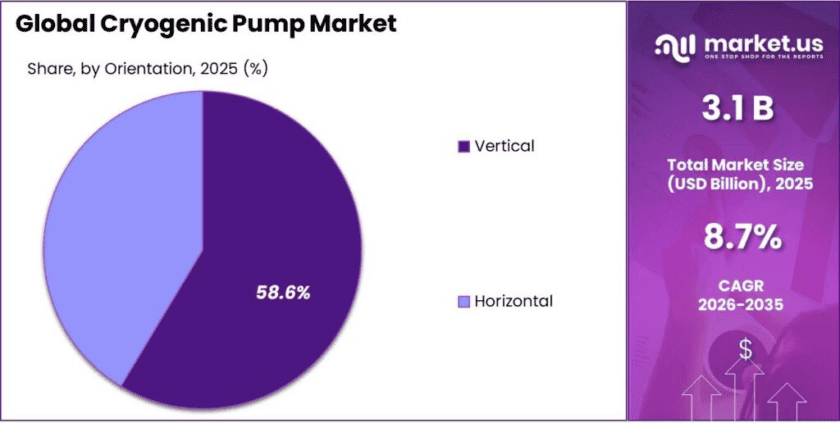
New York, NY – October 9, 2026 – The global Cryogenic Pump Market is gaining importance as energy companies, industrial gas producers, and manufacturers invest in equipment for handling liquefied gases at extremely low temperatures. According to the supplied Market.us report, the market was valued at USD 3.1 billion in 2025 and is projected to reach USD 7.1 billion by 2035, registering a compound annual growth rate (CAGR) of 8.7% from 2026 to 2035.
Cryogenic pumps transfer liquids such as liquefied natural gas (LNG), liquid nitrogen, liquid oxygen, argon, and liquid hydrogen between storage tanks, processing facilities, pipelines, and transportation systems. These pumps are essential for maintaining reliable flow and safe operations in energy, chemicals, healthcare, aerospace, and industrial gas applications.
North America led the market in 2025, accounting for 32.60% of global revenue, equivalent to USD 1.01 billion. Expanding LNG export facilities, industrial gas production, and growing interest in hydrogen infrastructure are supporting demand. The US Energy Information Administration reported that global LNG trade reached a record 56.3 billion cubic feet per day in 2025, an increase of 5.4% from 2024. Over the coming years, improved pump efficiency, reliable sealing systems, digital monitoring, and specialised liquid hydrogen equipment are expected to create further opportunities for manufacturers and service providers.
Key Takeaways
- The Cryogenic Pump Market is projected to increase from USD 3.1 billion in 2025 to USD 7.1 billion by 2035, at a reported CAGR of 8.7%.
- North America held a 32.60% share in 2025, representing USD 1.01 billion in revenue.
- Centrifugal pumps captured more than 72.00% of the market in 2025 because they support high-flow liquid transfer.
- Submersible pumps accounted for more than 59.00% of the market.
- Vertical pumps held more than 58.00% of the market, supported by their suitability for storage and transfer applications.
- Industrial gases represented more than 44.05% of the market.
- Energy and power accounted for more than 21.00% of market revenue.
Regional Analysis
North America led the Cryogenic Pump Market in 2025, accounting for 32.60% of global revenue, valued at USD 1.01 billion. The region benefits from LNG production, export terminals, gas processing, and industrial gas applications. According to the US Energy Information Administration, marketed natural gas production in the United States reached a record 118.5 billion cubic feet per day in 2025. Growing LNG handling requirements support demand for pumps used in liquefaction, storage, loading, and transfer operations.
Market Dynamics
Driver: Expansion of LNG Infrastructure
The expansion of liquefied natural gas infrastructure is a major driver of the Cryogenic Pump Market. LNG facilities need specialised pumps to transfer liquefied gas between storage tanks, processing units, pipelines, and ships.
The US Energy Information Administration reported that global LNG trade reached 56.3 billion cubic feet per day in 2025, increasing 5.4% from the previous year. The Federal Energy Regulatory Commission also tracks new and expanding US export terminals, including projects under construction. These developments support demand for high-flow cryogenic pumps, loading systems, and replacement equipment. However, orders depend on project completion, terminal utilisation, and capital spending.
Trend: High-Efficiency Pumps and Digital Monitoring
Cryogenic pump manufacturers are increasingly focused on improving efficiency, reliability, and equipment monitoring. Variable-speed drives, temperature sensors, vibration monitoring, and remote diagnostics can help operators identify abnormal performance and schedule maintenance before a failure interrupts production.
Centrifugal pumps held more than 72.00% of the market in 2025, according to the supplied report, reflecting their role in high-volume liquid transfer. NASA also identifies centrifugal turbopumps and positive-displacement pumps as two major approaches to cryogenic pumping. Equipment selection depends on flow, pressure, liquid properties, and operating conditions. Digital monitoring can improve maintenance planning, but actual savings depend on the installation and operating practices.
Restraint: High Equipment Costs and Technical Requirements
Cryogenic pumps must operate reliably at extremely low temperatures, making material selection, sealing, insulation, and thermal management important. Equipment may require specialised engineering, testing, installation, and safety procedures. Operators also need trained technicians and suitable spare parts to limit downtime.
The US Department of Energy’s hydrogen programme highlights the substantial infrastructure investment needed to develop production, storage, delivery, and end-use networks. Such investments can be difficult to justify when facility utilisation is uncertain or project funding is delayed. For manufacturers, qualification requirements and long project schedules can increase sales costs. These factors may slow adoption, particularly for smaller facilities and emerging applications.
Opportunity: Liquid Hydrogen and Emerging Clean-Energy Systems
Liquid hydrogen offers a potential growth opportunity for cryogenic pump manufacturers. Hydrogen must be cooled to approximately −253°C to become liquid at atmospheric pressure, requiring specialised equipment for storage, transfer, and loading. The US Department of Energy’s Regional Clean Hydrogen Hubs programme was supported by up to USD 8 billion under the Infrastructure Investment and Jobs Act to encourage connected hydrogen production, storage, delivery, and end-use infrastructure.
Not every hub requires liquid hydrogen, but projects adopting liquefaction will need appropriate cryogenic systems. Manufacturers can develop specialised pump packages, improved seals, monitoring systems, and maintenance services for emerging hydrogen supply chains.
Emerging Trends in Cryogenic Pumps
1. LNG Transfer and High-Flow Pumping
Cryogenic pumps are increasingly important in LNG export terminals and storage facilities. Global LNG trade reached 56.3 billion cubic feet per day in 2025, up 5.4% year over year, supporting demand for reliable liquid transfer, loading, and circulation equipment.
2. Liquid Hydrogen Handling
Liquid hydrogen requires specialised equipment because it must be maintained at approximately −253°C under atmospheric-pressure conditions. As hydrogen infrastructure develops, pump suppliers may find opportunities in storage, transport, loading, and refueling applications. Commercial adoption remains dependent on project economics and infrastructure readiness.
3. Remote Monitoring and Predictive Maintenance
Digital sensors can monitor vibration, temperature, pressure, and pump operating conditions. These measurements help operators identify changes that may indicate wear or developing faults. Predictive maintenance can be especially valuable at LNG terminals and industrial gas plants where unexpected shutdowns can interrupt continuous operations.
4. Submersible and Vertical Pump Designs
Submersible pumps held more than 59.00% of the market in 2025, while vertical pumps accounted for more than 58.00%, according to the supplied report. Both designs are useful in selected storage and transfer applications, depending on tank layout, flow requirements, and maintenance access.
5. Advanced Cryogenic Materials and Sealing
Manufacturers are improving materials, bearings, seals, and thermal insulation to handle extreme temperatures and repeated operating cycles. These changes can help reduce leakage risks and improve reliability. The main design priorities include thermal contraction, material compatibility, safe liquid transfer, and reduced maintenance requirements.
Use Cases of Cryogenic Pumps
1. LNG Export Terminals
LNG terminals use cryogenic pumps to move liquefied gas between storage tanks, process units, pipelines, and ships. US LNG exports averaged 17.4 billion cubic feet per day in the first half of 2026, illustrating the scale of infrastructure that depends on reliable gas-handling equipment.
2. Industrial Gas Production
Industrial gas facilities use cryogenic pumps to transfer liquid nitrogen, oxygen, and argon into storage, distribution, and processing systems. The supplied report states that industrial gases accounted for more than 44.05% of the market in 2025, highlighting the importance of this application category.
3. Liquid Hydrogen Storage and Transfer
Cryogenic pumps can move liquid hydrogen between storage vessels, transport equipment, and specialised loading systems. Hydrogen must be maintained near −253°C at atmospheric pressure to remain liquid. These pumps may support emerging hydrogen supply chains where liquefaction is selected as the storage or transport method.
4. Healthcare and Medical Gas Supply
Cryogenic pumps can support facilities that produce and distribute liquid oxygen and other medical or industrial gases. Hospitals and gas suppliers depend on reliable handling systems to maintain supply continuity. Pump specifications must match the gas, required flow, pressure, cleanliness, and applicable safety requirements.
5. Aerospace and Rocket Propulsion
Rocket propulsion systems use cryogenic liquids such as liquid oxygen and liquid hydrogen. NASA identifies centrifugal turbopumps and positive-displacement pumps as major cryogenic pumping approaches. These pumps help deliver propellants at controlled flow and pressure to engine systems under demanding operating conditions.
Frequently Asked Questions About Cryogenic Pumps and the Cryogenic Pump Market
1. What is a cryogenic pump?
A cryogenic pump is specialised equipment designed to transfer liquefied gases at extremely low temperatures. It is used for liquids such as LNG, liquid nitrogen, liquid oxygen, argon, and liquid hydrogen across energy, industrial, healthcare, and aerospace applications.
2. What is the projected size of the Cryogenic Pump Market by 2035?
According to the supplied Market.us report, the Cryogenic Pump Market is projected to reach USD 7.1 billion by 2035, compared with USD 3.1 billion in 2025. The report forecasts a CAGR of 8.7% from 2026 to 2035.
3. Which region leads the Cryogenic Pump Market?
North America led the market in 2025, accounting for 32.60% of global revenue, equivalent to USD 1.01 billion. LNG production, export terminals, natural gas processing, and industrial gas applications support the region’s demand for cryogenic pumping equipment.
4. Which pump type holds the largest market share?
Centrifugal pumps held the leading position in 2025, capturing more than 72.00% of the market. Their ability to move large volumes of liquid makes them suitable for LNG transfer, storage, loading, and other industrial cryogenic applications.
5. Which cryogen category dominates the market?
Industrial gases accounted for more than 44.05% of the market in 2025, according to the supplied report. This category includes gases such as nitrogen, oxygen, argon, and hydrogen, which require specialised equipment for liquefaction, storage, and transfer.
6. What are the main applications of cryogenic pumps?
Cryogenic pumps are used in LNG terminals, industrial gas plants, chemical facilities, healthcare gas supply, aerospace propulsion, and emerging hydrogen systems. They transfer cold liquids between storage vessels, pipelines, processing equipment, loading facilities, and specialised end-use systems.
Conclusion
The Cryogenic Pump Market is expected to grow as energy companies and industrial producers invest in LNG infrastructure, industrial gases, and specialised low-temperature fluid handling. According to the supplied report, the market will increase from USD 3.1 billion in 2025 to USD 7.1 billion by 2035, registering an 8.7% CAGR.
North America currently leads, while centrifugal pumps, submersible designs, and industrial gas applications represent important market segments. High equipment costs and technical requirements remain challenges. However, LNG expansion, emerging hydrogen infrastructure, and advances in monitoring and sealing technologies offer manufacturers opportunities to improve performance and support future demand.
Discuss your needs with our analyst
Please share your requirements with more details so our analyst can check if they can solve your problem(s)