Overview
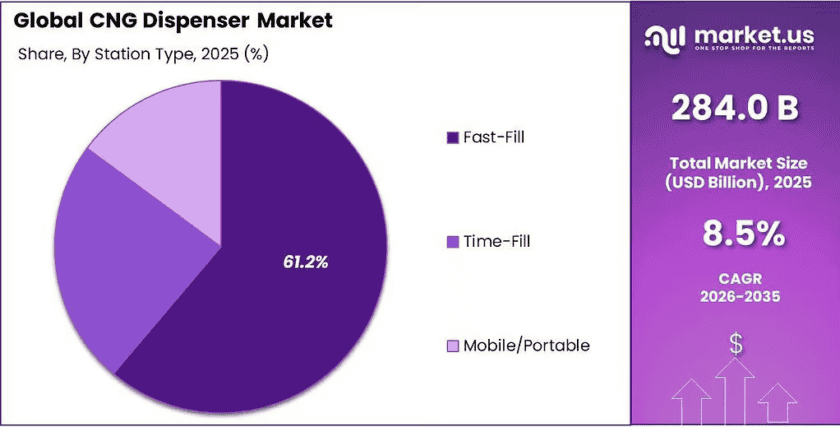
New York, NY – October 9, 2026 – The global CNG Dispenser Market is gaining attention as transport operators, fuel retailers, and commercial fleet owners invest in compressed natural gas (CNG) refueling infrastructure. According to the supplied market report, the market was valued at USD 284.0 billion in 2025 and is projected to reach USD 642.2 billion by 2035, growing at a compound annual growth rate (CAGR) of 8.5% from 2026 to 2035.
CNG dispensers are essential equipment at natural gas fueling stations. They measure and deliver compressed gas to vehicles through high-pressure hoses, meters, valves, and control systems. These dispensers serve passenger vehicles, taxis, buses, refuse trucks, delivery fleets, and heavy commercial vehicles. Fast-fill systems are particularly useful at public retail stations, while time-fill systems support fleets that refuel at central depots overnight.
In 2025, Asia Pacific held the leading regional position, accounting for 48.21% of the market and generating reported revenue of USD 136.8 billion. Single-hose dispensers, fast-fill stations, and public retail stations were the leading segments in their respective categories. Continued investment in gas distribution networks, commercial transport, and alternative-fuel infrastructure could support further demand. Digital metering, improved safety controls, renewable natural gas, and more efficient dispenser designs are also creating opportunities for manufacturers and station operators.
Key Takeaways
- The market is forecast to increase from USD 284.0 billion in 2025 to USD 642.2 billion by 2035, at a reported CAGR of 8.5%.
- Asia Pacific accounted for 48.21% of the market in 2025, with reported revenue of USD 136.8 billion.
- Single-hose dispensers held the leading position, capturing 44.15% of the market.
- Fast-fill stations accounted for 61.23%, supported by demand for quick vehicle refueling.
- Public retail stations captured 52.34%, reflecting their importance for drivers and commercial vehicles requiring accessible fueling.
- India’s expanding city gas distribution network provides opportunities for dispenser installations, replacements, and servicing.
- Digital metering, automated pressure control, high-flow dispensing, and remote monitoring can improve station operations.
- Fleet depots, heavy-duty natural gas vehicles, and renewable natural gas infrastructure could create additional demand for compatible dispensing equipment.
Regional Analysis
Asia Pacific
Asia Pacific led the CNG Dispenser Market in 2025 with a reported 48.21% share and USD 136.8 billion in revenue. Growth is supported by natural gas vehicle use, commercial transport, and investments in fueling infrastructure. India’s Petroleum and Natural Gas Regulatory Board tracks city gas distribution development across geographical areas, while China’s large transport market creates demand for reliable, high-pressure fueling equipment. Public stations and fleet depots are important customers for dispensers, compressors, storage systems, and metering equipment.
North America
North America offers opportunities through public CNG stations, municipal fleets, refuse trucks, and commercial transport. The US Energy Information Administration reported record marketed natural gas production of 118.5 billion cubic feet per day in 2025, up 5.3 billion cubic feet per day from 2024. Domestic supply supports the broader natural gas ecosystem, although dispenser demand also depends on vehicle adoption, station economics, and competition from other fuels.
Market Dynamics
Driver: Expansion of CNG Fueling Infrastructure
The expansion of city gas distribution networks and public fueling stations is a key driver of the CNG Dispenser Market. As operators add stations for taxis, buses, delivery vehicles, and commercial fleets, they need dispensers, compressors, storage vessels, and pressure-control equipment.
India’s Petroleum and Natural Gas Regulatory Board publishes station-level development data, reflecting continued infrastructure rollout. In the United States, the Energy Information Administration reported natural gas production of 118.5 billion cubic feet per day in 2025. Reliable gas supply and improved access can encourage infrastructure investment, although actual dispenser demand depends on vehicle adoption, station utilisation, and project costs.
Trend: High-Speed Filling and Digital Metering
The market is moving towards dispensers that provide faster fueling, accurate measurement, improved safety, and better operational monitoring. Fast-fill systems are particularly suitable for public stations where vehicles arrive at different times and need quick service. The US Department of Energy identifies 3 main CNG station configurations: fast-fill, time-fill, and combination-fill.
Fast-fill stations use compressors and high-pressure storage to make gas available when vehicles arrive. Digital pressure sensors, temperature compensation, electronic meters, and monitoring systems can help operators manage fuel delivery and identify equipment problems. These features are increasingly important at busy retail stations and commercial refueling facilities.
Restraint: High Installation and Maintenance Costs
High installation costs can slow the adoption of CNG dispensers, particularly at stations with limited vehicle traffic. A complete facility may require compressors, storage vessels, gas pipelines, safety valves, metering equipment, and pressure-rated dispensing hoses.
The US Department of Energy explains that station costs depend on compressor size, storage capacity, fueling requirements, and the chosen station configuration. Time-fill facilities can serve fleets over several hours, while fast-fill stations require equipment designed for rapid delivery. Operators must also budget for inspection, calibration, repairs, and safety compliance. These expenses can lengthen payback periods when station throughput is low or vehicle demand is uncertain.
Opportunity: Fleet Depots and Renewable Natural Gas
Fleet depots offer an opportunity for CNG dispenser suppliers because buses, refuse trucks, and delivery vehicles often return to the same location for refueling. Time-fill systems can refuel several vehicles during overnight parking, while combination-fill installations can also serve vehicles requiring rapid refueling.
The US Department of Energy identifies these configurations as suitable for different operating patterns. Renewable natural gas produced from organic waste can provide another fuel pathway where gas quality and equipment compatibility requirements are met. Dispenser manufacturers can benefit by supplying high-flow systems, metering equipment, monitoring software, and maintenance services to fleet operators and renewable gas projects.
Emerging Trends in the CNG Dispenser Market
1. High-Speed Fast-Fill Dispensers
Fast-fill systems are important at public stations because drivers need quick refueling. The US Department of Energy identifies 3 CNG station types and confirms that public CNG stations offer a fast-fill option. This supports continued demand for reliable, high-pressure dispensing equipment.
2. Digital Fuel Measurement
Modern dispensers use pressure and temperature sensors to measure fuel delivery accurately. The US Department of Energy explains that fast-fill equipment measures the amount of gas delivered while accounting for temperature. Better measurement helps operators monitor transactions and manage station performance.
3. Expansion of India’s CNG Network
India’s city gas distribution infrastructure continues to expand. The Petroleum and Natural Gas Regulatory Board’s April 2026 data tracks CNG station targets and installations across authorised geographical areas. Network expansion can create demand for new dispensers, replacement parts, and maintenance services.
4. Growth in Natural Gas Supply
US marketed natural gas production reached 118.5 billion cubic feet per day in 2025, an increase of 5.3 billion cubic feet per day from 2024. This supply growth supports the wider gas market, although dispenser investments also depend on transport demand and station economics.
5. Combined Fast-Fill and Time-Fill Stations
Combination stations allow operators to serve public customers quickly while refueling fleet vehicles over longer periods. The US Department of Energy recognises this configuration as a way to meet different fueling needs at one location, although it generally requires more equipment than simpler station designs.
Use Cases of CNG Dispensers
1. Public Retail Fueling Stations
Public stations use CNG dispensers to refuel taxis, private vehicles, and commercial transport. Fast-fill equipment supports customers arriving throughout the day. The US Department of Energy confirms that all public CNG fueling stations offer a fast-fill option, making it an important retail application.
2. City Bus Depots
Bus depots can use time-fill dispensers to refuel vehicles parked overnight. The US Department of Energy notes that time-fill systems suit fleets that return to a central location each night. This approach allows operators to plan fueling schedules around vehicle routes and departure times.
3. Municipal and Refuse Fleets
Municipalities can use CNG dispensers for refuse trucks, road-maintenance vehicles, and other service fleets. Time-fill stations allow several vehicles to refuel at a central depot. The Department of Energy explains that compressor sizing should match the number of vehicles and their daily fueling requirements.
4. Delivery and Logistics Vehicles
Delivery companies can install CNG dispensers at distribution centres where vehicles return after completing their routes. Combination-fill systems can support both scheduled depot refueling and faster refueling when required. The Department of Energy identifies combination-fill as a configuration that integrates both fueling approaches.
5. Renewable Natural Gas Stations
CNG dispensers can deliver compatible renewable natural gas to vehicles when the gas meets required quality specifications. This creates potential applications at facilities using gas derived from organic waste. Operators must verify gas composition, pressure requirements, and equipment compatibility before connecting renewable gas supplies.
Frequently Asked Questions About CNG Dispensers and the CNG Dispenser Market
1. What is a CNG dispenser?
A CNG dispenser is equipment used to deliver compressed natural gas to vehicles at a fueling station. It contains metering and control components and connects to high-pressure hoses, allowing operators to measure and manage the gas supplied to vehicles.
2. What is the projected size of the CNG Dispenser Market by 2035?
According to the supplied Market.us report, the CNG Dispenser Market is projected to reach USD 642.2 billion by 2035, compared with USD 284.0 billion in 2025, representing a reported CAGR of 8.5%.
3. Which region leads the CNG Dispenser Market?
Asia Pacific led the market in 2025, accounting for a reported 48.21% share and USD 136.8 billion in revenue. Natural gas vehicle infrastructure, commercial transport requirements, and station development support the region’s market position.
4. Which dispenser configuration holds the largest market share?
Single-hose dispensers held the leading position in 2025, with a reported 44.15% share. These systems can suit stations seeking straightforward layouts, fewer dispensing components, and manageable installation and maintenance requirements.
5. Which station type dominates the market?
Fast-fill stations led the market with a reported 61.23% share in 2025. They are suitable for public fueling locations where vehicles arrive at different times and require relatively quick refueling.
6. Which end-user segment leads the CNG Dispenser Market?
Public retail stations accounted for a reported 52.34% share in 2025. These stations serve private motorists, taxis, commercial vehicles, and other customers who require access to public CNG fueling infrastructure.
Conclusion
The CNG Dispenser Market is supported by demand for accessible natural gas fueling infrastructure, commercial fleet operations, and advances in dispensing technology. According to the supplied report, the market is projected to grow from USD 284.0 billion in 2025 to USD 642.2 billion by 2035, at a CAGR of 8.5%.
Asia Pacific leads the reported regional market, while fast-fill dispensers and public retail stations remain important segments. High installation costs and maintenance requirements present challenges for station operators. However, fleet-depot infrastructure, digital metering, and renewable natural gas applications offer opportunities for equipment manufacturers and service providers.
Discuss your needs with our analyst
Please share your requirements with more details so our analyst can check if they can solve your problem(s)