Overview
New York, NY – Nov 12, 2026 – The global Nutraceutical Ingredients Market is gaining importance as consumers increasingly focus on preventive healthcare, healthy ageing, digestive health and daily nutrition. Nutraceutical ingredients such as vitamins, minerals, probiotics, prebiotics, amino acids, proteins, omega-3 fatty acids and botanical extracts are widely used in dietary supplements, functional foods, fortified beverages and sports nutrition products.
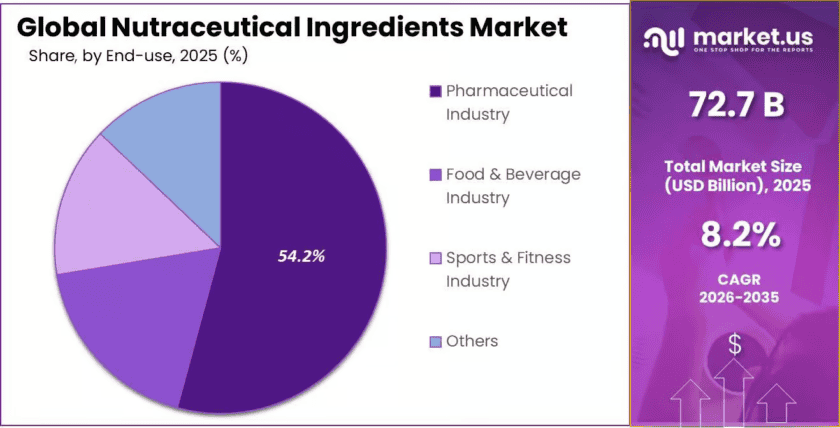
According to the market figures provided in the referenced report, the market was valued at USD 72.7 billion in 2025 and is projected to reach USD 159.6 billion by 2035, registering a compound annual growth rate of 8.2%. Probiotics, dietary supplements, dry-form ingredients and pharmaceutical applications represent important market segments.
Manufacturers are focusing on ingredient quality, improved absorption, product stability and traceable sourcing. Growing interest in gut health, immunity, weight management and personalised nutrition is encouraging suppliers to develop specialised ingredient solutions. At the same time, regulatory requirements, raw material costs and product safety standards continue to influence product development and market expansion.
Key Takeaways
- The global market was valued at USD 72.7 billion in 2025 and is projected to reach USD 159.6 billion by 2035, at a CAGR of 8.2%.
- Probiotics led the product segment with a 23.12% share in 2025.
- Dietary supplements dominated the application segment with a 35.23% share.
- Dry-form ingredients accounted for a leading 39.78% share.
- The pharmaceutical industry held a dominant 54.23% share by end-use industry.
- North America led the regional market with a 34.21% share, valued at USD 24.8 billion in 2025.
Regional Analysis
North America: Dominating Region
North America held the leading position in the Nutraceutical Ingredients Market in 2025, accounting for 34.21% of the global market and generating USD 24.8 billion in revenue. The region benefits from established dietary supplement manufacturers, developed food-processing facilities, wide product distribution and consumer interest in preventive nutrition.
Demand for probiotics, vitamins, minerals, botanical extracts and protein ingredients is supported by their use in supplements and functional food products. According to the U.S. Centers for Disease Control and Prevention (CDC), 60.2% of adults aged 20 and older used dietary supplements during August 2021 to August 2023. This provides evidence of established supplement use in the United States.
Market Dynamics
Driver: Rising focus on preventive nutrition
Demand for nutraceutical ingredients is supported by growing attention to nutrition, healthy ageing and long-term health management. Vitamins, minerals, proteins, probiotics and plant extracts are increasingly used in products designed to support everyday nutritional needs.
According to the World Health Organization (WHO), 2.6 billion adults were overweight worldwide in 2024, including 940 million living with obesity. These health concerns encourage food and supplement manufacturers to develop products for weight management, digestive health and general wellness. This does not mean nutraceutical ingredients treat these conditions, but it highlights the wider need for evidence-based nutritional products.
Trend: Greater focus on ingredient quality and scientific evidence
Ingredient quality, safety and scientific support are becoming important considerations in nutraceutical product development. Manufacturers are giving more attention to ingredient identity, purity, stability and accurate product information. The National Institutes of Health (NIH) reports that the United States has more than 100,000 dietary supplement products.
Its 2025–2029 research plan highlights the need to improve knowledge of supplement composition, quality, safety and effectiveness. This is encouraging suppliers to strengthen testing, maintain better product records and support ingredient claims with reliable research.
Restraint: Ingredient costs and affordability pressures
Higher food and production costs can make premium nutraceutical products less affordable for consumers. Ingredient suppliers and finished-product manufacturers may face pressure from changing prices for agricultural materials, energy, packaging and transportation.
The United States Department of Agriculture (USDA) forecast that overall food prices would increase by 2.8% in 2026, compared with an average annual rise of 3.0% during 2006–2025. Although this data covers food prices rather than nutraceutical ingredients specifically, it indicates the cost environment in which manufacturers operate. Higher prices can encourage consumers to choose lower-cost products.
Opportunity: Specialised nutrition for changing health needs
Ingredient suppliers have an opportunity to develop specialised formulations for healthy ageing, digestive health, weight management and nutritional adequacy. Products combining proteins, fibres, vitamins and minerals can serve consumers with different dietary requirements.
The WHO’s 2025 guidance on GLP-1 therapies for adults with obesity emphasises that treatment should form part of comprehensive care that includes a healthy diet, physical activity and ongoing support. This creates scope for evidence-based nutritional products developed with appropriate professional guidance. Suppliers that provide reliable ingredient information, consistent quality and clear usage instructions may be better positioned to serve this demand.
Emerging Trends
1. Probiotic and gut-health ingredients: Interest in digestive health is supporting the use of probiotic cultures in supplements and functional foods. The CDC reported that 60.2% of U.S. adults used dietary supplements during August 2021–August 2023, indicating an established consumer base for supplement products.
2. Personalised nutrition formulations: Nutritional products are increasingly designed around age, diet and individual health needs. NIH’s 2025–2029 research plan highlights population-based supplement use and nutrient intake as research priorities, supporting more targeted product development and stronger scientific evaluation.
3. Plant-based and botanical ingredients: Manufacturers are exploring botanical extracts and plant-derived compounds for functional foods and supplements. NIH notes that dietary supplements can contain complex mixtures of plant compounds, sometimes involving hundreds or thousands of chemical substances, increasing the need for proper identification and quality checks.
4. Stronger ingredient safety checks: Quality testing is becoming a central part of ingredient sourcing and manufacturing. The U.S. FDA requires at least 1 appropriate test or examination to verify the identity of each dietary ingredient used in supplement production, subject to applicable regulatory provisions.
5. New ingredient approvals and documentation: Companies developing new dietary ingredients must prepare safety information before entering the U.S. market. The FDA requires applicable new dietary ingredient notifications at least 75 days before a product is introduced into interstate commerce, encouraging earlier regulatory planning.
Use Cases
1. Daily vitamin and mineral supplements: Nutraceutical ingredients are used in tablets, capsules and powders to help consumers meet nutritional needs. CDC data shows that 60.2% of U.S. adults used dietary supplements during August 2021–August 2023, demonstrating their established role in everyday nutrition.
2. Digestive health products: Probiotic and prebiotic ingredients are used in capsules, powders, fermented foods and selected beverages. These formulations target digestive wellness and gut microbiome support. Product development requires attention to strain identity, ingredient stability and appropriate scientific evidence.
3. Healthy ageing formulations: Vitamins, minerals, proteins and other nutrients are incorporated into products for older consumers. CDC data found that 75.9% of U.S. adults aged 60 and older used dietary supplements during August 2021–August 2023, indicating substantial use in this age group.
4. Functional food and beverage fortification: Nutraceutical ingredients such as fibres, vitamins and minerals are added to cereals, dairy products, drinks and nutritional foods. These applications allow manufacturers to offer products with added nutritional value in familiar and convenient formats.
5. Sports and active-lifestyle nutrition: Protein, amino acids, minerals and selected botanical ingredients are used in powders, bars and recovery beverages. These products are developed for people with active lifestyles, with formulations designed around nutritional requirements, product safety and clear ingredient information.
Frequently Asked Questions
1. What are nutraceutical ingredients?
Nutraceutical ingredients are substances used in products that provide nutritional value or support specific wellness needs. Common examples include vitamins, minerals, probiotics, prebiotics, proteins, amino acids, omega-3 fatty acids and botanical extracts.
2. What is driving the Nutraceutical Ingredients Market?
The market is supported by rising interest in preventive nutrition, healthy ageing, digestive health and functional foods. In the United States, 60.2% of adults used dietary supplements during August 2021–August 2023, according to the CDC.
3. Which product segment leads the Nutraceutical Ingredients Market?
Probiotics led the product segment in 2025, accounting for 23.12% of the market. Their use in dietary supplements, functional foods and selected beverages supports their position among the major ingredient categories.
4. Which region dominates the Nutraceutical Ingredients Market?
North America dominated the market in 2025 with a 34.21% share and revenue of USD 24.8 billion. Established supplement manufacturers, distribution networks and consumer demand support the region’s leading position.
5. What challenges affect nutraceutical ingredient manufacturers?
Manufacturers face challenges related to raw material costs, ingredient authenticity, product stability, regulatory compliance and scientific evidence. In the United States, applicable new dietary ingredients require FDA notification at least 75 days before market introduction.
6. What is the future outlook for the Nutraceutical Ingredients Market?
The market is projected to grow from USD 72.7 billion in 2025 to USD 159.6 billion by 2035, at a CAGR of 8.2%. Demand for specialised nutrition and functional products is expected to support expansion.
Conclusion
The Nutraceutical Ingredients Market is expected to maintain its growth as consumers and manufacturers place greater importance on preventive nutrition, healthy ageing and functional food products. Probiotics, vitamins, proteins, minerals and botanical extracts remain important ingredients across supplements, beverages and fortified foods.
North America holds the leading regional position, supported by established supplement consumption and manufacturing capabilities. However, ingredient affordability, quality assurance and regulatory requirements remain important challenges. The projected increase from USD 72.7 billion in 2025 to USD 159.6 billion by 2035 reflects the market’s growth potential. Suppliers focusing on reliable sourcing, product safety and scientifically supported formulations are positioned to address changing nutritional needs.
Discuss your needs with our analyst
Please share your requirements with more details so our analyst can check if they can solve your problem(s)