Overview
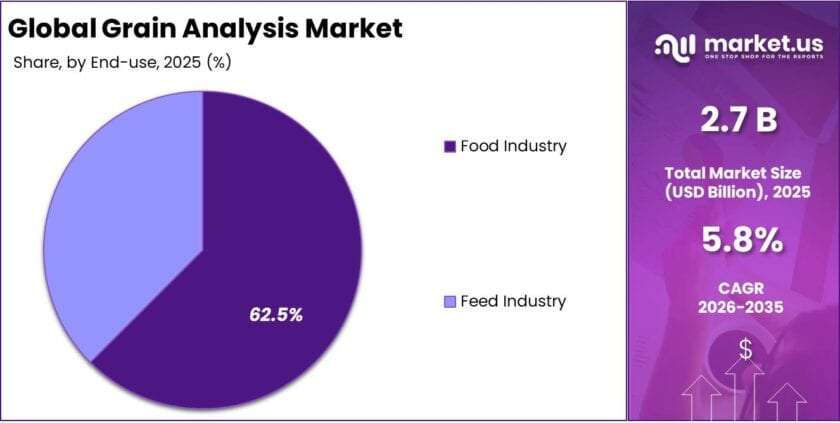
New York, NY – Oct 06, 2026 – The global Grain Analysis Market is expanding as grain producers, processors, exporters, food manufacturers, and feed companies place greater importance on quality, safety, composition, and regulatory compliance. The market was valued at approximately USD 2.7 billion in 2025 and is projected to reach around USD 4.7 billion by 2035, growing at a 5.8% CAGR during 2026–2035.
Grain analysis includes testing for moisture, protein, oil, starch, test weight, foreign material, pesticide residues, microorganisms, and mycotoxins. These tests help determine grain grade, processing suitability, storage stability, and food or feed safety.
The testing requirement is supported by enormous global grain volumes. FAO estimated global cereal production at a record 3.043 billion tonnes in 2025, representing a 6.1% increase from 2024. For 2026, production is forecast near 2.979 billion tonnes, still the second-highest harvest on record.
USDA’s official inspection system also tests grain for moisture, protein, oil, foreign material, aflatoxin, pesticide residues, and other quality characteristics, making analytical testing an essential part of commercial grain movement.
Key Takeaways
- The global Grain Analysis Market was valued at USD 2.7 billion in 2025 and is expected to reach approximately USD 4.7 billion by 2035, growing at a 5.8% CAGR.
- By technology, Traditional Technology held the dominant position in 2025 with more than a 62.56% share.
- By grain type, Cereals dominated the market, capturing more than a 41.45% share during 2025.
- By end user, the Food Industry accounted for more than a 62.56% share of the Grain Analysis Market.
- Asia-Pacific led the global market with more than a 38.32% share in 2025.
- Based on the published total market value and regional share, Asia-Pacific represented approximately USD 1.03 billion in 2025.
- Global cereal production reached approximately 3.043 billion tonnes in 2025, creating a large testing base for grain elevators, millers, laboratories, processors, and exporters.
- USDA reported that its official grain inspection system oversaw approximately 146.3 million metric tons of grain, demonstrating the large volume requiring standardized quality assessment.
Regional Analysis
Asia-Pacific Leads with 38.32% Market Share
In 2025, Asia-Pacific held a dominant position in the Grain Analysis Market, accounting for more than a 38.32% share. Based on the global market value of USD 2.7 billion, this share represents approximately USD 1.03 billion.
The region benefits from large cereal production, food-processing activity, grain storage infrastructure, animal-feed manufacturing, and expanding agricultural trade. High grain volumes increase demand for moisture, protein, oil, pesticide, microbial, and mycotoxin testing before commodities enter storage, processing, or export channels.
Global grain conditions also underline the scale of analytical demand. FAO estimated total cereal output at a record 3.043 billion tonnes in 2025, up 6.1% year over year. In October 2026, FAO forecast 2026 production at approximately 2.979 billion tonnes, only 2.1% below the previous record.
Market Dynamics
Driver – Increasing Grain Production and Quality Requirements
Large global grain volumes are increasing demand for dependable quality and safety analysis. FAO reported record cereal production of approximately 3.043 billion tonnes in 2025, an increase of 6.1% from the previous year. Even after this record, production in 2026 is forecast at about 2.979 billion tonnes, making it the second-largest harvest recorded.
Grain must be evaluated for moisture, protein, foreign material, test weight, contaminants, and processing quality before storage or sale. USDA’s official grain system similarly tests characteristics including moisture, protein, oil, aflatoxin, and pesticide residues, supporting continued analytical demand across commercial supply chains.
Trend – Growing Adoption of Rapid Testing
Grain handlers are increasingly adopting rapid instruments that shorten testing time while maintaining standardized results. USDA’s Federal Grain Inspection Service uses equipment including moisture meters, mycotoxin test kits, near-infrared transmittance instruments, dockage machines, and falling-number apparatus in its official testing system.
At the same time, traditional technology still represented more than 62.56% of the Grain Analysis Market in 2025, showing that rapid systems are expanding alongside established laboratory and physical methods. USDA also operates electronic capability testing that provides real-time pass-or-fail feedback, illustrating how grain testing is becoming more digital and automated.
Restraint – Testing Cost and Standardization Requirements
Maintaining accurate grain-analysis systems requires calibrated equipment, trained inspectors, approved methods, and continuous quality checks. USDA requires official service providers to follow uniform standards and procedures so buyers receive consistent results regardless of inspection location.
These requirements can raise operating costs for laboratories and smaller grain handlers. USDA also revised inspection and weighing fees in 2025 and established formulas intended to maintain an operating reserve equal to 3 to 6 months of program costs. For private companies, purchasing rapid testing instruments, maintaining laboratory systems, conducting verification, and training technicians can therefore slow adoption, particularly at smaller storage or processing facilities.
Opportunity – Expanding Mycotoxin and Multi-Contaminant Testing
Growing attention to mycotoxins creates an important opportunity for grain-analysis providers. FDA currently monitors major toxins including aflatoxins, DON, fumonisins, ochratoxin A, T-2/HT-2 toxins, and zearalenone in susceptible foods. Its laboratories have moved toward an LC-MS/MS method capable of simultaneously quantifying 12 mycotoxins in human food.
FDA also sets a 1 ppm advisory level for DON in finished wheat products intended for human consumption. As processors require faster multi-residue and multi-mycotoxin screening, laboratories can expand services using rapid kits, chromatography, mass spectrometry, near-infrared systems, automated sampling, and digitally connected testing platforms.
Emerging Trends
1. Rapid Mycotoxin Screening
Rapid grain screening is expanding because contamination must often be identified before storage or processing. FDA monitors at least 7 major mycotoxin groups, including aflatoxins, DON, fumonisins, ochratoxin A, T-2/HT-2 toxins, and zearalenone.
2. Multi-Mycotoxin Laboratory Methods
Laboratories are moving from individual contaminant tests toward multi-analyte systems. FDA’s food laboratories use an LC-MS/MS method validated for simultaneous measurement of 12 mycotoxins, helping laboratories generate broader food-safety information from a single grain-related sample.
3. Digital Grain Inspection Records
Grain inspection records are becoming more digital. USDA’s Inspection Data Warehouse allows users to access official inspection and weighing information and download records in CSV format while also supporting automated transmission through AgXML or CSV files.
4. Automated Equipment Verification
Automation is entering grain laboratory quality control. USDA’s Equipment Capability Testing system supports real-time pass-or-fail feedback for equipment including moisture meters, NIR instruments, scales, samplers, and mycotoxin kits, improving consistency across official testing locations.
5. Higher Testing Volumes from Record Grain Output
Large harvests are expanding the amount of grain needing analysis. FAO estimated approximately 3.043 billion tonnes of global cereal production in 2025, representing a 6.1% annual increase, increasing testing requirements throughout storage, milling, feed, and export channels.
Use Cases
1. Grain Export Inspection
Grain analysis verifies commercial quality before export. USDA reported approximately 146.3 million metric tons of grain under inspections overseen by FGIS, highlighting the large volume requiring standardized evaluation of moisture, grade, contaminants, and physical quality.
2. Mycotoxin Detection in Wheat
Wheat processors use analytical testing to detect DON before flour production. FDA maintains a 1 ppm advisory level for DON in finished wheat products intended for human consumption, making accurate laboratory or rapid screening important for food-safety decisions.
3. Aflatoxin Testing
Aflatoxin testing protects food and feed supply chains. USDA requires domestic and imported raw peanuts intended for human consumption to contain no more than 15 ppb total aflatoxins before being certified for commercial movement.
4. Grain Storage Management
Moisture testing helps handlers determine whether grain can be stored safely. USDA includes moisture meters among equipment covered by its nationwide capability-testing program, supporting consistent measurements across elevators, laboratories, warehouses, processing plants, and official inspection facilities.
5. Food Processing Quality Control
Millers and food manufacturers analyze grain before production for protein, moisture, oil, foreign material, and safety hazards. The food-industry segment held more than a 62.56% share of the Grain Analysis Market in 2025.
Frequently Asked Questions on Grain Analysis and Grain Analysis Market
What is grain analysis?
Grain analysis is the testing of cereals, oilseeds, and pulses for quality, composition, physical condition, and contaminants. Common measurements include moisture, protein, oil, starch, foreign material, mycotoxins, pesticide residues, test weight, and grain defects.
How large was the Grain Analysis Market in 2025?
The global Grain Analysis Market was valued at approximately USD 2.7 billion in 2025. It is projected to reach around USD 4.7 billion by 2035, expanding at a forecast 5.8% CAGR.
Which technology dominates the Grain Analysis Market?
Traditional technology held the leading position during 2025, accounting for more than a 62.56% share. These methods remain important for visual grading, moisture determination, sieving, dockage assessment, test weight, and laboratory confirmation.
Which grain type dominates the market?
Cereals represented the largest grain category in 2025, capturing more than a 41.45% share. Large worldwide production of wheat, corn, rice, barley, and other cereals creates continuous demand for quality and contamination testing.
Which end user leads the Grain Analysis Market?
The food industry held more than a 62.56% share in 2025. Food processors rely on grain analysis to verify moisture, composition, foreign material, mycotoxins, pesticide residues, and processing characteristics before raw grains enter production.
Which region leads the Grain Analysis Market?
Asia-Pacific held the leading regional position in 2025 with more than a 38.32% share. Based on the global USD 2.7 billion market value, this equals approximately USD 1.03 billion.
Why is mycotoxin analysis important for grains?
Mycotoxins can develop in grain during crop production or storage and may remain through food processing. FDA monitors several major toxins and uses a validated laboratory method capable of measuring 12 mycotoxins simultaneously.
What is rapid grain analysis?
Rapid grain analysis uses technologies such as near-infrared instruments, moisture meters, digital imaging, and rapid mycotoxin kits to provide faster quality results. These systems help grain handlers make quicker decisions during receiving, storage, processing, and trading.
How does grain analysis support international trade?
Standardized analysis confirms grain grade, condition, and safety before shipments move between buyers and sellers. USDA’s official certificates provide recognized descriptions of grain quality and can serve as legal documents during commercial disputes.
What will drive future Grain Analysis Market growth?
Future growth is expected to come from higher grain volumes, food-safety requirements, rapid mycotoxin screening, automated laboratories, digital inspection records, and greater use of NIR and multi-contaminant methods across processing, storage, feed production, and trade.
Conclusion
The Grain Analysis Market is becoming increasingly important as food and agricultural supply chains demand faster, more accurate quality and safety information. The market was valued at USD 2.7 billion in 2025 and is projected to reach approximately USD 4.7 billion by 2035, growing at a 5.8% CAGR.
Traditional testing remains dominant, while rapid methods, digital records, NIR instruments, and multi-mycotoxin testing are gaining importance. Record global cereal production of 3.043 billion tonnes in 2025 further strengthens testing needs. Continued regulatory attention, trade activity, food safety, and laboratory automation should support long-term market development.
Discuss your needs with our analyst
Please share your requirements with more details so our analyst can check if they can solve your problem(s)