Overview
New York, NY – November 05, 2026 – The Chocolate Flavors Market provides flavoring ingredients used to create or enhance chocolate taste and aroma across confectionery, bakery, dairy products, beverages, frozen desserts, and packaged foods. These ingredients are available in liquid, powder, and paste forms, allowing manufacturers to develop products with consistent taste, texture, and aroma. Chocolate flavors also help food companies introduce new varieties and maintain product quality across large-scale manufacturing.
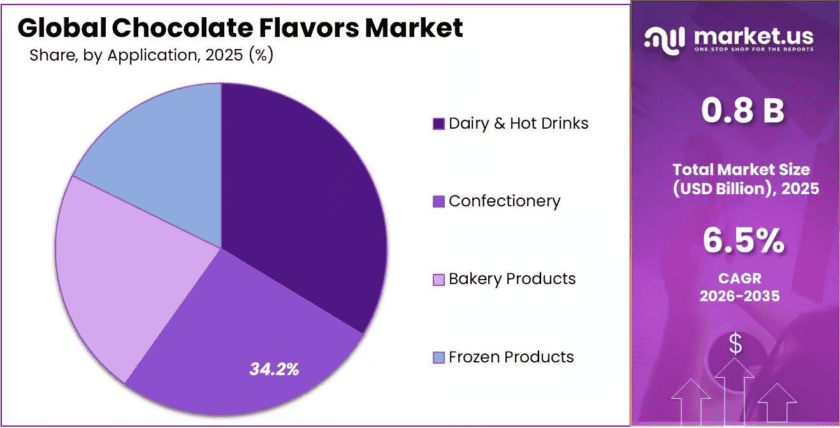
The market is expected to reach USD 1.5 billion by 2035, from USD 0.8 billion in 2025, registering a 6.5% CAGR during 2026–2035. Demand is supported by growing applications in chocolate beverages, bakery fillings, dairy desserts, confectionery, and convenient food products. Milk chocolate remains the leading flavor type, while powder flavors are widely used because of their convenience in storage, handling, and blending.
However, fluctuations in cocoa prices, changing consumer preferences, and food labeling requirements influence product development and sourcing decisions. Manufacturers are focusing on natural flavor profiles, cocoa-efficient formulations, and innovative chocolate alternatives. As food producers seek consistent flavor performance and greater product variety, chocolate flavors remain important ingredients across the global food and beverage industry.
Key Takeaways
- Market size: USD 0.8 billion in 2025.
- Forecast value: USD 1.5 billion by 2035.
- Growth rate: 6.5% CAGR during 2026–2035.
- Leading type: Milk chocolate, with 41.23% market share.
- Leading form: Powder flavors, accounting for 53.67%.
- Leading application: Dairy and hot drinks, capturing 37.89%.
- Leading end user: Food and beverage manufacturers, with 63.45% share.
- Dominant region: Europe, holding 35.67% share and generating approximately USD 0.2 billion in 2025.
Regional Analysis
Europe held a dominant position in the Chocolate Flavors Market in 2025, capturing 35.67% of the market and generating approximately USD 0.2 billion in revenue. Its leadership is supported by an established chocolate and confectionery manufacturing base, strong consumer demand for chocolate-based products, and extensive use of flavor ingredients in bakery, dairy, and beverage applications.
The Netherlands Enterprise Agency’s Centre for the Promotion of Imports from developing countries reported that Europe accounted for 48% of global chocolate consumption in 2024. This figure represents chocolate consumption overall, rather than chocolate flavor sales specifically. The region’s developed food processing industry and demand for consistent flavor profiles support its position.
Asia-Pacific represents an important growth opportunity, driven by expanding food processing, packaged snacks, bakery products, dairy desserts, and chocolate beverages. The Cocoa Association of Asia reported that regional cocoa grinding volumes increased by an average of 3% annually over the decade leading to 2024.
Market Dynamics
Driver: Cocoa-Saving Reformulation and Product Innovation
Food manufacturers are increasingly looking for ways to maintain chocolate taste while managing ingredient costs. Chocolate flavors can help improve taste consistency and support reformulation in selected bakery products, beverages, desserts, and confectionery applications.
The International Cocoa Organization (ICCO) reported that the average international cocoa indicator price reached USD 6,612 per tonne during the 2024/2025 season, approximately 39% higher than the previous year. Such cost pressure encourages manufacturers to review recipes and sourcing strategies. Flavor suppliers are developing cocoa boosters and concentrated flavor systems to help preserve sensory quality.
Trend: Natural, Customized, and Application-Specific Flavors
Food manufacturers are moving toward customized flavor systems designed for specific applications, including dairy beverages, bakery products, confectionery, and frozen desserts. The United States Food and Drug Administration (FDA) recognizes flavoring ingredients as common components in products such as candies, cake mixes, soft drinks, and ice cream.
This broad usage encourages flavor suppliers to develop formulations suited to different processing conditions. Natural flavor preferences and clean-label positioning are also influencing product development. Manufacturers are focusing on improved flavor stability, consistent aroma, and formulations that work effectively in reduced-sugar and plant-based products.
Restraint: Cocoa Price Volatility and Formulation Costs
Fluctuating cocoa prices can increase costs for chocolate manufacturers and create uncertainty in ingredient purchasing. According to the ICCO, global cocoa production reached approximately 4.733 million tonnes in the 2024/2025 season, while grindings were estimated at 4.649 million tonnes. Although production improved, cocoa prices remained sensitive to weather, supply conditions, and demand.
Flavor manufacturers must also manage formulation costs, storage stability, and compatibility with other ingredients. When food producers face lower processing margins, they may delay product launches or reduce spending on new formulations. These conditions can slow adoption of specialized chocolate flavor systems.
Opportunity: Chocolate Alternatives and Plant-Based Applications
Chocolate flavor suppliers can expand into plant-based desserts, reduced-cocoa bakery products, alternative confectionery, and new beverage formulations. In November 2025, Barry Callebaut and Planet A Foods announced a long-term commercial partnership to develop and expand chocolate alternatives made without cocoa.
This development demonstrates growing industry interest in cocoa-free solutions. Chocolate flavors can help create familiar taste profiles in products using alternative ingredients. Additional opportunities include dairy-free drinks, protein snacks, instant beverage mixes, and premium bakery fillings.
Emerging Trends
1. Cocoa-Efficient Flavor Systems
Manufacturers are developing flavor systems that preserve chocolate taste while lowering cocoa usage in suitable formulations. The ICCO reported an average cocoa indicator price of USD 6,612 per tonne in 2024/2025, encouraging greater attention to ingredient efficiency and recipe optimization.
2. Natural and Clean-Label Flavor Development
Food companies are exploring natural flavor ingredients and simplified ingredient lists to meet changing preferences. The FDA regulates flavoring ingredients under food safety requirements, encouraging manufacturers to ensure ingredient suitability, documentation, and accurate product labeling.
3. Powder Flavor Innovation
Powder flavors represented 53.67% of the market in 2025. Their convenient handling, storage, and blending make them suitable for bakery mixes, instant drinks, dessert powders, and packaged food products. Manufacturers are improving stability and flavor consistency for industrial applications.
4. Plant-Based Chocolate Applications
Plant-based dairy alternatives and cocoa-free products are creating demand for chocolate flavor systems that work with different ingredient bases. The Barry Callebaut–Planet A Foods partnership announced in November 2025 highlights commercial interest in developing chocolate alternatives without traditional cocoa.
5. Customized Flavor Solutions
Customized flavor systems are gaining importance as manufacturers develop products for different applications and consumer preferences. The U.S. Census Bureau reported approximately USD 21.97 billion in shipments from chocolate and chocolate confectionery manufacturing in 2024, highlighting the scale of the wider industry served by specialized ingredients.
Use Cases
1. Confectionery Products
Chocolate flavors are used in candies, pralines, filled chocolates, confectionery coatings, and other sweet products. They help maintain consistent taste and support flavor combinations such as chocolate-caramel, chocolate-nut, and chocolate-fruit. U.S. chocolate and confectionery manufacturing shipments reached approximately USD 21.97 billion in 2024.
2. Dairy Products and Hot Drinks
Chocolate flavors are widely used in milkshakes, flavored milk, hot chocolate, dairy desserts, and instant beverage mixes. Dairy and hot drinks represented 37.89% of the market in 2025. Flavor ingredients help manufacturers maintain taste consistency across liquid, powdered, and ready-to-drink formats.
3. Bakery and Dessert Applications
Chocolate flavors are added to cakes, biscuits, cookies, pastries, fillings, frostings, and dessert toppings. They help maintain consistent chocolate aroma and taste across large production batches. The U.S. FDA identifies cake mixes and similar processed foods among common applications for flavoring ingredients.
4. Frozen Desserts and Ice Cream
Chocolate flavors are used in ice cream, frozen yogurt, dessert bars, and frozen dairy products. They help manufacturers deliver recognizable chocolate taste and develop varieties with complementary flavors such as vanilla, caramel, and nuts. Flavor stability and compatibility are important during processing and storage.
5. Convenient and Packaged Foods
Chocolate flavors are used in instant drink powders, snack products, ready-to-mix desserts, and convenience foods. Powder flavors represented 53.67% of the market in 2025, supporting their role in dry formulations. Their ease of blending and handling makes them suitable for large-scale production.
Frequently Asked Questions
What is the Chocolate Flavors Market?
The Chocolate Flavors Market includes ingredients used to create or enhance chocolate taste and aroma in food and beverages. These flavors are supplied in powder, liquid, and paste forms for applications such as confectionery, bakery, dairy, beverages, and frozen desserts.
What is the projected size of the Chocolate Flavors Market?
The market is estimated at USD 0.8 billion in 2025 and is projected to reach USD 1.5 billion by 2035, growing at a 6.5% CAGR during 2026–2035, according to the referenced Market.us report.
Which chocolate flavor type leads the market?
Milk chocolate was the leading type in 2025, accounting for 41.23% of the market. Its creamy, sweet, and familiar cocoa profile makes it suitable for confectionery, bakery products, dairy desserts, ice cream, and flavored beverages.
Which form dominates the Chocolate Flavors Market?
Powder flavors led the market in 2025 with a 53.67% share. They are convenient to store, transport, and blend into dry formulations, including bakery mixes, instant beverages, confectionery, dessert powders, and packaged food products.
Which application holds the largest market share?
Dairy and hot drinks represented 37.89% of the market in 2025. Chocolate flavors are used in flavored milk, milkshakes, hot chocolate, instant beverage mixes, and dairy desserts, helping manufacturers achieve consistent taste and aroma.
Which region dominates the Chocolate Flavors Market?
Europe led the market in 2025 with a 35.67% share and approximately USD 0.2 billion in revenue. Its established confectionery industry, strong chocolate consumption, and extensive food processing activity support demand for flavor ingredients.
Conclusion
The Chocolate Flavors Market is expected to expand as food manufacturers increase their use of specialized flavor ingredients across confectionery, bakery, dairy, hot drinks, frozen desserts, and packaged foods. The market is projected to grow from USD 0.8 billion in 2025 to USD 1.5 billion by 2035, at a 6.5% CAGR.
Milk chocolate, powder flavors, dairy and hot drinks, and food and beverage manufacturers remain key segments. Europe leads the regional market, while Asia-Pacific offers opportunities through expanding food processing and cocoa-related activity. Cocoa price volatility and formulation challenges remain important restraints.
Discuss your needs with our analyst
Please share your requirements with more details so our analyst can check if they can solve your problem(s)