Overview
New York, NY – Oct 13, 2026 –The global Oilseed Processing Market plays an important role in the production of edible oils, protein meals, animal feed ingredients, and industrial raw materials. Oilseeds such as soybeans, rapeseed, sunflower seeds, and cottonseed are processed through cleaning, drying, cracking, dehulling, conditioning, pressing, and solvent extraction. The resulting oils are used in food manufacturing, while protein-rich meals support livestock and poultry production. Some processed oils also serve as feedstocks for biodiesel and other industrial applications.
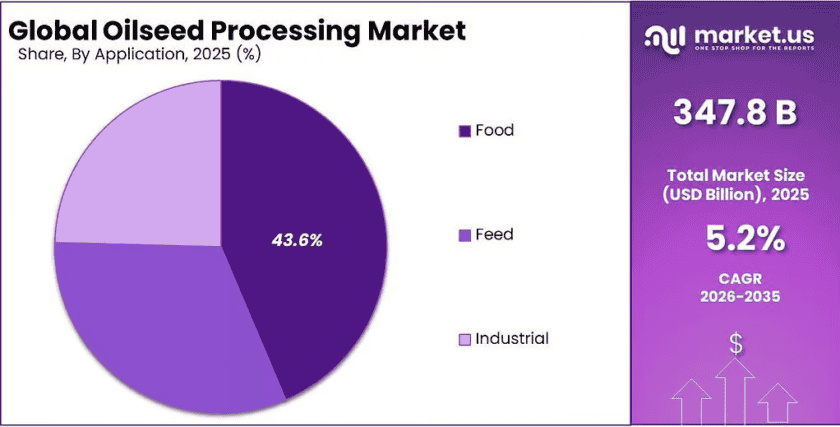
According to the supplied Market.us report, the Oilseed Processing Market recorded a value of USD 209.2 billion in 2025, with Asia-Pacific accounting for 47.89% of the market. Soybean held a 40.20% share by oilseed type, chemical processing accounted for 62.45% by processing method, and food applications represented 43.67%. These figures indicate the importance of soybean supply, extraction technologies, and edible oil demand within the reported market structure.
The industry’s development is closely linked to agricultural output, international commodity trade, food demand, and demand for protein meals. The United States Department of Agriculture (USDA) publishes oilseed production, trade, and supply-and-use information that helps processors and buyers assess raw-material availability. The Food and Agriculture Organization of the United Nations (FAO) also tracks oil crops and vegetable oil markets, providing important context for industry planning.
Market values and segment shares in this release are taken from the user-provided Market.us report. Government sources are used for industry context, not to independently validate the report’s market estimates.
Key Takeaways
- Market value: The supplied report places the Oilseed Processing Market at USD 209.2 billion in 2025.
- Leading region: Asia-Pacific accounted for 47.89% of the reported market.
- Leading oilseed: Soybean held a 40.20% share by oilseed type.
- Leading processing method: Chemical processing represented 62.45% of the market.
- Leading application: Food applications accounted for 43.67% of the market.
Market Dynamics
1. Driver: Rising Demand for Vegetable Oils and Protein Meals
Growing demand for edible oils and protein-rich animal feed supports oilseed processing because crushing produces both oil and meal from the same crop. The United States Department of Agriculture (USDA) reported that US soybean crushing was forecast to rise nearly 3% to a record 2.49 billion bushels in marketing year 2025/26.
The agency linked this growth to demand for soybean meal and soybean oil, including oil used in biomass-based diesel. This creates incentives to expand crushing capacity, improve extraction efficiency, and strengthen storage and transport infrastructure.
2. Trend: Greater Use of Soybean Oil for Biofuels
Oilseed processors are responding to demand from renewable fuel producers as vegetable oils become important industrial feedstocks. The US Environmental Protection Agency (EPA) set biomass-based diesel requirements of 8.86 billion renewable identification number equivalents for 2026 and 8.95 billion for 2027, before adding applicable reallocation volumes.
These policy targets support demand for feedstocks used in renewable fuels, although they do not guarantee a specific level of soybean oil consumption. Processors are therefore assessing how to balance food oil markets, animal feed meal production, and industrial demand while managing commodity price changes.
3. Restraint: Raw Material and Energy Cost Fluctuations
Oilseed processing margins can be affected by changes in crop prices, harvest yields, energy costs, freight charges, and currency movements. A poor harvest or disruption to international trade can raise the cost of soybeans, rapeseed, or sunflower seeds, while higher electricity and fuel costs increase plant operating expenses.
USDA market outlooks regularly revise production, crush, and price estimates as supply and demand conditions change. Processors may reduce this risk through diversified sourcing, forward purchasing, efficient plant operations, and flexible use of raw materials. However, these measures cannot fully remove exposure to weather, commodity markets, or transport disruptions.
4. Opportunity: Higher-Value Uses for Oilseed By-products
Oilseed processing creates opportunities beyond the sale of crude vegetable oil. Protein-rich meal can supply livestock and poultry feed, while lecithin and other extracted components serve selected food and industrial applications. Soybean oil can also be used as a feedstock for biomass-based diesel, subject to market conditions and applicable policy.
USDA has reported that rising domestic crushing in the United States has increased the availability of soybean meal for domestic use and export markets. Processors can improve revenue potential by recovering more usable material, reducing waste, and matching product quality to buyer requirements. Investment decisions still depend on demand, costs, and regulatory conditions.
Emerging Trends
1. Expansion of Soybean Crushing Capacity
USDA forecast US soybean crushing at a record 2.49 billion bushels in 2025/26, nearly 3% above the previous marketing year. This reflects growing demand for soybean meal and oil, encouraging investment in additional processing capacity.
2. Growing Biofuel Feedstock Demand
Renewable fuels are creating another market for vegetable oils. The US EPA set biomass-based diesel requirements of 8.86 billion RIN-equivalents for 2026 and 8.95 billion for 2027, before applicable reallocation. This supports demand for eligible oil-based feedstocks.
3. Improved Oil Recovery
Processors are focusing on better seed preparation, extraction control, and refining to recover more usable oil from available crops. Chemical extraction and mechanical pressing serve different operating needs. The choice depends on seed type, plant scale, energy use, and product specifications.
4. Greater Value from Protein Meal
Oilseed meal is becoming increasingly important because crushing supplies both vegetable oil and protein-rich feed ingredients. USDA reports that domestic meal demand is a major driver of US soybean meal production, while exports have also reached record levels since marketing year 2023/24.
5. More Flexible Crop Sourcing
Processors are monitoring soybean, rapeseed, and sunflower supplies to manage price and availability risks. USDA’s market outlook tracks changes in production and crushing for different oilseeds, including revised global rapeseed and sunflowerseed forecasts for 2026/27. This information helps businesses plan procurement and plant use.
Use Cases
1. Edible Oil Production
Oilseed processors extract and refine vegetable oils for cooking, packaged foods, sauces, and commercial food preparation. Soybean, rapeseed, and sunflower seeds are important feedstocks. Processing plants use cleaning, pressing or extraction, and refining steps to meet buyer specifications for quality and consistency.
2. Animal Feed Ingredients
After oil extraction, the remaining meal can be processed into protein-rich ingredients for livestock and poultry feed. USDA identifies domestic feed demand as a major driver of soybean meal production in the United States. The meal also supports international feed markets and export supply chains.
3. Renewable Fuel Production
Vegetable oils can be supplied to producers of biomass-based diesel and other renewable fuels. EPA’s final standards set biomass-based diesel requirements at 8.86 billion RIN-equivalents for 2026 and 8.95 billion for 2027, creating a policy framework for eligible renewable fuel supply.
4. Food Ingredient Manufacturing
Oilseed processing can supply ingredients such as lecithin and selected protein products for use in food manufacturing. These materials support emulsification, texture, and protein content in suitable products. Processing requirements depend on the crop, intended use, purity standards, and specifications established by food manufacturers.
5. Industrial Oil Applications
Processed vegetable oils can be used in selected industrial products, including lubricants, oleochemicals, and personal care ingredients. Such uses allow processors to serve markets beyond food and feed. The commercial value depends on oil properties, product consistency, production costs, and competition from other feedstocks.
Regional Analysis
Asia-Pacific: Leading Region
According to the supplied Market.us report, Asia-Pacific held a 47.89% share of the Oilseed Processing Market in 2025, with reported revenue of USD 209.2 billion. The region’s position reflects its large edible oil market, extensive food manufacturing activity, and demand for oilseed meals used in animal feed.
Soybean, rapeseed, and other oil crops contribute to regional processing supply chains. Demand from households, food producers, and feed manufacturers supports crushing and refining activity. The region’s future performance will depend on raw-material availability, import requirements, processing investment, and commodity price movements.
North America: Crushing and Biofuel Demand
North America benefits from established soybean production, large-scale crushing operations, and demand for both soybean meal and oil. USDA forecast US soybean crush at a record 2.49 billion bushels in 2025/26, nearly 3% higher than the previous marketing year.
The agency links expansion to demand for meal and soybean oil, including its use in biomass-based diesel. These conditions encourage investments in crushing facilities, logistics, and storage. Market conditions will continue to depend on crop yields, export demand, fuel policies, and operating costs.
Europe: Diverse Oilseed Processing Needs
Europe’s processing industry serves edible oil, animal feed, and industrial markets, with rapeseed and sunflower among the relevant crops. Processors must manage differences in crop supply, food quality requirements, and environmental expectations. USDA’s global outlook tracks changes in rapeseed and sunflowerseed production and crushing, providing useful context for supply planning.
European market conditions are influenced by crop yields, import availability, energy costs, and competition among food, feed, and industrial buyers. Investment in efficient extraction, refining, and by-product use can help processors improve resource utilisation and respond to changing customer requirements.
Latin America: Agricultural Supply and Processing
Latin America is an important oilseed production and processing region, with soybeans supporting edible oil, feed meal, and export supply chains. Processing activity depends on harvest volumes, transport infrastructure, port access, and global commodity prices.
Efficient crushing allows producers to supply both oil and meal to domestic and international customers. Investment opportunities include higher processing efficiency, storage improvements, and better recovery of useful by-products. However, changes in weather, freight costs, and trade flows can influence margins and plant utilisation.
Middle East and Africa: Supply and Import Requirements
Oilseed processing in the Middle East and Africa is shaped by demand for cooking oils, food ingredients, and animal feed. Some markets depend heavily on imported oilseeds or vegetable oils, making procurement and transport costs important factors. Local crushing and refining facilities can help supply domestic buyers and create additional value from imported or locally grown crops. Growth opportunities depend on reliable raw-material access, infrastructure, financing, technical expertise, and stable demand from food and feed manufacturers.
Important numerical clarification: The supplied report lists USD 347.8 billion as the global Oilseed Processing Market value in 2025 and USD 575.0 billion as its 2035 forecast, with a stated 5.2% CAGR. The USD 209.2 billion value refers to Asia-Pacific’s 2025 revenue, not the global market total. The global values should be used in the final press release.
Frequently Asked Questions
1. What is oilseed processing?
Oilseed processing converts crops such as soybeans, rapeseed, and sunflower seeds into vegetable oils and meal. Common stages include cleaning, seed preparation, pressing or extraction, and refining, depending on the crop and intended end product.
2. What is the global Oilseed Processing Market value?
According to the supplied Market.us report, the global market was valued at USD 347.8 billion in 2025 and is projected to reach USD 575.0 billion by 2035, with a stated CAGR of 5.2%.
3. Which region led the Oilseed Processing Market in 2025?
Asia-Pacific led the market, accounting for a reported 47.89% share and USD 209.2 billion in revenue in 2025. Its position reflects demand for edible oils, food ingredients, and protein-rich animal feed products.
4. Which oilseed type held the leading market share?
Soybean held the leading position by oilseed type, with a reported 40.20% share in 2025. Soybeans provide both soybean oil and protein-rich meal, allowing processors to serve food, feed, and selected industrial markets.
5. Which processing method held the largest share?
Chemical processing accounted for a reported 62.45% share in 2025. Solvent extraction can recover oil remaining in prepared seed material after pressing, making it useful for large-scale operations where efficient oil recovery is a priority.
6. Which application led the Oilseed Processing Market?
Food applications held a reported 43.67% share in 2025. Processed oilseeds supply vegetable oils and ingredients used in cooking, packaged foods, sauces, bakery products, and other food manufacturing applications.
Conclusion
The Oilseed Processing Market supports food manufacturing, animal nutrition, and industrial supply chains by converting oil crops into vegetable oils and protein-rich meal. According to the supplied Market.us report, the global market is estimated at USD 347.8 billion in 2025 and projected to reach USD 575.0 billion by 2035, at a stated CAGR of 5.2%.
Asia-Pacific held a reported 47.89% share, while soybean, chemical processing, and food applications led their respective segments. Future growth will depend on crop availability, demand for edible oils and feed ingredients, processing efficiency, and renewable fuel markets. Official USDA and EPA data help explain these industry drivers.
Discuss your needs with our analyst
Please share your requirements with more details so our analyst can check if they can solve your problem(s)