Market Overview
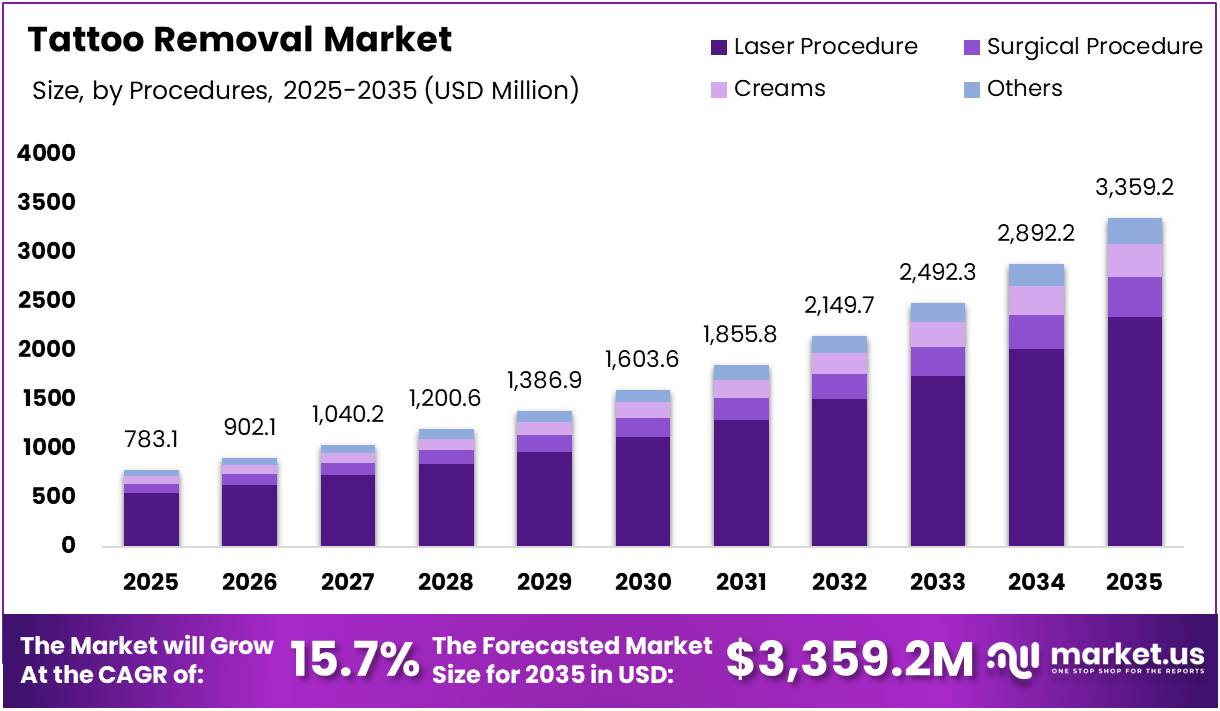
The global tattoo removal market is valued at USD 783.1 million in 2025. Industry projections indicate the market will reach USD 3,359.2 million by 2035. This expansion represents a compound annual growth rate (CAGR) of 15.7% from 2026 through 2035. Tattoo removal procedures are becoming increasingly mainstream across multiple demographics worldwide.
Tattoo removal refers to professional procedures that eliminate or fade unwanted tattoos from human skin. These services include laser-based treatments, surgical excision, and topical creams. Laser technology currently dominates the field due to its precision and minimal damage to surrounding tissue. Patients and dermatologists prefer laser methods for their superior safety profile and predictable outcomes.
Data-Driven Insights for Smarter Business Decisions: Explore the Full Report
Main industries driving adoption include dermatology clinics, medspas, and specialized tattoo removal centers. Corporate employers increasingly encourage removal for visible tattoos in professional settings. Additionally, individuals undergoing lifestyle changes or career transitions actively seek removal services. The military and healthcare sectors also contribute to steady demand across many regions.
Advanced laser technologies are rapidly transforming treatment effectiveness and patient experience. Picosecond and Q-switched laser systems now deliver higher energy pulses in shorter durations. These innovations improve pigment fragmentation while reducing thermal damage to healthy skin. Consequently, manufacturers continue investing in next-generation devices that treat diverse ink colors and skin tones.
Regulatory frameworks across North America and Europe are enabling market growth through stricter safety standards. Government health agencies now provide clearer guidelines for clinic accreditation and laser operation. These policies improve patient safety and build consumer confidence in professional removal services. Therefore, structured oversight encourages more individuals to pursue treatment without fear of complications.
Related statistics reinforce strong market demand for tattoo removal services. According to PubMed (NCBI), 58% of tattooed individuals regret their tattoo, and 42.5% attempt removal. Cultural reasons drive 74% of removal cases, while side effects like itching (32%) and pain (22.7%) motivate others. These numbers highlight substantial untapped patient pools across global markets.
Key Takeaways
- Global tattoo removal market valued at USD 783.1 million in 2025, projected to reach USD 3,359.2 million by 2035
- Market growing at a robust CAGR of 15.7% during forecast period 2026 to 2035
- Laser procedure segment dominates with 69.1% market share due to high clinical efficacy
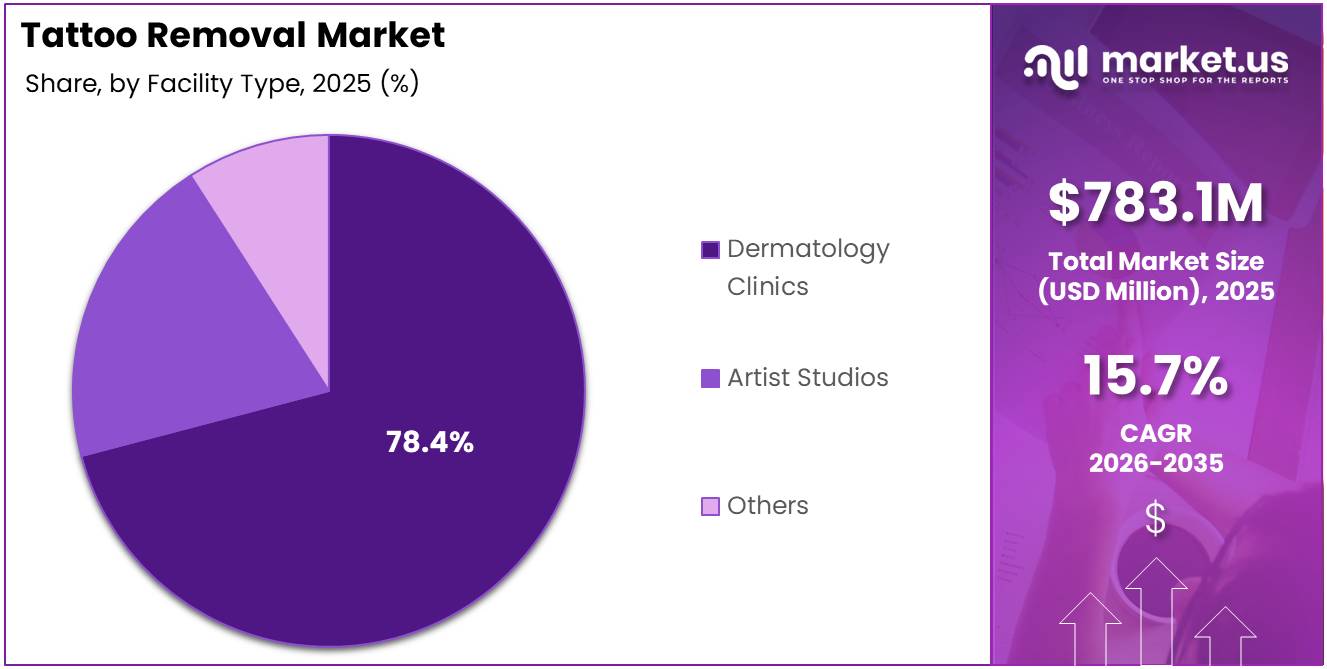
- Dermatology clinics lead facility type segment with 78.4% share driven by clinical credibility
- Women account for majority end-user share at 67.9%, reflecting higher engagement with aesthetic procedures
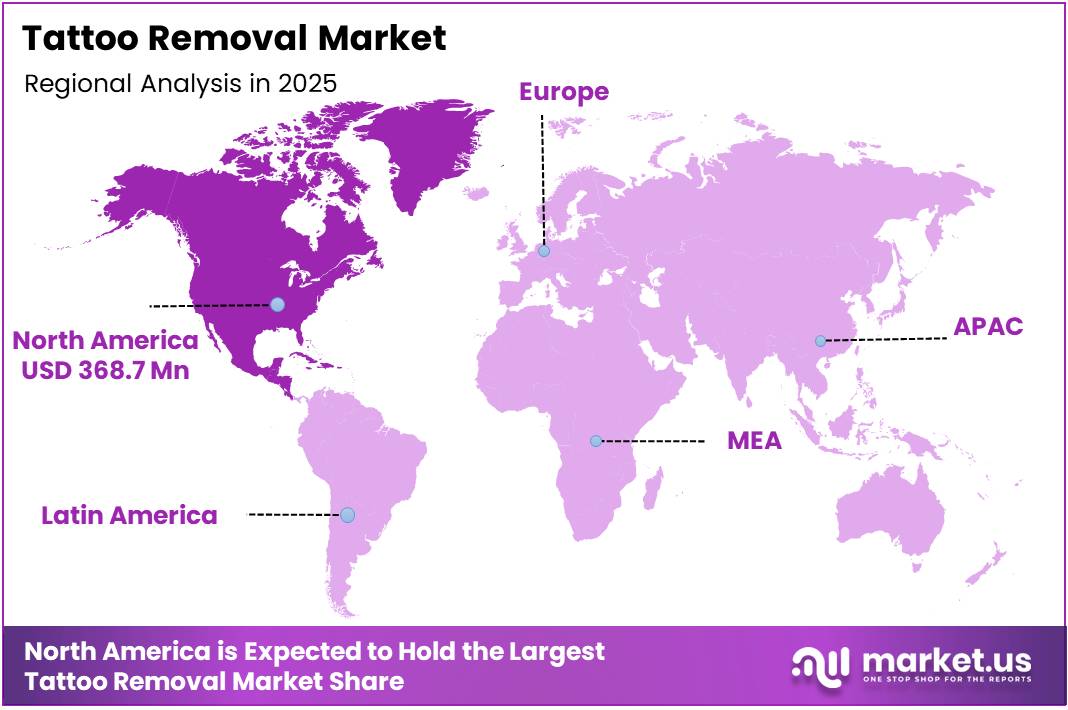
- North America dominates regional market with 47.10% share, valued at USD 368.7 million in 2025
Market Segmentation Overview
Laser procedures hold a dominant market position in the tattoo removal market with 69.1% share in 2025. This dominance reflects high clinical efficacy and strong patient preference for non-invasive treatments. Moreover, continuous advancements in Q-switched and picosecond laser technologies have significantly improved treatment outcomes. Consequently, dermatologists and patients consistently choose laser methods over alternative approaches.
Surgical procedures represent a smaller but relevant segment typically used when lasers prove ineffective. Complete and immediate removal requirements drive demand for surgical excision in specific clinical cases. However, higher recovery times and scarring risks limit this segment’s broader adoption. Surgical removal is generally reserved for unique scenarios where other methods cannot deliver satisfactory results.
Topical creams occupy a niche position offering non-invasive and cost-effective options for consumers. Nevertheless, their effectiveness remains limited compared to laser or surgical approaches. These creams are more commonly used for early-stage fading or in regions lacking advanced clinical facilities. Therefore, creams serve as an entry-level solution rather than a primary removal method for most patients.
Dermatology clinics dominate the facility type segment with a commanding 78.4% market share in 2025. These clinics employ certified professionals and operate high-grade laser systems that ensure patient safety. Growing awareness of safe removal practices continues to increase footfall at dermatology facilities worldwide. Consequently, patients trust medical clinics over alternative providers for their tattoo removal needs.
Artist studios are increasingly offering removal or fading services for clients seeking partial removal before re-tattooing. While these studios lack medical-grade equipment, many partner with licensed practitioners to provide safe services. Artist studios gain relevance as convenient access points, especially for urban and semi-urban clients. Moreover, this trend creates collaboration opportunities between tattoo artists and medical professionals.
Women hold a dominant end-user position with 67.9% of the tattoo removal market in 2025. Women demonstrate higher engagement with aesthetic correction procedures for professional and social reasons. Targeted marketing campaigns and social media influence have significantly shaped female consumer behavior in this segment. Therefore, female patients drive the majority of appointment volumes across dermatology clinics globally.
Drivers
Rising demand for aesthetic procedures among young adults strongly drives the tattoo removal market forward. Individuals aged 18 to 39 make up two-thirds of those seeking removal, according to Practical Dermatology. These consumers seek tattoo removal to align with changing professional goals or personal preferences. Consequently, clinics experience consistent increases in appointment volumes and repeat treatments across major markets.
Advanced laser technologies are rapidly replacing older, less efficient methods and expanding treatment capabilities. Picosecond lasers improve clearance efficiency by approximately 30% to 50% compared to traditional nanosecond lasers, per NCBI (PMC). Patients report higher satisfaction with newer technologies, encouraging more individuals to pursue professional removal. Moreover, shorter treatment sessions and reduced discomfort make procedures accessible to broader patient demographics.
Use Cases
Professional career advancement represents a primary use case for tattoo removal in corporate environments. Many employers in banking, healthcare, and law enforcement require employees to remove visible tattoos. Individuals facing job transitions or promotions actively seek removal services to improve their employment prospects. Consequently, career-driven removal requests account for a substantial portion of clinic revenue in urban centers.
Tattoo lightening before re-tattooing is an emerging use case reshaping service delivery models. Clients often request partial fading rather than complete removal to prepare skin for new designs. This trend expands the addressable market beyond those seeking full removal services. Additionally, collaboration between tattoo artists and removal clinics improves client experience and increases visit frequency per patient.
Major Challenges
A significant shortage of skilled professionals and certified laser technicians limits market scalability worldwide. Not all clinics can access adequately trained staff, which directly affects treatment quality and patient safety. Consequently, some regions face capacity constraints that prevent meeting growing consumer demand effectively. This workforce gap represents a critical barrier to expanding service availability in underserved areas.
Limited awareness of safe tattoo removal techniques in emerging regions continues to restrain market penetration. Many potential patients in these areas remain unaware of available clinical options or hold misconceptions about safety. The perception of high treatment costs also discourages price-sensitive consumers from pursuing professional removal. Multiple sessions often required for satisfactory results make total expenditure significant for budget-conscious individuals.
Business Opportunities
The development of faster, pain-free, and multi-pigment removal lasers presents substantial business opportunities for manufacturers. New-generation devices can treat a wider range of ink colors in fewer sessions than existing technologies. Moreover, reduced discomfort and shorter recovery periods make treatments accessible to more patient demographics. Consequently, companies investing in next-generation laser platforms stand to capture significant market share.
Integration of artificial intelligence and digital tools for personalized skin assessment creates new revenue streams. AI-powered platforms can analyze skin type, ink depth, and pigment composition to recommend customized treatment protocols. These innovations improve clinical outcomes and increase patient confidence in professional removal services. Therefore, technology providers offering AI-driven assessment tools will find growing demand from clinics worldwide.
Regional Analysis
North America leads the global tattoo removal market with 47.10% share, valued at USD 368.7 million in 2025. The region benefits from high consumer spending on aesthetic procedures and dense networks of certified dermatology clinics. Strong awareness campaigns and favorable reimbursement environments continue sustaining demand across the United States and Canada. Moreover, rapid adoption of advanced laser technologies keeps North America at the forefront of market innovation.
Asia Pacific emerges as a high-growth region fueled by changing social attitudes and rising disposable incomes. Markets such as China, Japan, South Korea, and India witness increasing clinic establishments and growing patient volumes. The influence of Western beauty trends and growing urban youth populations accelerate market expansion across the region. Furthermore, improving healthcare infrastructure supports the spread of certified tattoo removal services.
Recent Developments
- February 2026 — Fotona launched its “Glow Up with Fotona” campaign aimed at redefining multi-dimensional skin rejuvenation for aesthetic clinics, highlighting laser platforms for tattoo removal.
- December 2025 — Ray Studios, a Paris-based tattoo removal specialist, completed a fundraising round of €10 million to support clinic expansion and technology upgrades across European markets.
- April 2025 — Fearless Tattoo Removal announced the Second Chances Program in collaboration with J Mayhew Marketing, providing accessible removal services for individuals seeking fresh starts.
Conclusion
The global tattoo removal market is on a strong growth trajectory driven by advanced laser technologies and rising aesthetic awareness. Rising demand among young adults aged 18 to 39 and increasing regret rates among tattooed individuals fuel market expansion. Additionally, technological innovations such as picosecond lasers continue improving treatment outcomes and patient satisfaction.
Laser procedures dominate the market with 69.1% share, while dermatology clinics lead facility types at 78.4%. Women represent the largest end-user segment at 67.9%, and North America holds regional leadership with 47.10% share. Moreover, only 38% of patients achieve complete removal following laser treatment, per NCBI data, indicating room for technological improvement.
Companies must invest in next-generation laser platforms and AI-driven assessment tools to capture emerging opportunities. Expanding into high-growth regions such as Asia Pacific will be essential for long-term market leadership. With the market projected to reach USD 3,359.2 million by 2035, stakeholders who act decisively will secure competitive advantages in this rapidly evolving industry.
Looking for data tailored to your specific market, region, or business need? Request a custom report or consultation — write to us at sales@market.us
Discuss your needs with our analyst
Please share your requirements with more details so our analyst can check if they can solve your problem(s)