Market Overview
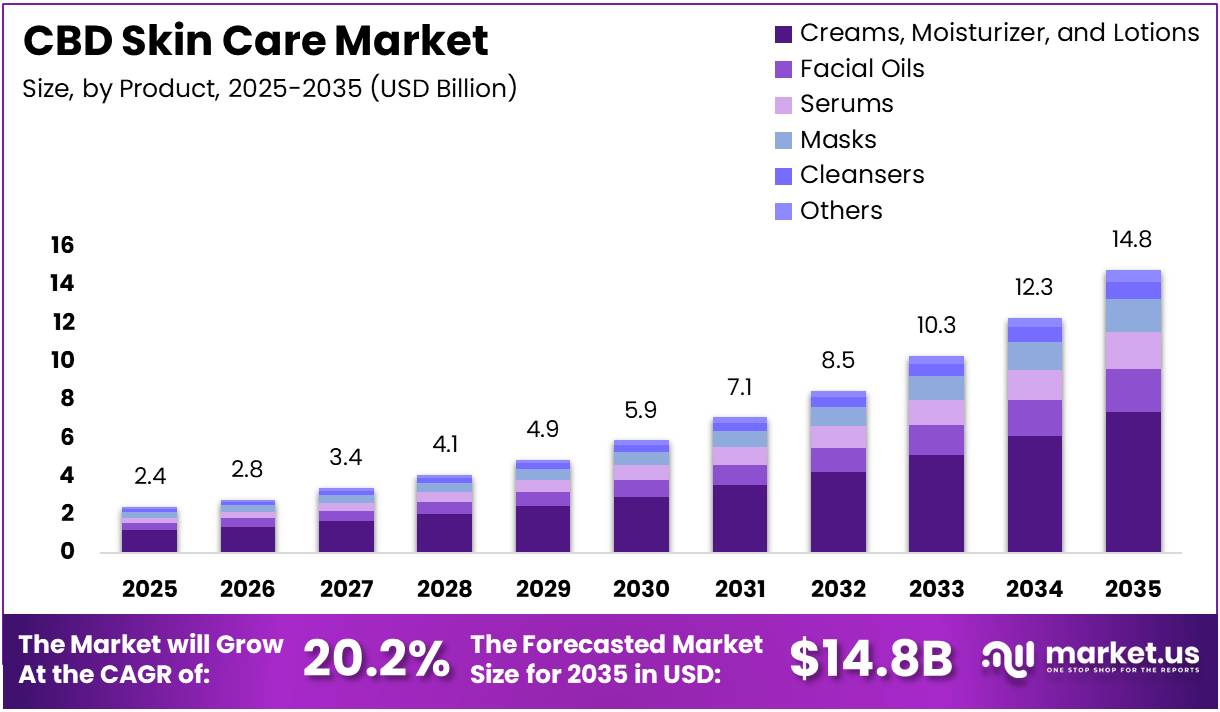
The Global CBD Skin Care Market was valued at USD 2.4 Billion in 2025 and is projected to reach USD 14.8 Billion by 2035. The market is expected to grow at a CAGR of 20.2% during 2026 to 2035. This rapid expansion reflects rising demand for natural and therapeutic skincare products.
CBD skincare products contain cannabidiol, a non-psychoactive compound derived from cannabis plants. These formulations include creams, serums, oils, masks, and cleansers. Consumers use them to manage inflammation, acne, dryness, and sensitivity, making them suitable for both cosmetic and dermatological applications.
Data-Driven Insights for Smarter Business Decisions: Explore the Full Report
Beauty, wellness, and dermatology industries drive adoption of CBD-based skincare solutions. Retailers, e-commerce platforms, and professional skincare clinics actively promote these products. Consequently, brands cater to both everyday consumers and premium buyers seeking plant-based and science-backed skincare benefits.
Manufacturers leverage advanced formulations and combine CBD with active ingredients like hyaluronic acid and retinol. Digital platforms use AI tools to recommend suitable skincare products. Therefore, technology enhances personalization, improves customer experience, and boosts product adoption across global markets.
Governments across North America, Europe, and Asia Pacific are updating regulations to allow hemp-derived CBD in cosmetics. These frameworks ensure product safety and encourage innovation. Consequently, regulatory progress supports new product launches and expands market access across multiple regions.
Consumer data strongly supports market growth trends. Forbes Health reports that 60% of U.S. adults have tried CBD products, showing high acceptance. Additionally, MDPI Cosmetics records satisfaction rates of 75–86%, indicating strong effectiveness and reinforcing consumer confidence in CBD skincare solutions.
Key Takeaways
- The market will grow from USD 2.4 Billion in 2025 to USD 14.8 Billion by 2035, reflecting strong demand.
- The industry will expand at a CAGR of 20.2% during 2026–2035 due to rising consumer awareness.
- Creams, moisturizers, and lotions lead with 36.8% share due to daily skincare usage.
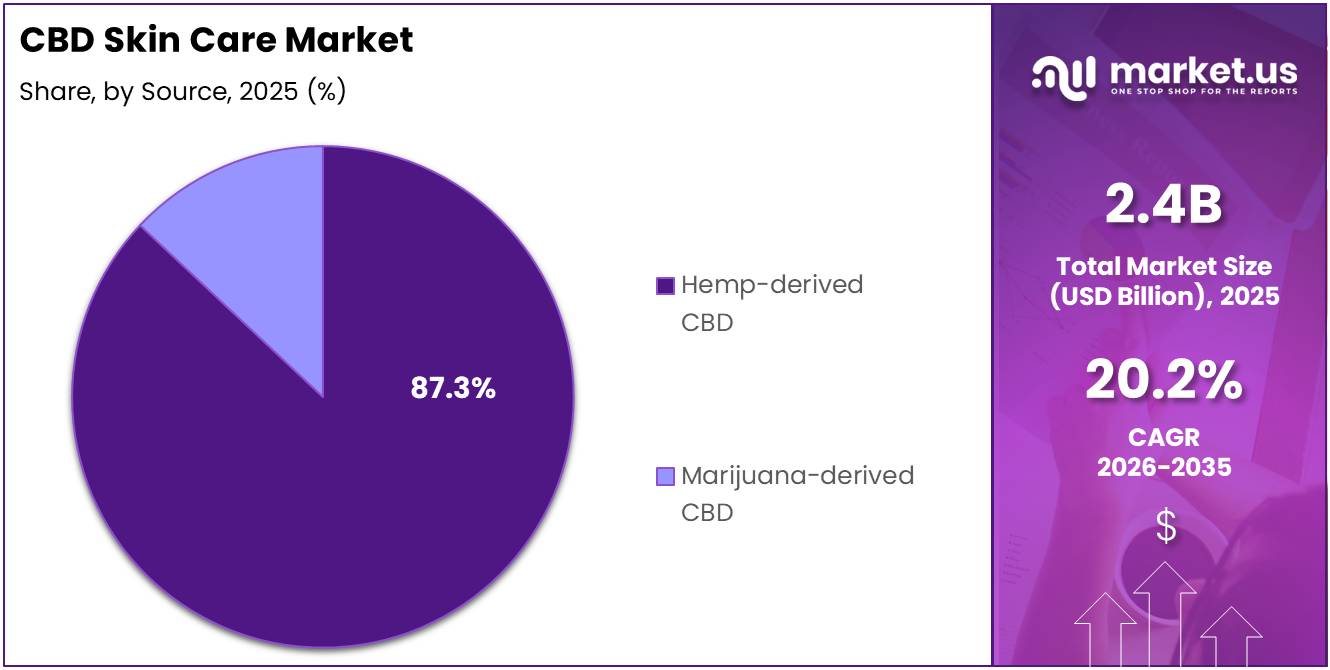
- Hemp-derived CBD dominates with 87.3% share because of favorable regulations.
- Online channels lead with 39.5% share, driven by convenience and direct access.
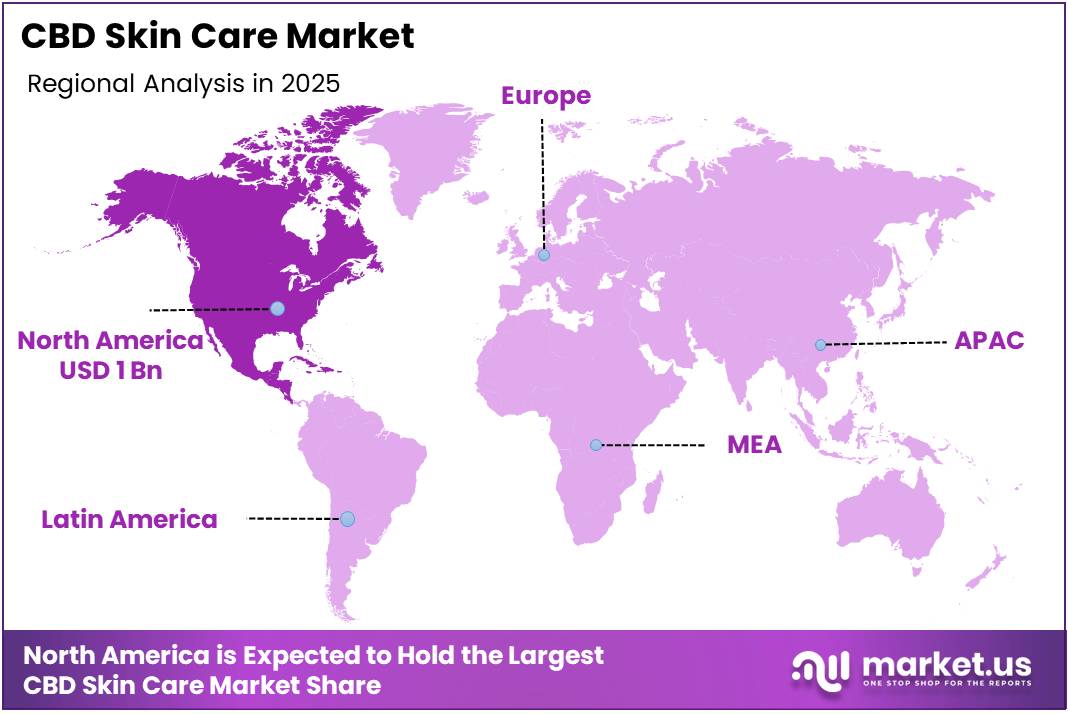
- North America holds 45.80% share, valued at USD 1 Billion, supported by strong adoption.
- Up to 86% satisfaction rates highlight effectiveness and boost consumer confidence.
Market Segmentation Overview
Creams, moisturizers, and lotions dominate the product segment with a 36.8% share. These products fit easily into daily skincare routines and offer hydration benefits. Consequently, widespread usage across age groups strengthens this segment’s leadership and supports consistent market demand.
Facial oils, serums, masks, and cleansers are expanding rapidly due to targeted skincare benefits. Serums attract younger consumers seeking fast absorption, while masks offer intensive treatments. Therefore, diversified product formats allow brands to address multiple skin concerns and increase consumer engagement.
Hemp-derived CBD leads the source segment with a 87.3% share due to legal accessibility and low THC content. This dominance reflects favorable regulatory frameworks across global markets. Consequently, manufacturers prefer hemp-based formulations for large-scale commercial production.
Online distribution channels dominate with a 39.5% share driven by convenience and product variety. Consumers rely on digital platforms for reviews and comparisons. Therefore, e-commerce enables direct brand communication and significantly improves global market reach.
Drivers
Consumers increasingly prefer natural and plant-based skincare ingredients over synthetic alternatives. CBD offers anti-inflammatory and soothing properties that appeal to health-conscious buyers. Consequently, this shift drives strong demand for CBD-based skincare products across global markets.
Consumers seek multi-functional skincare products that address multiple concerns in one formulation. CBD supports hydration, protection, and treatment benefits simultaneously. Therefore, its versatility encourages product innovation and accelerates market growth.
Use Cases
Dermatology applications use CBD skincare products to manage acne, inflammation, and sensitive skin conditions. Patients benefit from soothing and calming effects. Consequently, dermatologists recommend CBD formulations as complementary skincare solutions.
Daily skincare routines incorporate CBD creams and serums for hydration and anti-aging benefits. Consumers experience improved skin texture and reduced irritation. Therefore, consistent usage increases product demand across both mass-market and premium segments.
Major Challenges
Regulatory uncertainty creates challenges for global market expansion. Different countries enforce varying rules on CBD usage and labeling. Consequently, companies face compliance complexities that increase costs and delay product launches.
Consumer concerns about product quality and mislabeling affect trust in CBD skincare products. Inconsistent CBD concentrations reduce confidence among buyers. Therefore, lack of standardized testing limits broader adoption across cautious consumer groups.
Business Opportunities
Premium skincare segments offer strong growth opportunities for CBD-based products. Consumers increasingly invest in high-quality, dermatologist-recommended formulations. Consequently, brands focusing on clinical validation can capture higher-value market segments.
Innovation in product formats such as serums and masks expands market potential. Advanced delivery systems improve product effectiveness. Therefore, continuous innovation supports differentiation and attracts new consumers.
Regional Analysis
North America leads the market with a 45.80% share, valued at USD 1 Billion. Strong consumer awareness and established regulations support growth. Consequently, high demand for natural skincare products reinforces regional dominance.
Asia Pacific is an emerging market driven by rising disposable income and growing beauty awareness. Expanding e-commerce improves accessibility across countries. Therefore, increasing regulatory clarity supports future growth opportunities in this region.
Recent Developments
- March 2026 — NourishUs Naturals launched CBD Ready Collection, enabling stable CBD skincare formulations.
- February 2025 — Prima was acquired by a hemp-focused brand group, strengthening premium skincare portfolios.
- September 2025 — Karo Healthcare acquired a skincare company, expanding its European dermatology presence.
Conclusion
The CBD skin care market is experiencing rapid growth driven by rising demand for natural and therapeutic skincare solutions. Consumers increasingly trust plant-based ingredients for skin health. Consequently, brands continue expanding their product portfolios to meet evolving consumer expectations.
Cream-based products dominate due to daily usage, while North America leads regional demand. Hemp-derived CBD remains the preferred source due to regulatory advantages. Therefore, companies focus on these segments to strengthen their market position.
Companies must invest in innovation, compliance, and transparency to succeed in this competitive market. Expanding digital presence and premium offerings will drive growth. Consequently, the market is expected to reach USD 14.8 Billion by 2035, creating strong opportunities.
Looking for data tailored to your specific market, region, or business need? Request a custom report or consultation — write to us at sales@market.us
Discuss your needs with our analyst
Please share your requirements with more details so our analyst can check if they can solve your problem(s)