Overview
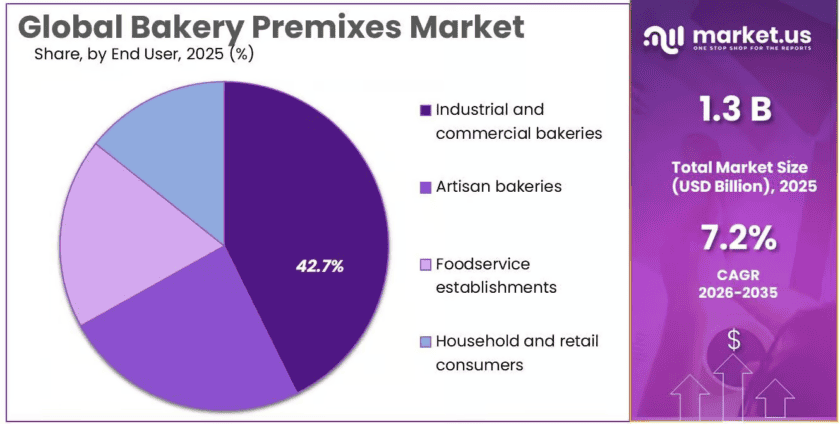
New York, NY – Oct 15, 2026 – The global Bakery Premixes Market is gaining attention as commercial bakeries, food manufacturers, hotels, and foodservice businesses seek convenient ways to produce consistent baked goods. Bakery premixes combine measured ingredients such as flour, sugar, leavening agents, emulsifiers, and other functional ingredients, helping reduce preparation time and simplify production. According to the supplied Market.us report, the market was valued at USD 1.3 billion in 2025 and is projected to reach USD 2.6 billion by 2035, registering a compound annual growth rate (CAGR) of 7.2%.
Demand is supported by the growth of industrial baking, the expansion of foodservice operations, and the need for reliable product quality across multiple outlets. Complete mixes, bread and roll premixes, and conventional formulations remain important product categories. At the same time, interest in gluten-free products, organic ingredients, and simplified ingredient labels is encouraging manufacturers to develop new formulations. The United States Department of Agriculture (USDA) estimated U.S. wheat production at 1.98 billion bushels in 2025, highlighting the importance of wheat supply to flour-based food production.
Key Takeaways
- Market value in 2025: USD 1.3 billion.
- Projected market value by 2035: USD 2.6 billion.
- Forecast CAGR: 7.2% from 2025 to 2035.
- Leading type: Complete mix, with a reported 55.00% share.
- Leading product: Bread and roll premixes, with a reported 46.00% share.
- Leading formulation: Conventional, with a reported 70.00% share.
- Leading end use: Industrial and commercial bakeries, with a reported 42.00% share.
- Leading distribution channel: Distributors and wholesalers, with a reported 35.00% share.
- Leading region: Europe, with a reported 31.00% share in 2025.
Regional Analysis
Europe
Europe held the leading regional position in 2025, accounting for a reported 31.00% share of the Bakery Premixes Market. Its established bakery industry, wide availability of baked products, and demand from industrial manufacturers and artisan bakeries support regional demand. Bakery premixes help producers standardize recipes, manage ingredient handling, and maintain consistent product quality across production batches.
European manufacturers also have opportunities to develop gluten-free, organic, and specialty formulations for changing consumer preferences. However, the Market.us page reports a regional revenue figure that does not reconcile with its stated global market value and regional share, so the regional dollar value should be confirmed before publication.
Market Dynamics
1. Driver: Growing Demand for Convenient Baking Solutions
Bakery premixes help bakeries reduce ingredient weighing, simplify preparation, and maintain consistent results across production batches. These benefits are important for commercial bakeries and foodservice operators producing large volumes with limited preparation time.
The U.S. Bureau of Labor Statistics recorded approximately 352,000 employees in bakeries and tortilla manufacturing in April 2025, reflecting the scale of the sector and its operational needs. Premixes can help teams standardize recipes and simplify staff training, especially when production is repeated across multiple outlets. Demand is likely to benefit as bakeries seek greater efficiency without compromising product quality.
2. Trend: Gluten-Free and Specialty Formulations
Bakery premix manufacturers are expanding beyond standard recipes to meet demand for gluten-free, organic, and other specialty products. These formulations help bakeries offer more choices while maintaining a repeatable baking process. In the United States, the Food and Drug Administration identifies 9 major food allergens, including wheat, milk, eggs, soybeans, and sesame, which can affect formulation and labeling decisions.
This encourages careful ingredient selection and clear product information. Manufacturers that develop reliable specialty mixes and communicate allergen details accurately can better serve bakeries catering to consumers with specific dietary needs.
3. Restraint: Fluctuating Ingredient Costs
Bakery premix producers depend on wheat flour, sugar, oils, dairy ingredients, and other raw materials, so changes in commodity prices can affect manufacturing costs and profit margins. The USDA estimated U.S. wheat production at 1.98 billion bushels in 2025/26, but crop output and quality can vary with weather and growing conditions.
When ingredient costs rise, premix suppliers may need to adjust prices or reformulate products, while bakeries may look for lower-cost alternatives. Maintaining consistent taste, texture, and performance while controlling costs remains a key challenge for manufacturers and their customers.
4. Opportunity: Product Innovation and Wider Distribution
Premix suppliers can expand by developing mixes for artisan bakeries, industrial production lines, hotels, restaurants, and home baking. Bread and roll premixes already account for a reported 46.00% share of the market, according to the supplied Market.us report, providing a strong base for product extensions.
Opportunities include high-fiber mixes, reduced-sugar formulations, gluten-free products, and regional recipes that require less preparation. Distributors, wholesalers, and online channels can help manufacturers reach smaller bakeries that cannot buy directly in large volumes. Clear allergen labeling and dependable product performance can also support adoption.
Emerging Trends
1. Complete Mixes for Faster Production
Complete mixes combine key ingredients in measured proportions, reducing the need for separate weighing and preparation. The supplied report assigns this segment a 55.00% share in 2025, reflecting the importance of convenience and repeatable production in commercial baking.
2. Growth in Gluten-Free Products
Gluten-free premixes help bakeries prepare products for customers avoiding gluten. Manufacturers must carefully select ingredients and prevent cross-contact. The FDA’s gluten-free and allergen guidance provides a regulatory reference for businesses developing and labeling specialty bakery formulations.
3. Consistent Bread and Roll Production
Bread and roll premixes help bakeries maintain consistent dough handling, texture, and finished-product quality. This category held a reported 46.00% market share in 2025, according to Market.us, highlighting its importance within the product mix.
4. Clearer Ingredient and Allergen Information
Premix suppliers are paying greater attention to ingredient declarations and allergen information. In the United States, 9 major food allergens must be identified under applicable labeling requirements. Clear labeling helps bakeries choose ingredients and communicate product information accurately.
5. Distribution Through Wholesalers
Distributors and wholesalers help premix producers reach bakeries, hotels, restaurants, and smaller food businesses. The supplied report attributes a 35.00% share to this channel in 2025. Reliable delivery and appropriate pack sizes remain important to repeat purchases.
Use Cases
1. Industrial Bread Production
Large bakeries use bread premixes to simplify ingredient handling and maintain consistent dough performance across production runs. The supplied report assigns bread and roll premixes a 46.00% share in 2025, showing the category’s importance in the market.
2. Cake and Muffin Manufacturing
Cake and muffin premixes help commercial producers standardize batter preparation, texture, and flavor across batches. A premeasured blend can reduce weighing steps and simplify repeat production, particularly for manufacturers supplying retail stores, cafés, hotels, and foodservice businesses.
3. Artisan Bakeries and Small Businesses
Smaller bakeries can use premixes to reduce ingredient storage needs and simplify staff training. Ready-measured blends help maintain reliable results when production volumes change or different employees prepare the same recipe. Product selection still depends on taste and customer preferences.
4. Gluten-Free Bakery Products
Specialty bakeries use gluten-free premixes to prepare suitable breads, cakes, and other baked goods. The FDA provides guidance on gluten-free and allergen labeling, helping businesses make appropriate ingredient and labeling decisions. Manufacturers must also manage cross-contact risks where relevant.
5. Hotel and Foodservice Baking
Hotels, restaurants, and catering businesses can use premixes to prepare baked products with less ingredient handling. Standard recipes help maintain consistency across shifts and locations. Different pack sizes can support both high-volume kitchens and smaller foodservice operations.
Frequently Asked Questions on Bakery Premixes and the Bakery Premixes Market
1. What are bakery premixes?
Bakery premixes are prepared ingredient blends used to make products such as bread, cakes, muffins, pastries, and cookies. They simplify preparation by reducing separate ingredient measurements and helping bakers achieve more consistent results.
2. What is the size of the Bakery Premixes Market?
According to the supplied Market.us report, the global Bakery Premixes Market was valued at USD 1.3 billion in 2025 and is projected to reach USD 2.6 billion by 2035, at a reported CAGR of 7.2%.
3. Which segment leads the Bakery Premixes Market?
Complete mixes lead by type, with a reported 55.00% share in 2025. These products combine key ingredients in measured proportions, helping commercial bakeries reduce preparation steps and maintain consistent product quality across production batches.
4. Which region dominates the Bakery Premixes Market?
Europe held the leading regional position in 2025, with a reported 31.00% market share. Its established baking industry and demand from commercial and artisan bakeries support the use of premixes for consistent, efficient production.
5. What factors are driving market growth?
Demand is supported by convenient food preparation, commercial bakery expansion, consistent product quality, and specialty formulations. Premixes also help simplify ingredient handling and recipe standardization, making them useful for industrial bakeries, hotels, restaurants, and smaller baking businesses.
Conclusion
The Bakery Premixes Market is supported by demand for convenient preparation, consistent baking quality, and efficient commercial production. Complete mixes and bread and roll premixes remain important categories, while gluten-free and specialty formulations offer opportunities for product development. Europe leads the market according to the supplied report, while other regions offer potential through expanding foodservice and bakery distribution networks.
However, changing raw material costs, formulation requirements, and food-labeling obligations remain important challenges. Manufacturers that combine dependable product quality, flexible formulations, clear ingredient information, and strong distribution can improve their position. The reported market figures should be verified before external publication.
Discuss your needs with our analyst
Please share your requirements with more details so our analyst can check if they can solve your problem(s)