Market Overview
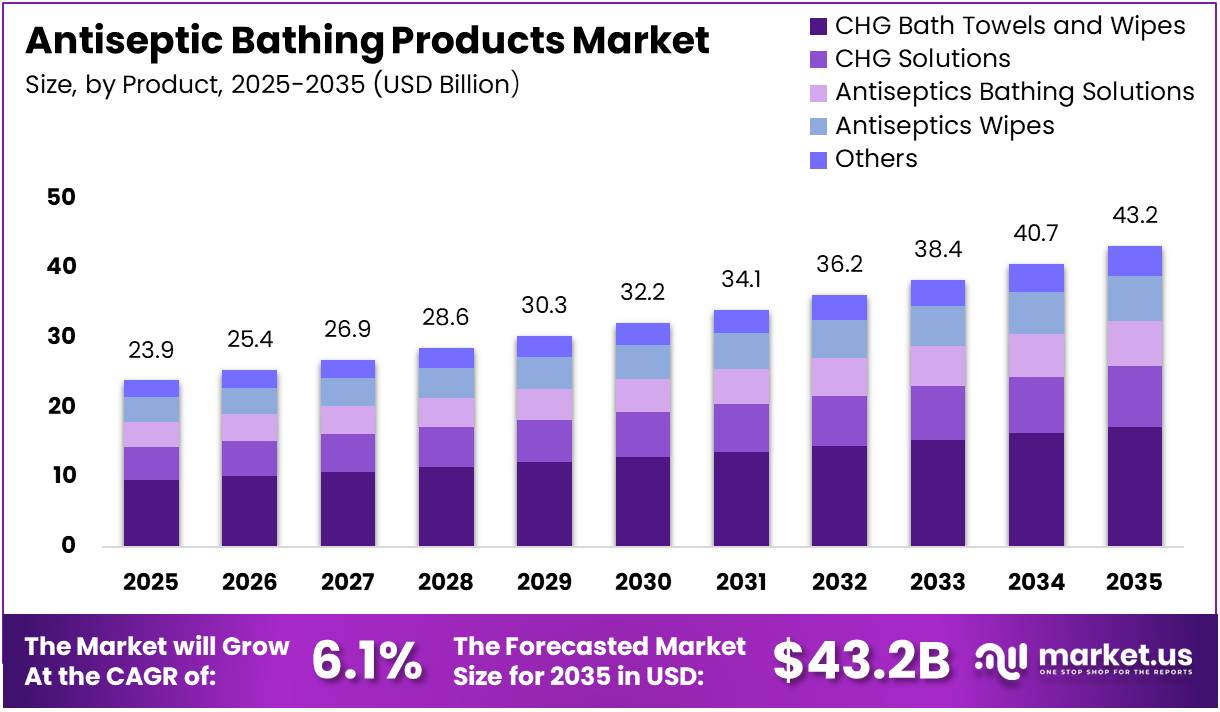
The Global Antiseptic Bathing Products Market was valued at USD 23.9 Billion in 2025 and is projected to reach USD 43.2 Billion by 2035. The market is expected to grow at a CAGR of 6.1% during 2026 to 2035. This growth reflects increasing focus on infection prevention and hygiene practices globally.
Antiseptic bathing products are formulated to reduce harmful microorganisms on the skin surface. These include wipes, towels, solutions, and antibacterial cleansers used in both clinical and home settings. Consumers and healthcare professionals use these products to maintain hygiene and prevent infections effectively.
Data-Driven Insights for Smarter Business Decisions: Explore the Full Report
Healthcare institutions, hospitals, and homecare sectors drive demand for antiseptic bathing solutions. Intensive care units, surgical wards, and long-term care facilities use these products regularly. Consequently, rising patient volumes and increasing infection risks support strong adoption across medical environments.
Manufacturers are improving formulations with skin-friendly ingredients and advanced antimicrobial technologies. Additionally, companies are developing easy-to-use formats such as no-rinse wipes and pre-saturated towels. Therefore, innovation enhances product convenience and encourages broader usage across clinical and consumer segments.
Regulatory authorities enforce strict hygiene protocols in healthcare facilities to reduce infections. Governments promote infection control programs and hospital safety standards. Consequently, hospitals invest in standardized antiseptic bathing solutions, which strengthens demand across institutional procurement channels.
Clinical research strongly supports product effectiveness in infection prevention. Studies show that daily antiseptic bathing reduces bloodstream infections by 29%, improving patient outcomes. Additionally, up to 20–30% of ICU patients acquire infections, which increases demand for preventive hygiene solutions.
Key Takeaways
- The market will grow from USD 23.9 Billion in 2025 to USD 43.2 Billion by 2035 due to rising hygiene demand.
- The industry will expand at a CAGR of 6.1% during 2026–2035 driven by healthcare growth.
- CHG bath towels and wipes lead with 37.8% share due to convenience and effectiveness.
- Intensive Care Units dominate with 41.2% share due to strict infection control needs.
- North America holds 39.70% share, valued at USD 9.4 Billion.
- Clinical studies show up to 56% infection risk reduction, supporting adoption.
- Daily antiseptic bathing reduces infections by nearly 30%, improving healthcare outcomes.
Market Segmentation Overview
CHG bath towels and wipes dominate the product segment with a 37.8% share. These products offer convenience and effective microbial control in clinical settings. Consequently, healthcare providers prefer pre-saturated wipes for infection prevention, strengthening their market leadership.
Other product categories such as CHG solutions and antiseptic liquids also show steady growth. These formulations are widely used for patient bathing and surgical preparation. Therefore, diversified product offerings support broader market adoption across healthcare and homecare applications.
Intensive Care Units lead the application segment with a 41.2% share due to strict infection control protocols. ICU patients are highly vulnerable to infections. Consequently, daily antiseptic bathing becomes essential, driving consistent product demand in critical care environments.
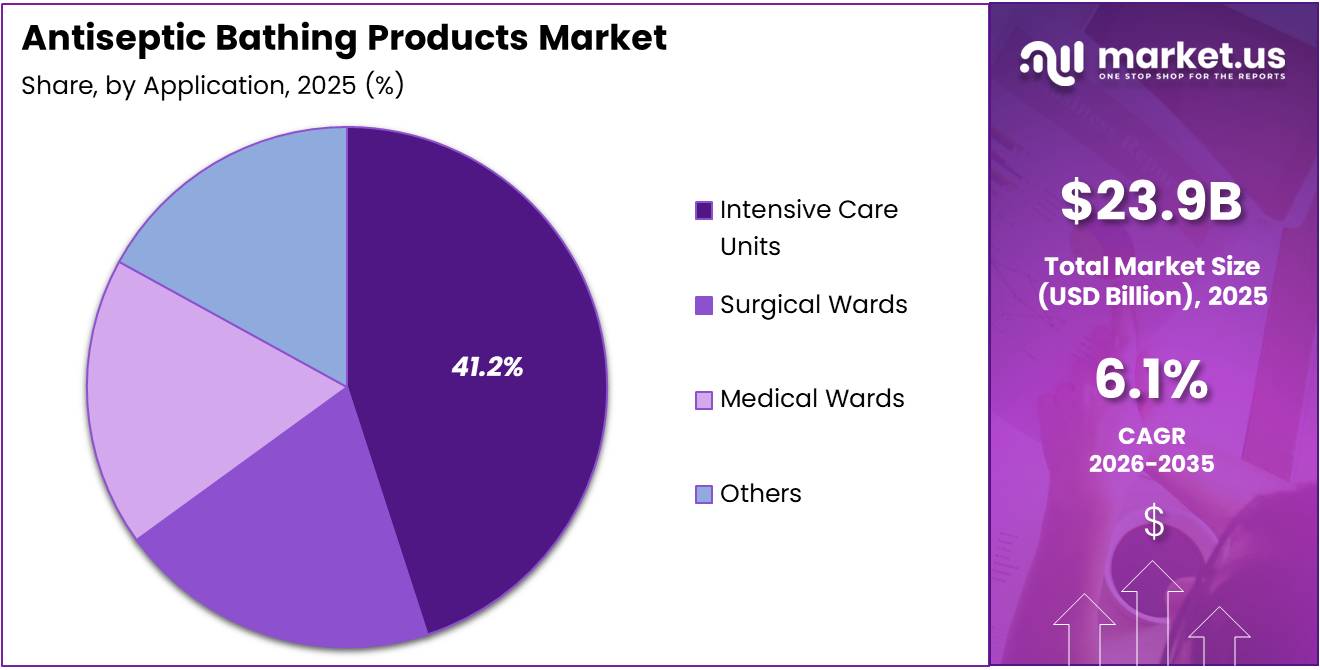
Surgical and medical wards also contribute significantly to market growth. Pre-operative bathing reduces infection risks, while routine hygiene supports patient safety. Therefore, hospitals integrate antiseptic bathing into standard care practices across multiple departments.
Drivers
Rising hygiene awareness following global health crises has significantly increased demand for antiseptic bathing products. Consumers and healthcare providers prioritize infection prevention. Consequently, regular use of antibacterial bathing solutions has become a standard hygiene practice worldwide.
Increasing incidence of healthcare-associated infections drives product adoption in hospitals. Medical professionals recommend antiseptic bathing to reduce infection risks. Therefore, growing patient populations and infection control needs continue to strengthen market demand.
Use Cases
Hospitals use antiseptic bathing products in intensive care units to prevent infections among critical patients. Daily bathing protocols reduce microbial load effectively. Consequently, these practices improve patient safety and reduce hospital-acquired infection rates.
Homecare settings use antiseptic bathing solutions for daily hygiene and infection prevention. Consumers adopt these products for personal health protection. Therefore, growing awareness of preventive healthcare supports increasing usage in household environments.
Major Challenges
Consumers express concerns about chemical-based antiseptic products causing skin irritation and allergies. Sensitive individuals avoid frequent usage. Consequently, these concerns limit adoption among certain consumer groups and create demand for safer alternatives.
Natural and herbal bathing products are gaining popularity, creating competition for antiseptic products. Consumers prefer plant-based solutions for daily use. Therefore, traditional antiseptic formulations face pressure to innovate and adapt to changing preferences.
Business Opportunities
Development of herbal and dermatologically tested antiseptic products presents strong growth opportunities. Consumers seek safe and effective formulations. Consequently, brands investing in plant-based solutions can expand their customer base and strengthen market positioning.
Multifunctional products combining antibacterial and skincare benefits create additional growth potential. Consumers prefer all-in-one solutions for convenience. Therefore, innovation in product features supports premium pricing and increases overall market value.
Regional Analysis
North America leads the market with a 39.70% share, valued at USD 9.4 Billion. Strong healthcare infrastructure and strict hygiene protocols drive demand. Consequently, hospitals in the region adopt antiseptic bathing as a standard practice.
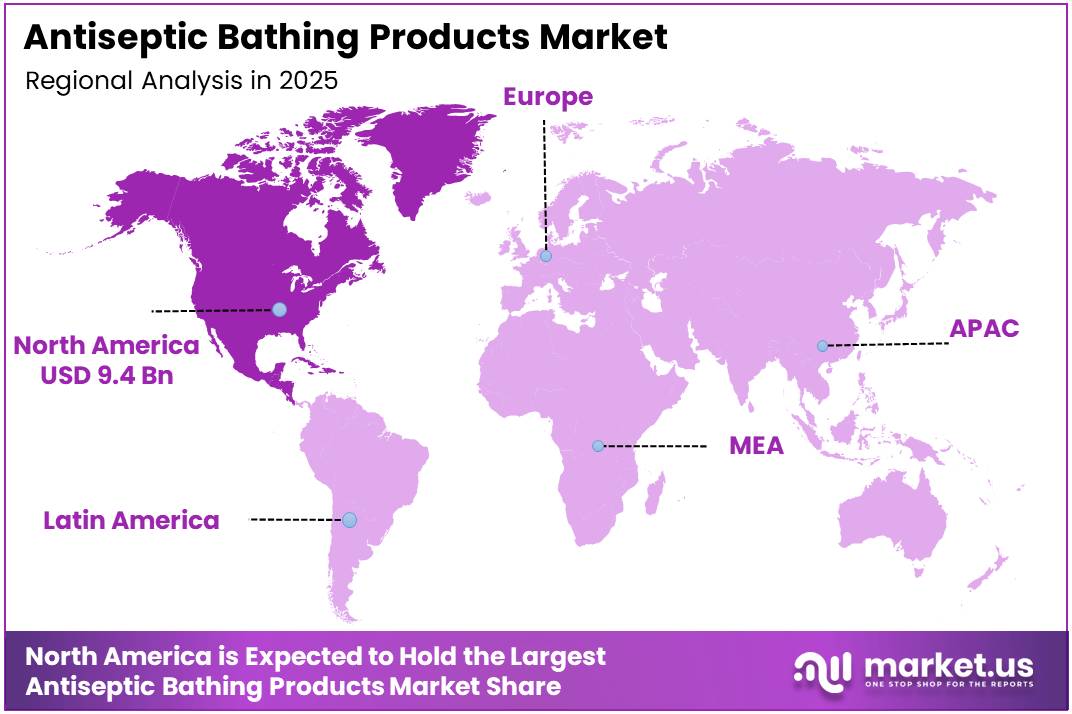
Asia Pacific is an emerging region driven by rising healthcare investment and hygiene awareness. Growing populations and urbanization increase demand. Therefore, expanding healthcare facilities and consumer awareness support strong regional growth potential.
Recent Developments
- May 2025 — Mölnlycke Health Care acquired P.G.F. Industry Solutions GmbH, expanding antiseptic product portfolio.
- June 2025 — Medline Industries signed supply agreement with Ohio State University Wexner Medical Center.
Conclusion
The antiseptic bathing products market is growing steadily due to rising focus on hygiene and infection prevention. Healthcare institutions and consumers prioritize safety. Consequently, demand for effective antimicrobial solutions continues to expand globally.
CHG wipes and ICU applications dominate due to proven effectiveness and clinical necessity. North America leads due to advanced healthcare systems. Therefore, companies focus on these segments to maintain competitive advantage.
Companies must invest in innovation, safety, and sustainability to meet evolving consumer needs. Expanding product portfolios and improving formulations will drive growth. Consequently, the market is expected to reach USD 43.2 Billion by 2035.
Looking for data tailored to your specific market, region, or business need? Request a custom report or consultation — write to us at sales@market.us
Discuss your needs with our analyst
Please share your requirements with more details so our analyst can check if they can solve your problem(s)