Market Overview
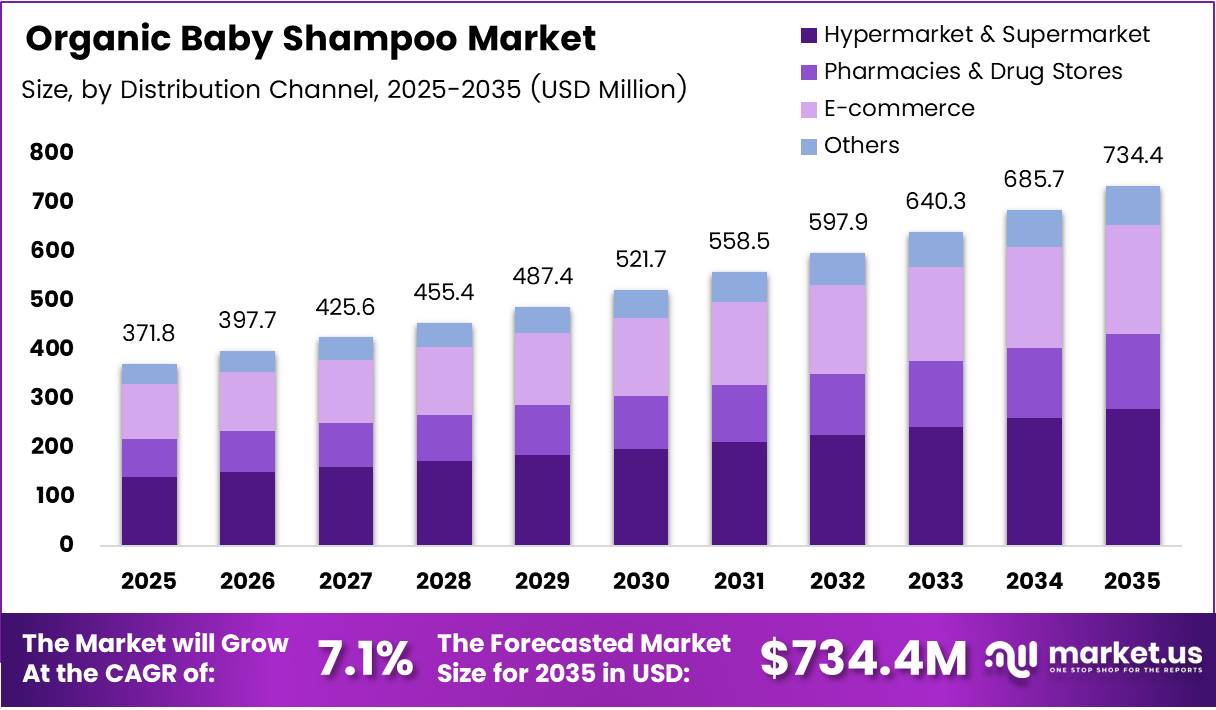
The Global Organic Baby Shampoo Market is valued at USD 371.8 million in 2025 and is projected to reach USD 734.4 million by 2035. The market is expected to grow at a CAGR of 7.1% during 2026–2035. This growth reflects rising demand for safe infant care products.
Organic baby shampoo refers to gentle cleansing products made from plant-based ingredients. These formulations exclude harsh chemicals, artificial fragrances, and synthetic preservatives. Parents use these shampoos to protect delicate infant skin. Manufacturers focus on hypoallergenic formulas that meet pediatric safety standards.
Data-Driven Insights for Smarter Business Decisions: Explore the Full Report
Personal care companies, healthcare providers, and retail chains drive product adoption globally. Baby care brands use organic formulations to meet safety expectations. Additionally, e-commerce platforms and pharmacies promote these products through trusted recommendations. Parenting communities also influence purchase decisions through online discussions and reviews.
Technology improves product formulation and safety validation across this market. Companies use advanced extraction methods to retain botanical benefits. Moreover, digital platforms help brands collect consumer feedback and improve product design. Consequently, innovation in packaging and formulation enhances user experience and product trust.
Government regulations play a major role in supporting organic product growth. The European Union restricts over 1,300 chemicals in cosmetics, ensuring safer products. This regulatory framework pushes global brands to comply with strict standards. Therefore, certified organic products gain credibility and stronger market acceptance.
Industry data highlights strong consumer behavior toward safer products. The Environmental Working Group reports that about 60% of U.S. parents avoid harmful chemicals. Additionally, the National Institutes of Health states infant skin is 20–30% thinner than adults. These factors increase demand for safer, organic baby care solutions.
Key Takeaways
- The market is valued at USD 371.8 million in 2025 and will reach USD 734.4 million by 2035.
- The market will grow at a CAGR of 7.1% during 2026–2035.
- Below 500ml segment dominates with 76.3% share due to trial-friendly sizing.
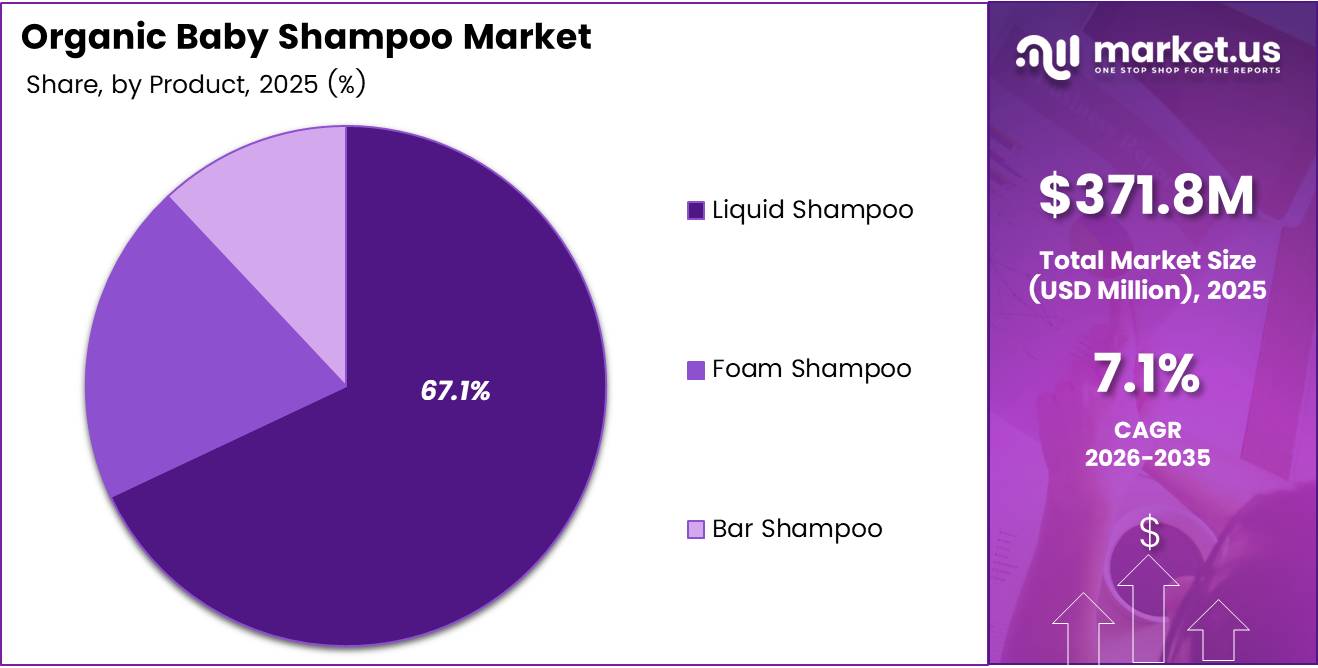
- Liquid shampoo leads with 67.1% share due to ease of use.
- Hypermarkets and supermarkets hold 37.9% share due to strong retail presence.
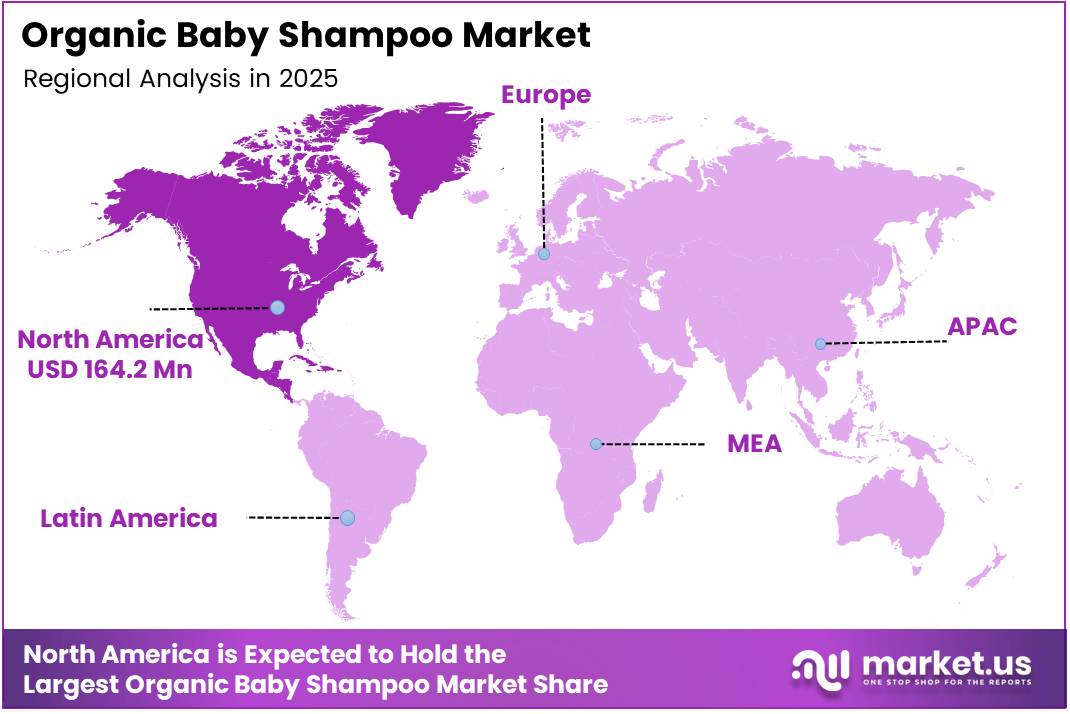
- North America leads with 44.20% share valued at USD 164.2 million.
Market Segmentation Overview
The Below 500ml segment dominates with 76.3% market share. Parents prefer smaller packs to test product safety before repeat purchase. This behavior reduces financial risk and supports faster adoption of new brands. Consequently, companies use smaller packaging to attract first-time buyers and increase conversion rates.
Moreover, Liquid Shampoo leads the product segment with 67.1% share. This dominance reflects ease of rinsing and compatibility with existing routines. Parents prefer convenient application methods. Therefore, manufacturers focus on liquid formulations to maintain product familiarity and ensure consistent demand across retail channels.
Additionally, Hypermarkets and Supermarkets dominate distribution with 37.9% share. These outlets allow physical product comparison and certification verification. High foot traffic increases visibility for organic brands. Consequently, retail presence strengthens consumer trust and drives higher sales conversion rates.
Drivers
Rising parental concern about chemical exposure drives market growth. Around 13% of children experience eczema, increasing sensitivity to harsh ingredients. This health concern encourages parents to choose safer alternatives. Consequently, demand for organic formulations grows as consumers prioritize skin-friendly and clinically safe products.
Moreover, expanding e-commerce access accelerates market penetration. Digital platforms allow brands to reach wider audiences without geographic limits. Parents research ingredients and reviews online before purchasing. Therefore, online availability improves accessibility and supports higher adoption of organic baby care products.
Use Cases
Parents use organic baby shampoo for daily infant hygiene and scalp care. These products reduce irritation and maintain natural skin balance. Pediatricians recommend mild cleansers for newborns. Consequently, organic shampoos improve comfort and reduce risk of allergic reactions during regular bathing routines.
Additionally, healthcare institutions use organic baby care products in neonatal units. Hospitals prioritize safe formulations for newborn care. These products minimize exposure to harmful chemicals. Therefore, clinical adoption strengthens product credibility and influences consumer trust in organic baby shampoo brands.
Major Challenges
High product cost limits adoption in price-sensitive markets. Organic ingredients and certification processes increase production expenses. Many consumers cannot afford premium pricing. Consequently, manufacturers face challenges in expanding into lower-income segments and emerging markets.
Furthermore, supply chain constraints affect raw material availability. Organic ingredients depend on seasonal agriculture and strict standards. Any disruption increases costs or delays production. Therefore, supply instability restricts scalability and impacts consistent product availability.
Business Opportunities
Multi-functional product development creates strong growth opportunities. Products combining shampoo and body wash increase convenience. Parents prefer fewer products for daily use. Consequently, companies can boost sales by offering bundled solutions that simplify infant care routines.
Additionally, eco-friendly packaging attracts sustainability-focused consumers. Brands adopting recyclable or refillable packaging gain competitive advantage. Environmental awareness influences buying decisions. Therefore, sustainable packaging strategies help companies expand market share and improve brand loyalty.
Regional Analysis
North America dominates with 44.20% share, valued at USD 164.2 million. High disposable income and strong awareness drive demand. Consumers prioritize chemical-free products. Consequently, established retail infrastructure and regulatory standards support continued market leadership in this region.
However, Asia Pacific shows strong growth potential due to rising urban populations. Increasing middle-class income supports demand for premium baby care. Additionally, safety concerns boost organic product adoption. Therefore, this region presents significant expansion opportunities for global brands.
Recent Developments
- April 2025 — Weleda announced expansion plans to launch new natural baby care products globally.
- August 2024 — The Honest Company launched bilingual baby products targeting multicultural consumers.
- October 2024 — Burt’s Bees introduced 100% natural fragrance baby products to meet clean-label demand.
Conclusion
The organic baby shampoo market shows steady growth due to rising health awareness and regulatory support. Parents increasingly prefer chemical-free products for infant care. Moreover, e-commerce expansion improves accessibility. These factors collectively drive sustained market demand over the forecast period.
Dominant segments such as Below 500ml packaging and liquid formulations lead due to convenience and affordability. North America remains the leading region due to strong consumer awareness. However, Asia Pacific emerges as a key growth market driven by rising income and urbanization.
Companies must focus on innovation, affordability, and sustainability to capture market opportunities. Strategic investments in eco-friendly packaging and multi-functional products will enhance competitiveness. Therefore, the market is expected to reach USD 734.4 million by 2035, driven by evolving consumer preferences.
Looking for data tailored to your specific market, region, or business need? Request a custom report or consultation — write to us at sales@market.us
Discuss your needs with our analyst
Please share your requirements with more details so our analyst can check if they can solve your problem(s)