Market Overview
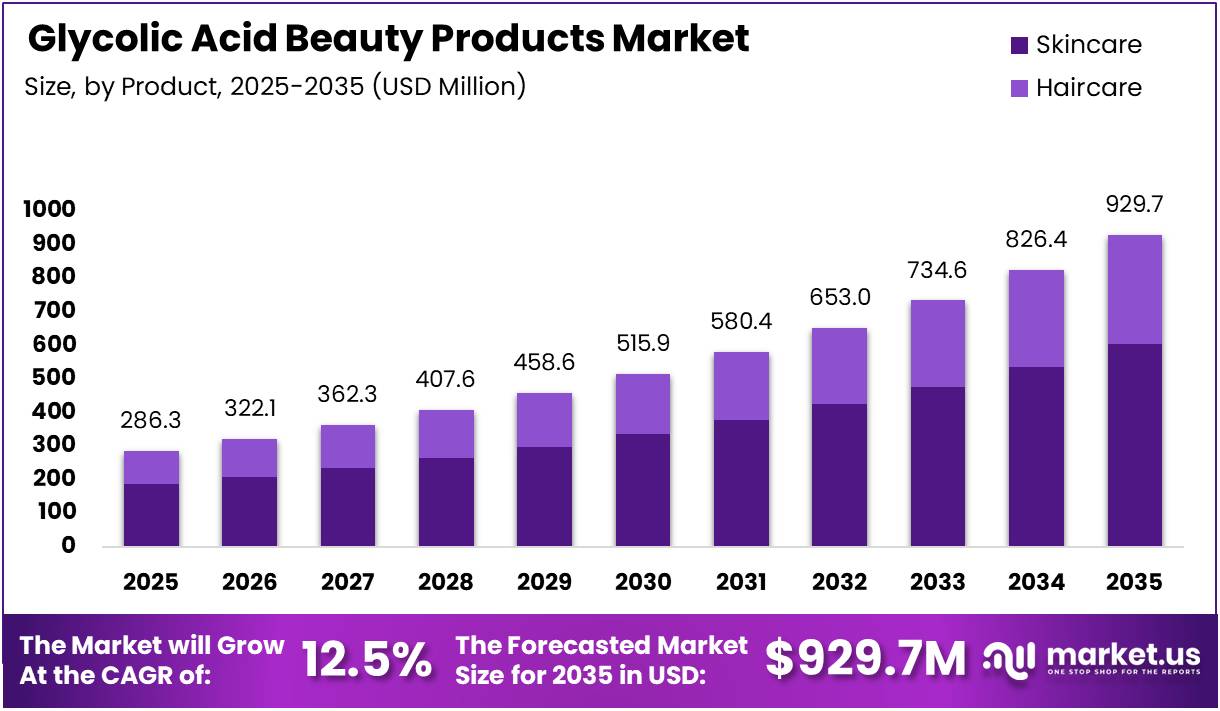
The Glycolic Acid Beauty Products Market was valued at USD 286.3 million in 2025 and is projected to reach USD 929.7 million by 2035. The market is expected to grow at a CAGR of 12.5% during 2026–2035. This growth reflects increasing consumer demand for active-ingredient skincare solutions.
Glycolic acid is a naturally derived alpha hydroxy acid used widely in skincare and haircare products. Manufacturers use it to remove dead skin cells and improve skin renewal. Consumers use these products for acne treatment, anti-aging benefits, and improved texture across daily personal care routines.
Data-Driven Insights for Smarter Business Decisions: Explore the Full Report
Beauty and personal care industries drive strong adoption of glycolic acid formulations globally. Skincare brands use it in serums, cleansers, and exfoliants for daily routines. Moreover, dermatology clinics and salons apply glycolic acid treatments for professional-grade exfoliation and skin rejuvenation services.
Technology advancements improve product performance and accessibility in this market. Brands develop pH-balanced and buffered formulations to reduce irritation risks. Additionally, AI-based skincare tools recommend personalized glycolic acid products, increasing consumer confidence and boosting conversion rates across online retail platforms.
Regulatory frameworks shape product formulation and market growth across regions. Authorities enforce strict limits on glycolic acid concentration in cosmetic products. Therefore, companies design compliant formulations that balance safety and effectiveness, ensuring broader consumer acceptance while maintaining product performance standards.
Clinical studies validate the effectiveness of glycolic acid-based treatments. Research from the Journal of Cutaneous and Aesthetic Surgery shows up to 70% acne reduction within 12 weeks. Additionally, Ulta reports 72% consumer preference for active ingredients, indicating strong market demand and supporting long-term growth potential.
Key Takeaways
- The market was valued at USD 286.3 million in 2025 and will reach USD 929.7 million by 2035.
- The industry is projected to grow at a CAGR of 12.5% during 2026–2035.
- Skincare dominated with a 61.3% share due to strong daily usage demand.
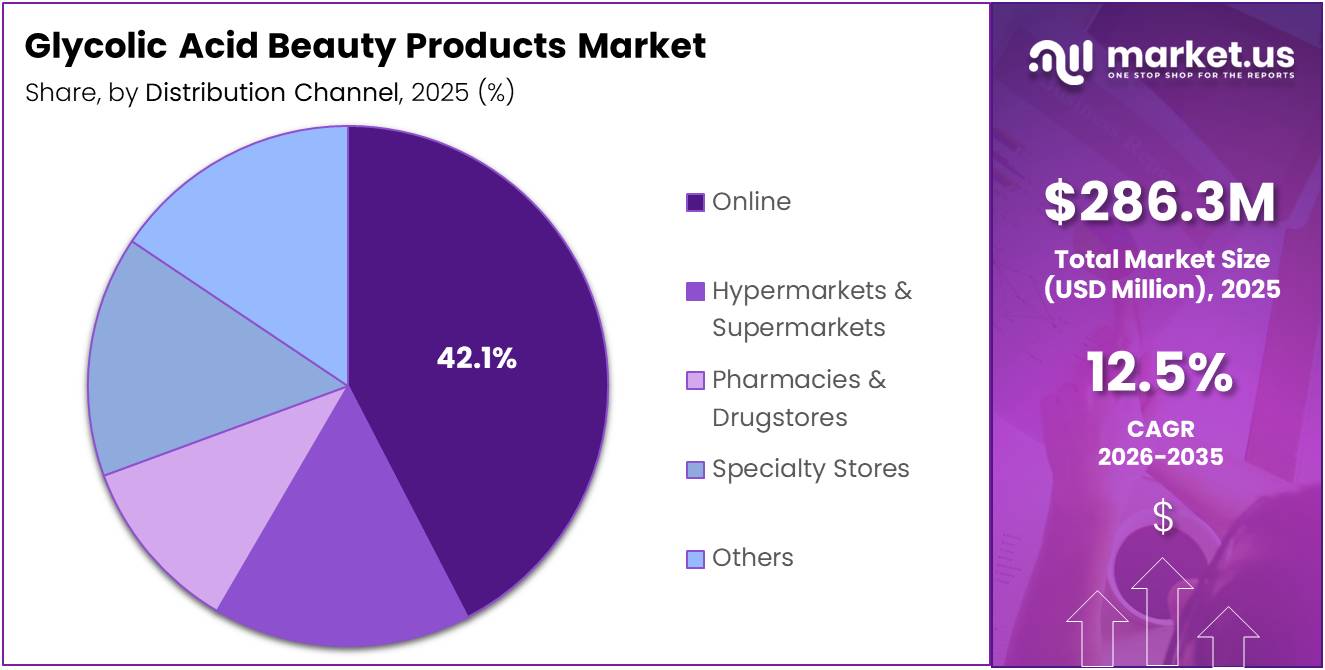
- Online distribution led with 42.1% share driven by convenience and pricing benefits.
- Asia Pacific held 43.7% share, valued at USD 125.1 million in 2025.
Market Segmentation Overview
Skincare leads the product segment with a 61.3% market share. This dominance reflects strong consumer adoption of serums, cleansers, and exfoliants. These products address acne, aging, and texture concerns. Consequently, brands focus heavily on skincare innovation to meet daily routine demands.
Haircare represents a growing segment as consumers adopt glycolic acid for scalp health and hair texture improvement. Additionally, new product launches in shampoos and conditioners support expansion. This trend indicates rising awareness beyond facial care applications, creating new revenue streams for manufacturers.
Online channels dominate distribution with a 42.1% share due to convenience and product variety. Consumers benefit from reviews and easy comparisons, improving purchase confidence. Consequently, e-commerce platforms continue to expand product visibility and drive global sales growth.
Offline channels such as supermarkets, pharmacies, and specialty stores maintain steady demand. Pharmacies support trust through dermatologist-backed products. Meanwhile, specialty stores attract premium consumers seeking personalized recommendations, ensuring balanced growth across multiple distribution formats.
Drivers
Rising demand for chemical exfoliation drives market growth significantly. Consumers prefer glycolic acid over physical scrubs due to better results and reduced skin damage. Consequently, brands expand product portfolios with advanced exfoliating solutions, strengthening market penetration across both entry-level and premium categories.
Increasing preference for dermatologist-backed skincare fuels product adoption globally. Consumers seek professional-grade results at home without clinic visits. Therefore, companies develop clinically proven formulations, boosting trust and encouraging repeat purchases among ingredient-conscious buyers.
Use Cases
Skincare brands use glycolic acid in anti-aging products to reduce wrinkles and improve skin texture. These products promote cell renewal and enhance radiance. Consequently, consumers adopt them in daily routines, increasing long-term product usage and driving consistent revenue growth.
Dermatology clinics apply glycolic acid peels for acne treatment and skin resurfacing. These treatments deliver faster and visible results compared to basic skincare products. Therefore, professional use strengthens product credibility and supports higher demand for at-home alternatives.
Major Challenges
Skin sensitivity remains a major challenge for market expansion. High concentrations of glycolic acid can cause irritation, redness, and peeling. Consequently, sensitive-skin consumers avoid these products, limiting broader adoption and reducing potential customer base growth.
Strict regulatory guidelines restrict allowable acid concentrations in products. Authorities impose safety limits across regions, increasing compliance costs. Therefore, manufacturers face delays in product development and struggle to deliver high-potency formulations within regulatory constraints.
Business Opportunities
Innovation in low-irritation formulations creates strong growth opportunities. Brands develop buffered and encapsulated glycolic acid products for sensitive skin users. Consequently, this expands the addressable market and improves accessibility for new consumer segments.
Demand for professional-grade at-home skincare solutions continues to rise globally. Consumers seek salon-quality results without visiting clinics. Therefore, companies invest in high-efficacy home-use products, driving premiumization and increasing overall market value.
Regional Analysis
Asia Pacific leads the market with a 43.7% share, valued at USD 125.1 million in 2025. Strong skincare culture and rising disposable income drive regional demand. Additionally, digital retail expansion supports easy product access, strengthening the region’s dominant position.
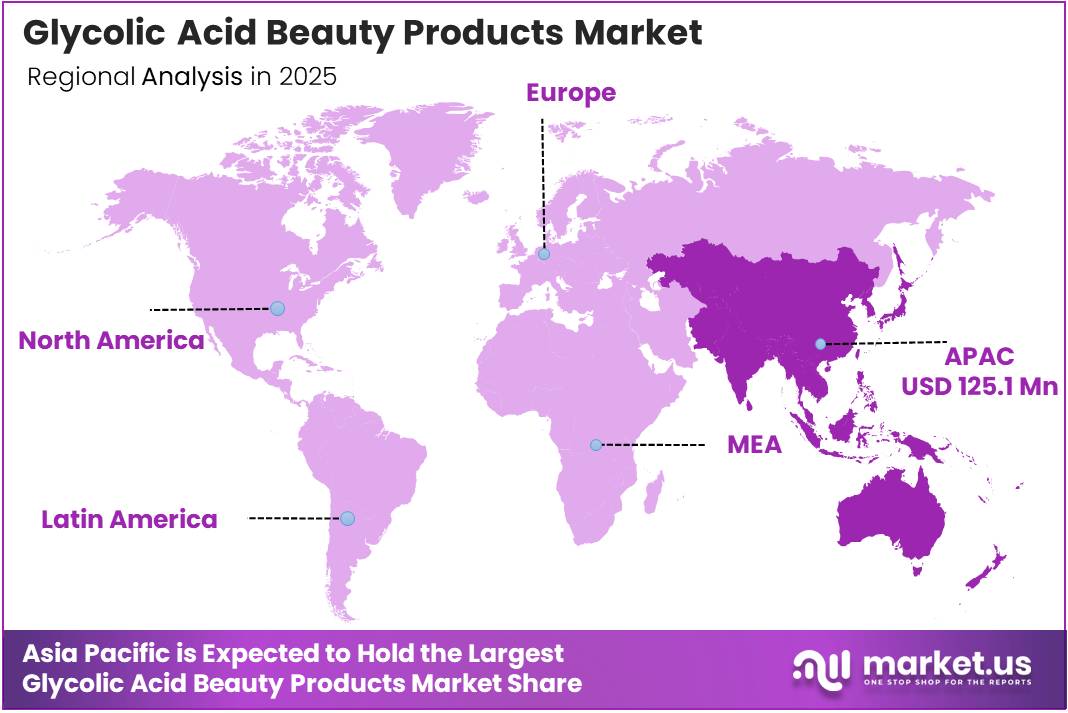
Latin America and the Middle East emerge as high-growth regions due to rising skincare awareness. Countries such as Brazil and the UAE show increasing demand for advanced beauty products. Consequently, expanding e-commerce and urbanization support sustained regional market growth.
Recent Developments
- July 2025 — L’Oréal Paris launched Elvive Glycolic + Gloss haircare line, expanding into mass-market haircare.
- April 2025 — Cyklar introduced 10% Glycolic Acid Body Spray, targeting body exfoliation demand.
- March 2024 — Clinical Skin acquired Glytone, strengthening dermatologist-focused product portfolio.
Conclusion
The glycolic acid beauty products market shows strong growth driven by rising demand for active-ingredient skincare. Increasing awareness of exfoliation benefits and dermatologist recommendations supports widespread adoption. Consequently, brands continue expanding product offerings to meet evolving consumer preferences.
Skincare remains the dominant segment due to daily usage and visible results. Asia Pacific leads regional growth with strong cultural and economic support. Additionally, online channels drive accessibility, enabling faster global expansion for brands.
Companies must invest in innovation, compliance, and personalized solutions to stay competitive. Expanding into emerging regions and developing low-irritation products will unlock new opportunities. The market is expected to reach USD 929.7 million by 2035, reflecting sustained long-term growth potential.
Looking for data tailored to your specific market, region, or business need? Request a custom report or consultation — write to us at sales@market.us
Discuss your needs with our analyst
Please share your requirements with more details so our analyst can check if they can solve your problem(s)