Market Overview
The global Neurocosmetics market reached USD 1.6 billion in 2025. Industry projections indicate a rise to USD 3.6 billion by 2035. This expansion represents a compound annual growth rate (CAGR) of 8.4% from 2026 through 2035. Beauty brands and neuroscience researchers increasingly invest in this innovative category.
Neurocosmetics bridges neuroscience and dermatology through advanced skincare and cosmetic products. These formulations target the skin-brain axis using neuroactive ingredients like mood-enhancing peptides and stress-reducing adaptogens. Products deliver emotional wellbeing benefits alongside visible skin improvements. Consumers use them to address stress-induced skin conditions while enhancing mental wellness during daily beauty rituals.
Get further insight into the global trends shaping the future of the neurocosmetics industry. Request Sample
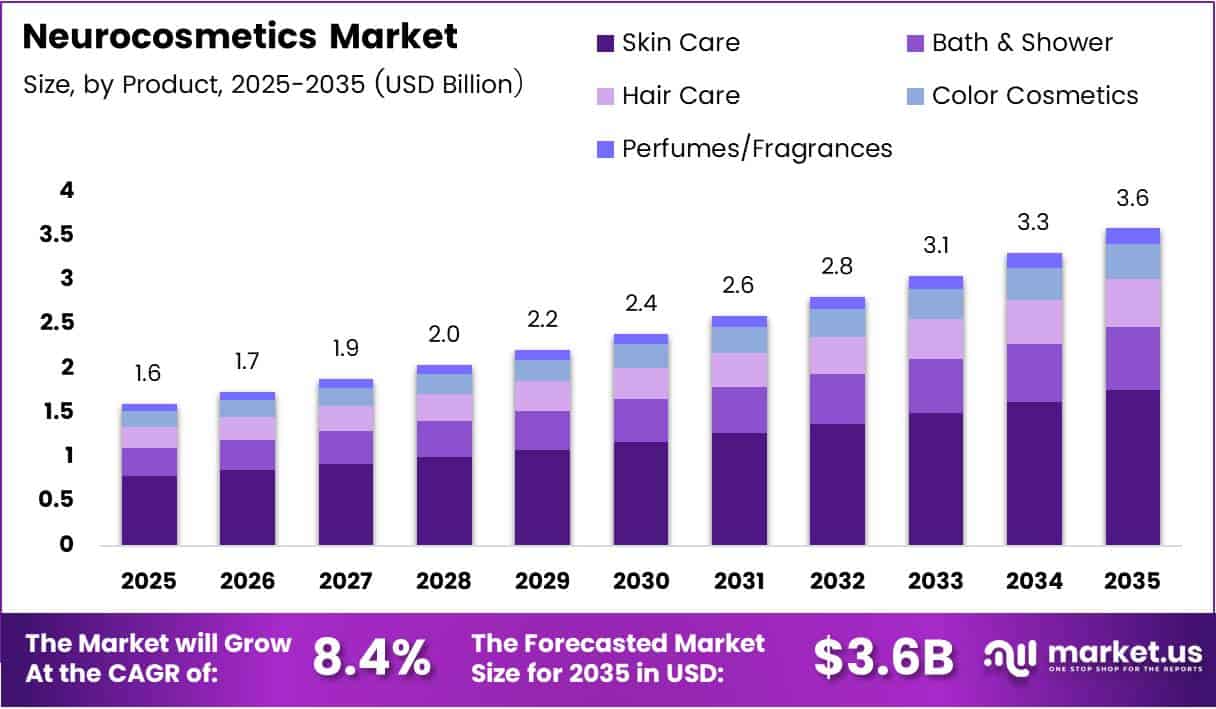
The beauty and personal care industries drive adoption across multiple sectors. Luxury skincare brands incorporate neuroactive compounds into serums and moisturizers. Hair care manufacturers develop scalp treatments with adaptogens that promote relaxation. Additionally, fragrance companies leverage aromachology principles to trigger positive emotional states through scent. These applications attract wellness-conscious consumers seeking holistic beauty solutions.
Advanced psychodermatology research validates bidirectional skin-mood connections that neurocosmetics target. Manufacturers integrate stress-reducing peptides and sensory-optimized textures into premium formulations. Moreover, clinical studies demonstrate how emotional states directly affect skin health outcomes. Consequently, brands invest heavily in validating neurocosmetic efficacy through rigorous testing protocols and ingredient innovation pipelines.
Regulatory frameworks continue evolving to accommodate novel neurocosmetic ingredient claims and testing protocols. Government bodies worldwide evaluate safety standards for products targeting skin-brain pathways. Additionally, research institutions expand collaborations with beauty manufacturers to advance psychodermatology applications. Therefore, companies prioritize compliance while developing scientifically substantiated mood-enhancing formulations for global markets.
According to Discovery Medical Science, 60% of participants experienced worsening skin conditions during stress periods. The same research revealed that more than 80% of respondents reported their skin appearance directly affected their mood. Furthermore, a PubMed meta-analysis of 113 studies found global pooled stress prevalence in skin disease patients reaches 39.4%. These statistics validate the physiological link between emotional states and dermatological health that neurocosmetics specifically target.
Key Takeaways
- Global Neurocosmetics Market valued at USD 1.6 billion in 2025, projected to reach USD 3.6 billion by 2035
- Market grows at a CAGR of 8.4% during forecast period 2026-2035
- Skin Care segment dominates By Product category with 48.5% market share in 2025
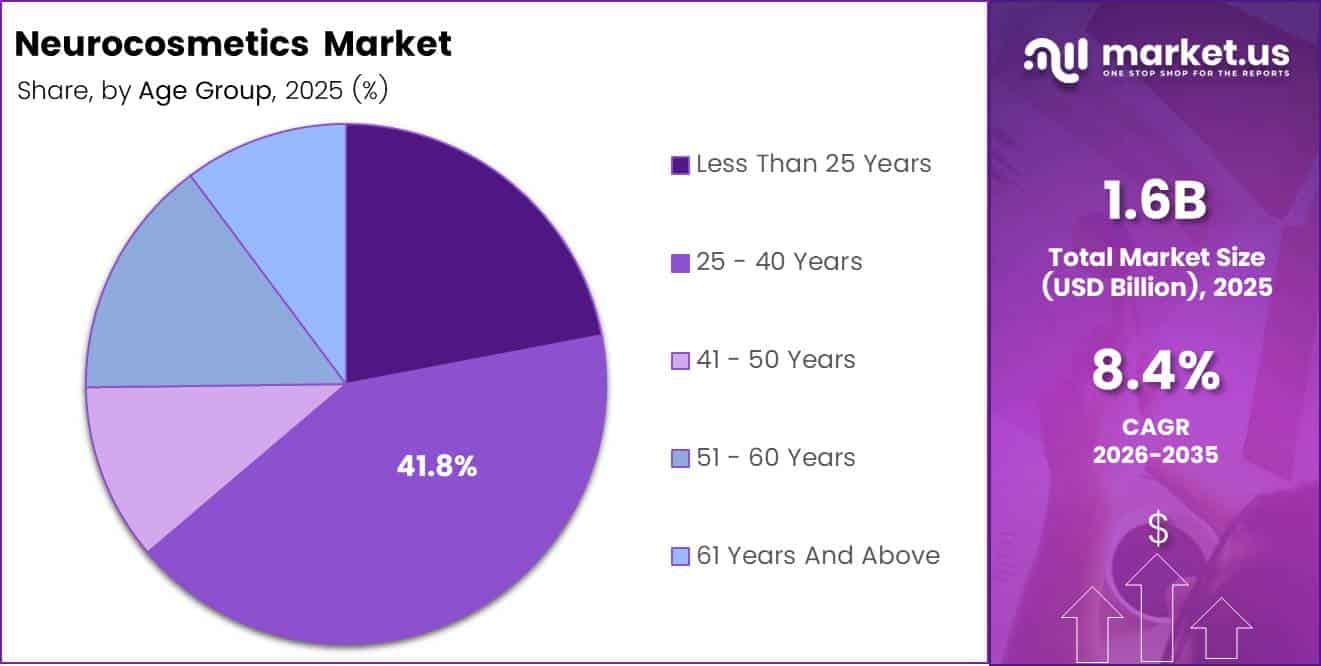
- 25-40 Years age group leads consumer adoption with 41.8% market share
- Women end users account for 72.9% of total market consumption
- Offline distribution channel holds 62.4% market share in 2025
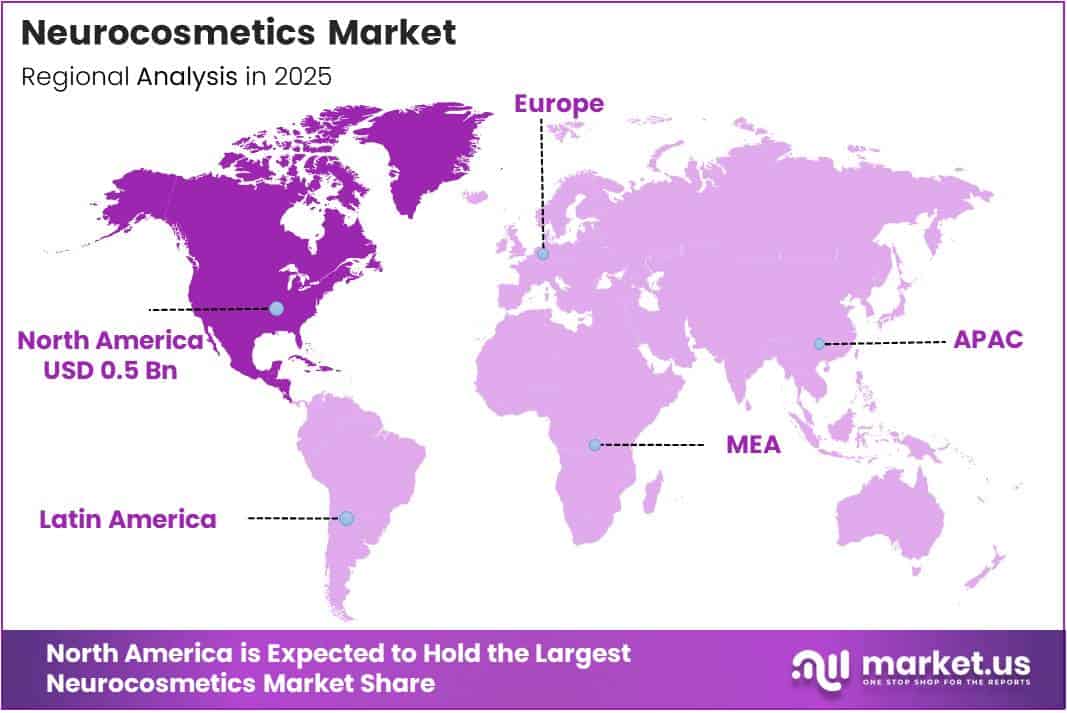
- North America dominates regional landscape with 37.40% share valued at USD 0.5 billion
Market Segmentation Overview
The Skin Care product segment captured 48.5% of the neurocosmetics market in 2025. This dominance reflects strong consumer demand for facial and body treatments incorporating stress-reducing peptides. These formulations address both visible aging concerns and emotional wellness through targeted neuroactive delivery systems. Consequently, premium brands invest substantially in developing clinically validated skin-brain axis products that differentiate their portfolios in competitive beauty markets.
Women represent the dominant end-use segment with 72.9% market share in 2025. Female consumers demonstrate higher sensitivity to skin-mood correlations and actively seek products addressing emotional wellness. Moreover, women historically invest more significantly in comprehensive skincare regimens that incorporate innovative ingredient technologies. Therefore, this demographic drives neurocosmetic innovation through sustained demand for mood-enhancing formulations backed by psychodermatology research.
The 25-40 Years age group leads consumer adoption with 41.8% market share. This demographic experiences peak professional stress levels that manifest in visible skin concerns. Furthermore, consumers in this bracket possess disposable income for premium neurocosmetic solutions while actively seeking scientifically validated products. Consequently, brands prioritize product development targeting these consumers’ specific stress-skin axis concerns and lifestyle needs.
Offline distribution channels dominate with 62.4% market share in 2025. Consumers prefer in-person consultations when purchasing premium neurocosmetic products requiring ingredient education. Physical retail environments enable sensory product testing essential for evaluating mood-enhancing fragrance and texture claims. Therefore, specialty beauty retailers and department stores maintain competitive advantages through experiential retail strategies that online platforms cannot fully replicate.
Drivers
Consumers increasingly prioritize holistic wellness approaches that integrate mental health and physical beauty outcomes. Neurocosmetic brands leverage this trend by formulating products with clinically validated neuroactive compounds that target stress-reduction pathways. Moreover, psychodermatology research expansion validates bidirectional skin-mood connections, driving consumer confidence in neurocosmetic efficacy. Consequently, premium beauty segments experience sustained demand growth for mood-enhancing skincare solutions.
Luxury brands differentiate product portfolios through neuroactive peptide and adaptogen integration into topical formulations. Marketing strategies emphasize emotional wellness positioning alongside visible aesthetic improvements. Additionally, sensory-optimized textures and aromachology principles enhance perceived product value. According to MDPI Sensors research, fragrance exposure reduced fatigue emotions by 64%, depressive emotions by 56%, and increased vitality by 66%. These statistics provide scientific validation supporting premium pricing strategies.
Use Cases
Stress-induced skin condition management represents a primary application for neurocosmetic products. Consumers with stress-related acne, eczema, or premature aging use mood-enhancing serums and moisturizers that target cortisol pathways. These formulations combine traditional anti-inflammatory ingredients with neuroactive peptides that calm neural responses. Consequently, users experience both reduced dermatological flare-ups and improved emotional states during daily application rituals.
Hair care applications leverage neurocosmetic principles through scalp-focused sensory experiences and stress-mitigation ingredients. Shampoos, conditioners, and scalp serums incorporate adaptogens like ashwagandha and rhodiola that promote relaxation during washing rituals. Moreover, aromatic compounds stimulate positive emotional responses while delivering traditional hair health benefits. Therefore, dual-purpose positioning attracts wellness-conscious consumers seeking holistic beauty routines that address both hair quality and mental wellbeing.
Major Challenges
Lack of globally standardized regulatory frameworks for neuroactive cosmetic claims creates compliance barriers. Different jurisdictions maintain varying standards for substantiating skin-brain axis claims, increasing legal risk for manufacturers. Consequently, brands face market entry challenges and potential enforcement actions that undermine category credibility. This fragmentation slows innovation adoption and complicates international product launches for neurocosmetic companies pursuing global expansion strategies.
High research and development investment requirements limit market entry for emerging brands lacking capital resources. Demonstrating neurocosmetic efficacy through rigorous clinical validation demands substantial financial commitments for long-term psychodermatology studies. Moreover, testing protocol ambiguity prevents standardized efficacy comparisons between competing products. Therefore, established corporations with significant R&D budgets maintain competitive advantages while smaller innovators struggle to afford necessary clinical validation studies.
Business Opportunities
Artificial intelligence integration enables personalized neurocosmetic recommendations based on individual stress patterns and emotional biomarkers. Wearable technology captures physiological data correlating psychological states with skin condition fluctuations, driving customized formulations. In June 2025, L’Oréal agreed to acquire a majority stake in Medik8 with approximately €1 billion enterprise value, demonstrating major industry investment in advanced dermocosmetic technologies. Consequently, personalization enhances treatment efficacy and consumer satisfaction while creating premium pricing opportunities.
Emerging markets present substantial untapped demand for hybrid wellness-beauty neurocosmetic product lines addressing local stress factors. Rapid urbanization and lifestyle changes increase psychological pressure driving skin health concerns across Asia Pacific and Latin America. Moreover, rising disposable incomes enable premium beauty product adoption in these regions. Therefore, strategic collaborations between neuroscience startups and established dermocosmetic manufacturers accelerate technology transfer and market penetration in high-growth economies.
Regional Analysis
North America dominates the neurocosmetics market with 37.40% share valued at USD 0.5 billion in 2025. Advanced psychodermatology research infrastructure and high consumer wellness awareness drive regional leadership. The region hosts numerous neuroscience-focused beauty startups and established corporations investing in skin-brain axis innovations. Moreover, sophisticated marketing campaigns emphasizing mental health benefits resonate strongly with North American consumers who possess strong purchasing power for premium neurocosmetic products.
Asia Pacific represents the fastest-growing regional market driven by expanding middle-class populations and rising stress-related skin concerns. Beauty-conscious consumers in China, Japan, and South Korea adopt innovative product categories combining traditional wellness philosophies with neuroscience. Additionally, e-commerce penetration accelerates market access while K-beauty and J-beauty influences drive neurocosmetic ingredient experimentation. Consequently, international brands prioritize Asia Pacific expansion to capture emerging demand for mood-enhancing beauty solutions.
Recent Developments
- April 2024 – Sisley Group unveiled and launched Neuraé, its neuroscience-driven skincare brand globally, marking significant luxury beauty investment in neurocosmetics innovation and establishing Sisley as category leader.
- June 2025 – L’Oréal agreed to acquire a majority stake in British science-based skincare brand Medik8 with approximately €1 billion enterprise value, demonstrating major industry commitment to advanced dermocosmetic technologies.
- October 2025 – Sisley’s Neuraé brand expanded retail presence into Portugal through Wells stores as part of international expansion strategy, demonstrating accelerating demand for premium neurocosmetic products across European markets.
Conclusion
The global neurocosmetics market grows at a robust 8.4% CAGR from USD 1.6 billion in 2025 to USD 3.6 billion by 2035. Rising consumer demand for mood-enhancing skincare and psychodermatology research validation drive this expansion. Additionally, luxury beauty brands invest heavily in neuroactive ingredients and sensory innovations that differentiate their portfolios while addressing stress-induced skin concerns.
Skin care holds 48.5% product share, while women represent 72.9% of end users. The 25-40 years age group leads adoption at 41.8%, and North America dominates regionally with 37.40% share valued at USD 0.5 billion. Offline channels maintain 62.4% distribution preference. These segmentation patterns reflect consumer priorities for scientifically validated mood-enhancing formulations delivered through experiential retail environments.
Companies must address regulatory fragmentation and high R&D costs while seizing opportunities in AI-personalization and emerging markets. Strategic acquisitions like L’Oréal’s Medik8 deal signal growing commercial confidence. The market’s trajectory toward USD 3.6 billion by 2035 rewards brands that balance clinical validation, sensory innovation, and accessibility across diverse global regions.
Looking for data tailored to your specific market, region, or business need? Request a custom report or consultation — write to us at sales@market.us