Market Overview
The global facial cleanser market was valued at USD 14.7 billion in 2025 and is projected to reach USD 25.6 billion by 2035. The market is expected to grow at a CAGR of 5.7% during 2026–2035. This growth reflects rising skincare awareness and increasing daily product usage worldwide.
Facial cleansers are skincare products designed to remove dirt, oil, and makeup from the face. These products come in gels, foams, creams, and bars. Consumers across age groups use them daily to maintain hygiene and skin health, making them a core part of personal care routines globally.
Data-Driven Insights for Smarter Business Decisions: Explore the Full Report
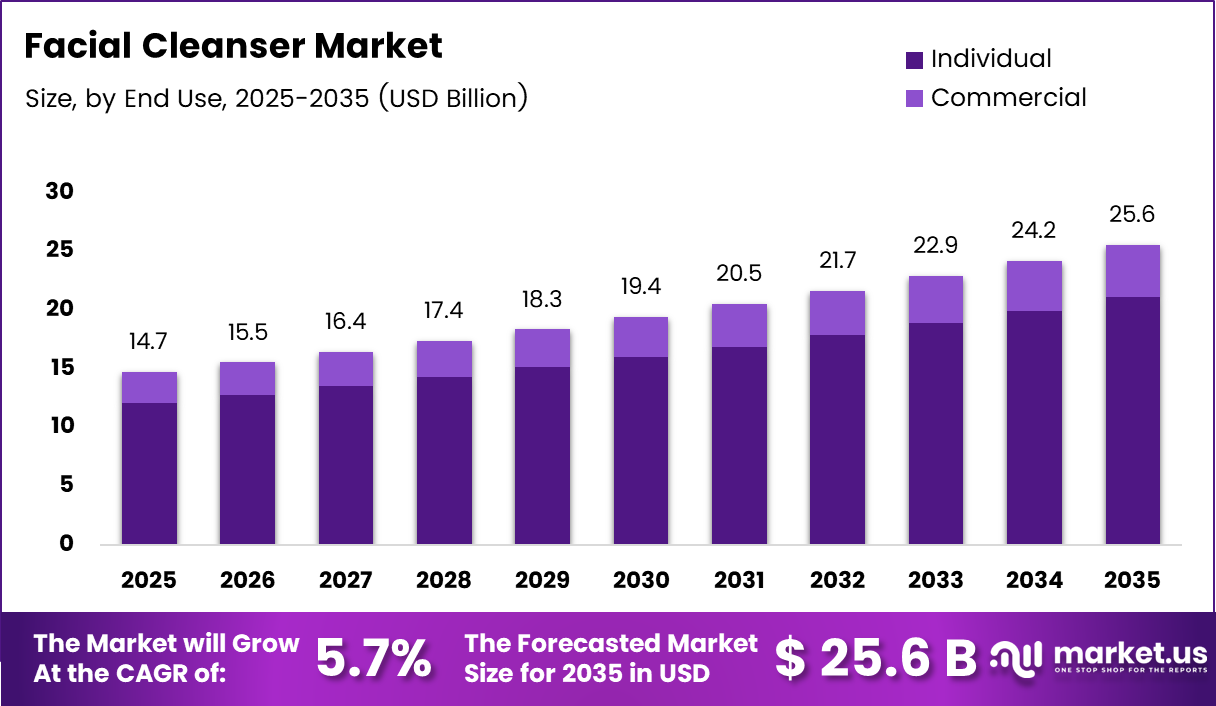
Beauty, dermatology, retail, and wellness industries drive strong demand for cleansing products. Consumers in spas, salons, and clinics also use them for professional treatments. Additionally, e-commerce platforms and supermarkets support product availability, which increases accessibility and boosts overall adoption across urban and semi-urban populations.
Technology plays a key role in improving product effectiveness and personalization. Companies integrate AI-based skin analysis and advanced ingredients to create targeted solutions. Consequently, brands offer customized cleansers for different skin conditions, which improves customer satisfaction and strengthens repeat purchases across premium and mass-market segments.
Government regulations ensure product safety, labeling accuracy, and ingredient transparency. Regulatory bodies in Europe and North America enforce strict cosmetic standards. Therefore, brands invest in clinically tested formulations and compliance processes, which builds consumer trust and supports long-term market growth across regulated regions.
Industry data from CeraVe shows that 80% of Americans make mistakes in face washing. This gap reflects low awareness and improper product use. Additionally, over 50% skip nighttime cleansing, which creates demand opportunities. Consequently, brands focus on education campaigns to drive consistent usage and expand the consumer base.
Key Takeaways
- Market valued at USD 14.7 billion in 2025 and projected to reach USD 25.6 billion by 2035.
- Market expected to grow at a CAGR of 5.7% during 2026–2035.
- Normal skin segment leads with 26.9% share due to broad compatibility.
- Gel cleanser dominates product type with 39.6% share driven by versatility.
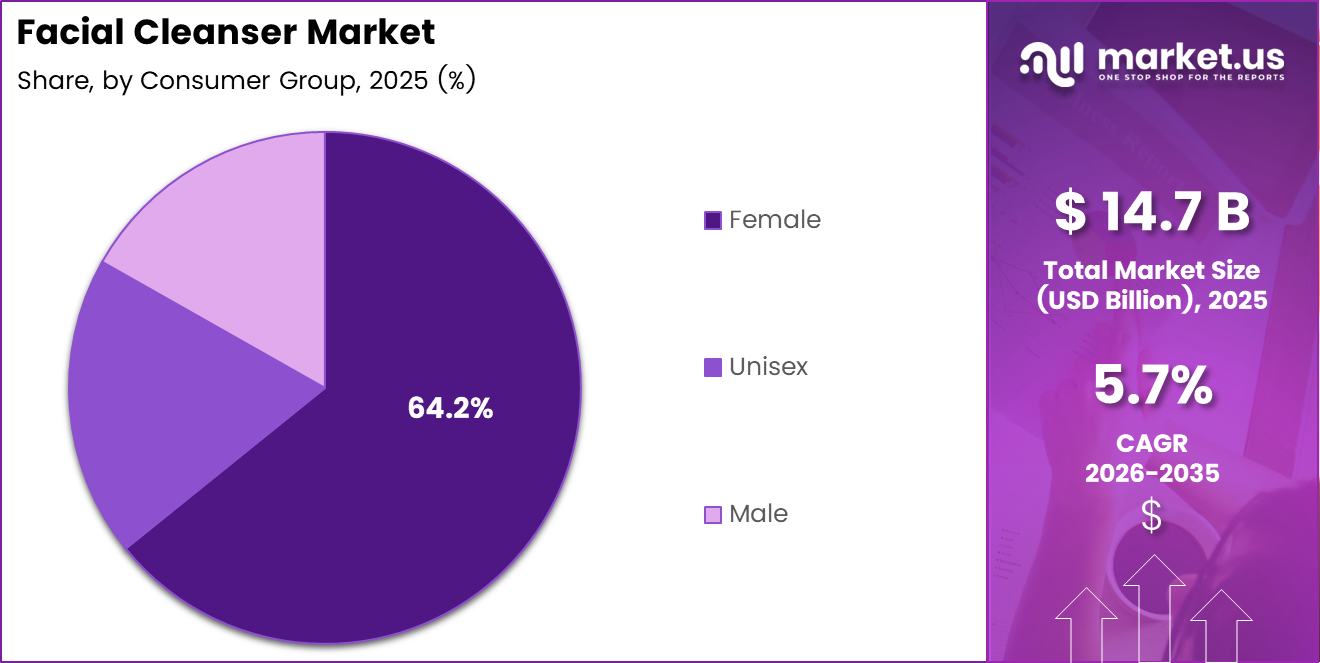
- Female consumers account for 64.2% share due to higher engagement.
- Individual use dominates with 82.4% share reflecting daily skincare adoption.
- Supermarkets lead distribution with 39.7% share due to accessibility.
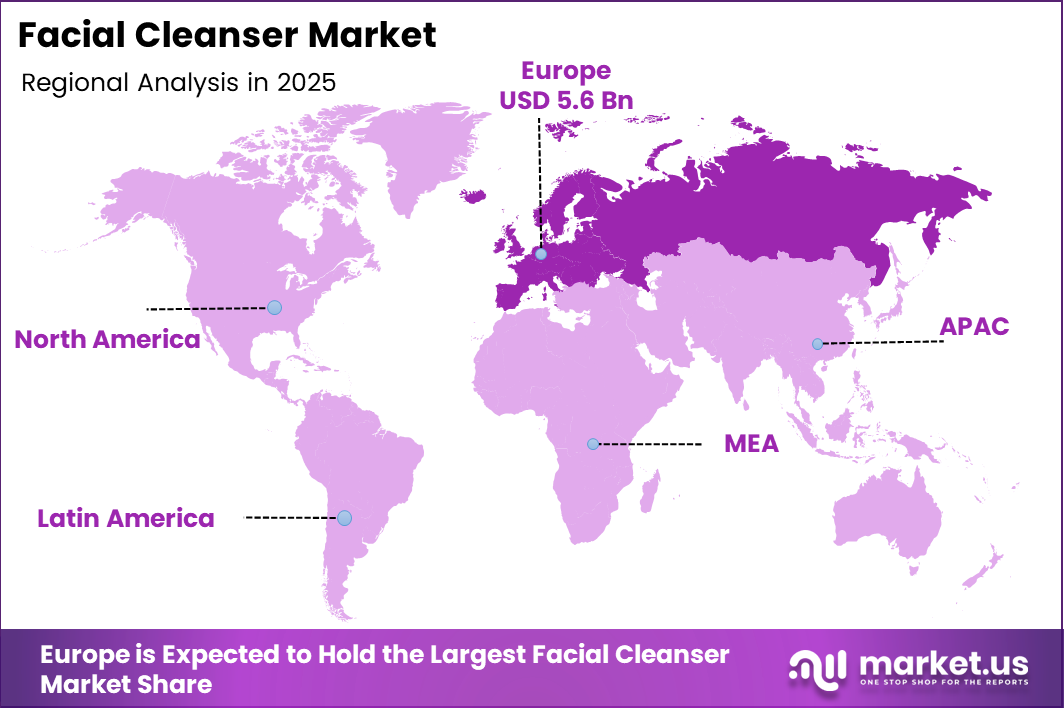
- Europe leads regionally with 38.60% share valued at USD 5.6 billion.
Market Segmentation Overview
Normal skin leads the skin type segment with 26.9% share. This dominance reflects a large consumer base and compatibility with multiple products. Consequently, brands prioritize mild and daily-use formulations. Oily and dry skin segments also grow due to demand for targeted solutions like oil control and hydration.
Gel cleansers dominate product type with 39.6% share due to their lightweight texture and effectiveness. Consumers prefer these products for deep cleansing and oil removal. Moreover, dermatologists recommend gel-based formulas for combination skin, which strengthens their adoption across multiple demographics and regions.
Female consumers lead with 64.2% share as they engage more in skincare routines. This trend reflects higher product awareness and usage frequency. Additionally, brands focus marketing on women, which reinforces demand. However, male grooming products are expanding, creating new growth segments in the market.
Individual use dominates end use with 82.4% share due to widespread daily skincare habits. Consumers increasingly adopt personal hygiene routines influenced by digital content. Similarly, supermarkets lead distribution with 39.7% share, as they offer convenience, variety, and promotional pricing, which drives impulse purchases.
Drivers
Rising consumer awareness about skincare significantly drives market growth. Consumers understand the importance of proper cleansing for healthy skin. Social media and dermatologist advice further influence behavior. Consequently, consistent product usage increases, which supports steady revenue growth across both developed and emerging markets.
Increasing disposable income in emerging economies boosts spending on personal care products. Urban populations adopt premium skincare routines more frequently. Additionally, middle-class expansion drives demand for specialized products. Therefore, brands expand product lines and pricing tiers to capture diverse consumer segments globally.
Use Cases
Consumers use facial cleansers in daily skincare routines to remove impurities and maintain hygiene. Individuals apply these products morning and night for optimal results. This routine improves skin health and appearance. Consequently, brands focus on promoting daily usage to increase product consumption and brand loyalty.
Professional settings such as spas and dermatology clinics use cleansers for treatment preparation. Experts use these products before procedures like facials and chemical treatments. This ensures clean skin and better results. Therefore, commercial demand supports premium product development and higher-value formulations in the market.
Major Challenges
High product costs limit adoption among price-sensitive consumers. Premium formulations often carry higher prices due to advanced ingredients. This restricts access in developing markets. Consequently, consumers switch to cheaper alternatives like soap, which reduces overall penetration of specialized skincare products globally.
Consumer misinformation about skincare practices remains a major barrier. Many users apply incorrect methods or products. This reduces effectiveness and limits demand. Therefore, brands invest in awareness campaigns and educational marketing to improve understanding and drive correct product usage among target audiences.
Business Opportunities
E-commerce expansion creates strong growth opportunities for facial cleanser brands. Online platforms improve accessibility and convenience for consumers. Digital marketing and personalized recommendations boost sales. Consequently, companies increase investments in direct-to-consumer strategies to capture growing online demand.
Product innovation in sustainable and multifunctional formulations drives new revenue streams. Consumers prefer eco-friendly and value-added products. Brands introduce cleansers with hydration, anti-aging, and brightening benefits. Therefore, innovation supports premium pricing and enhances competitive positioning in global markets.
Regional Analysis
Europe leads the market with 38.60% share and valuation of USD 5.6 billion. Strong consumer awareness and purchasing power support this dominance. Additionally, strict regulatory standards ensure product quality. Consequently, premium skincare products gain high acceptance, which strengthens regional market leadership.
Asia Pacific represents the fastest-growing region due to rising incomes and urbanization. Countries like China and India show strong demand growth. Moreover, K-Beauty trends influence consumer preferences. Therefore, international and domestic brands expand operations to capture emerging opportunities in this region.
Recent Developments
- December 2024 — L’Oréal acquired Gowoonsesang Cosmetics, expanding K-Beauty portfolio and strengthening global skincare presence.
- January 2026 — Lion Corporation acquired Sukin, accelerating entry into natural beauty segment and Asia Pacific markets.
Conclusion
The facial cleanser market shows steady growth driven by rising awareness and daily skincare adoption. Consumers increasingly prioritize hygiene and skin health. Additionally, digital influence and dermatologist recommendations support consistent demand across global markets, which ensures stable long-term expansion.
Dominant segments such as gel cleansers and female consumers shape market dynamics. Europe leads regionally due to strong infrastructure and regulations. Meanwhile, Asia Pacific offers rapid growth potential. Consequently, companies balance mature market strategies with expansion into emerging economies.
Companies must invest in innovation, sustainability, and digital channels to stay competitive. Brands should also focus on consumer education and personalization. These strategies will help capture new demand. The market is expected to reach USD 25.6 billion by 2035, reflecting strong future potential.
Looking for data tailored to your specific market, region, or business need? Request a custom report or consultation — write to us at sales@market.us
Discuss your needs with our analyst
Please share your requirements with more details so our analyst can check if they can solve your problem(s)