Market Overview
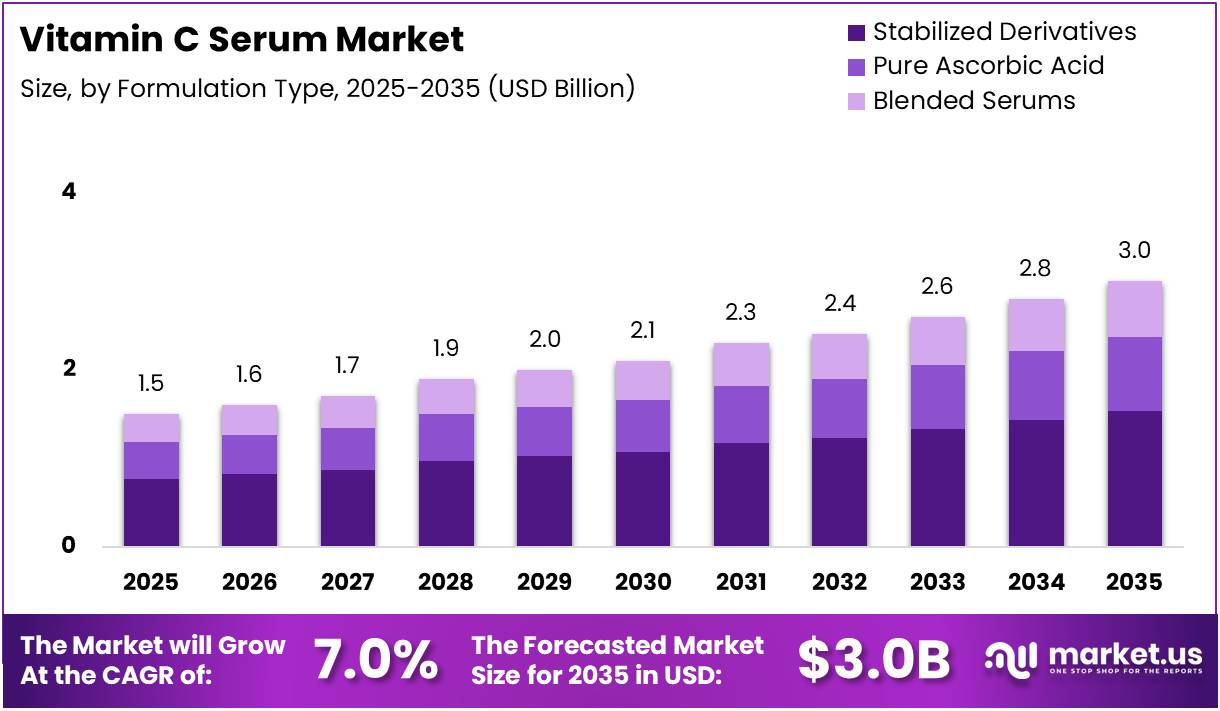
The Global Vitamin C Serum Market is valued at USD 1.5 Billion in 2025 and is projected to reach USD 3.0 Billion by 2035, expanding at a CAGR of 7.0% during 2026–2035. This growth reflects rising demand for antioxidant skincare and increasing consumer focus on visible skin improvement outcomes.
Vitamin C serums are topical skincare products containing ascorbic acid or its derivatives. These formulations help brighten skin tone, reduce pigmentation, and protect against environmental damage. Consumers across age groups use these products daily, especially those seeking anti-aging and skin repair solutions.
Data-Driven Insights for Smarter Business Decisions: Explore the Full Report
Beauty and personal care industries drive strong demand for these formulations. Dermatology clinics, cosmetic brands, and online skincare platforms widely promote these products. Moreover, consumers use them for daily skincare routines, anti-aging treatments, and hyperpigmentation correction, especially in urban and high-pollution environments.
Technology advancements improve product performance and stability. Manufacturers use encapsulation techniques and stabilized derivatives to enhance absorption and shelf life. Additionally, digital tools such as skin analysis apps and AI-based recommendations help consumers choose suitable formulations, increasing adoption and personalized skincare engagement.
Regulatory bodies such as the FDA and European agencies ensure product safety and formulation standards. These regulations build consumer trust and improve product reliability. Consequently, compliant and clinically validated products gain stronger market traction, especially in developed regions with strict cosmetic regulations.
According to affordable.skin, 45% of users under 30 use Vitamin C serums daily, reflecting early adoption trends. Additionally, journal.pandawainstitute.com reports a 20.35% increase in skin firmness, proving clinical effectiveness. These statistics highlight strong consumer trust and support continued global market expansion.
Key Takeaways
- The market is valued at USD 1.5 Billion in 2025 and will reach USD 3.0 Billion by 2035.
- The market will grow at a CAGR of 7.0% during 2026–2035.
- Stabilized Derivatives lead formulation with 51.3% share due to better stability.
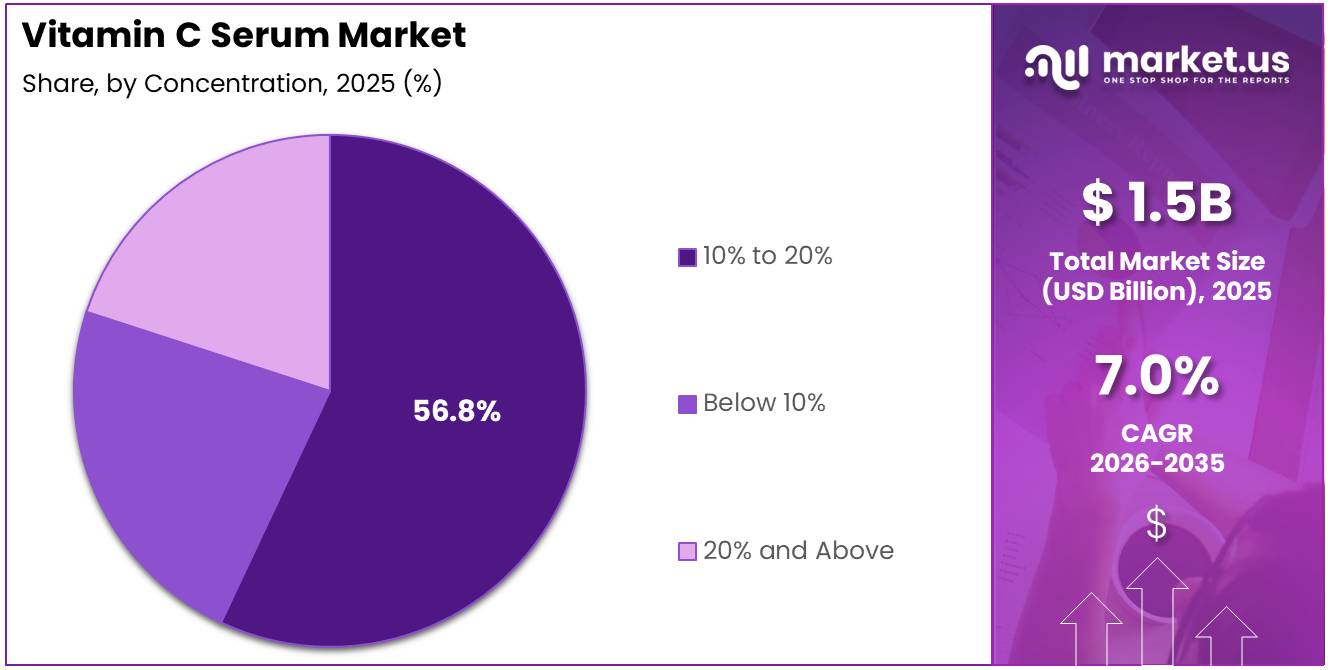
- 10% to 20% concentration dominates with 56.8% share due to balanced effectiveness.
- Online distribution leads with 56.8% share due to convenience and accessibility.
- North America dominates with 37.90% share, valued at USD 0.5 Billion.
Market Segmentation Overview
Stabilized derivatives dominate formulation type with 51.3% share. This leadership reflects improved shelf life and reduced oxidation risks, ensuring consistent product performance. Consequently, brands prefer these formulations to deliver reliable results across diverse skin types and enhance customer satisfaction in competitive skincare markets.
Moreover, the 10% to 20% concentration segment holds 56.8% share due to its balance between effectiveness and skin tolerance. Consumers prefer this range because it delivers visible results without irritation. Therefore, brands widely promote this concentration as a safe and effective daily skincare solution.
Additionally, online channels capture 56.8% share in distribution. This dominance results from easy product access, influencer marketing, and digital consultations. Consequently, e-commerce platforms enable brands to expand reach globally and provide personalized shopping experiences, driving consistent sales growth.
Drivers
Rising demand for skin brightening solutions drives market growth significantly. Consumers actively seek products that reduce pigmentation and improve skin tone. Consequently, Vitamin C serums gain popularity as effective solutions, encouraging brands to expand product lines and invest in innovation across premium and mass-market categories.
Growing awareness of environmental skin damage further accelerates adoption. Consumers recognize the protective role of antioxidants against pollution and UV exposure. Therefore, urban populations increasingly use these serums as preventive skincare, strengthening demand and supporting long-term market expansion.
Use Cases
Skincare consumers use Vitamin C serums for daily brightening routines. These products help reduce dark spots and improve overall skin clarity. Consequently, individuals incorporate them into morning routines to achieve visible improvements and maintain consistent skin health over time.
Additionally, dermatology clinics use these formulations for anti-aging treatments. Professionals recommend them to improve firmness and reduce wrinkles. Therefore, clinical usage strengthens product credibility and drives demand among consumers seeking scientifically proven skincare solutions.
Major Challenges
Product stability remains a key challenge in this market. Pure Vitamin C degrades quickly when exposed to light and air. Consequently, reduced effectiveness leads to consumer dissatisfaction, impacting brand trust and limiting repeat purchases, especially in mid-range product segments.
High formulation complexity increases production costs for manufacturers. Companies require advanced technologies and specialized packaging to maintain product quality. Therefore, smaller brands face barriers in delivering affordable yet effective products, limiting market entry and competitive positioning.
Business Opportunities
Advanced stabilized formulations create strong growth opportunities. Innovations such as encapsulated Vitamin C improve absorption and durability. Consequently, these developments attract new consumers and enhance product effectiveness, allowing brands to differentiate offerings in competitive skincare markets.
Moreover, e-commerce expansion opens new revenue channels globally. Digital platforms allow brands to reach wider audiences efficiently. Therefore, online retail and subscription models support consistent sales, improve customer retention, and drive long-term business growth.
Regional Analysis
North America leads the market with 37.90% share, valued at USD 0.5 Billion. This dominance reflects strong consumer awareness, high spending power, and advanced retail infrastructure. Consequently, demand for dermatologist-recommended and science-based products remains strong across the region.
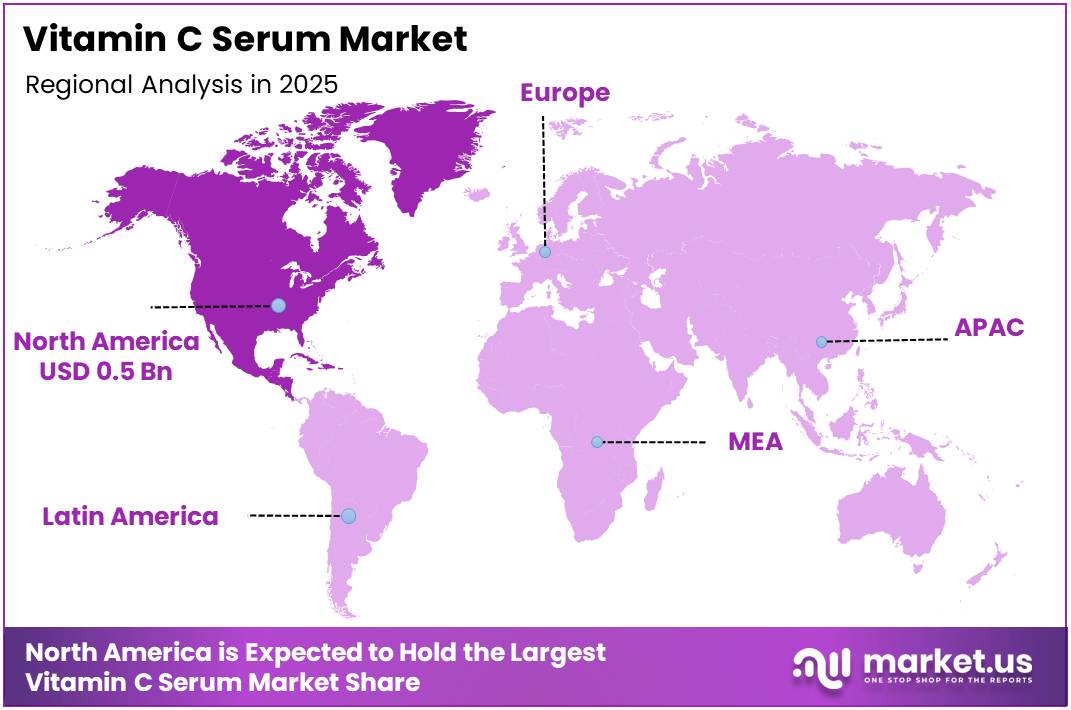
Asia Pacific represents the fastest-growing region due to rising incomes and strong beauty culture. Countries like China and India drive demand through digital influence and skincare awareness. Therefore, this region offers significant growth opportunities for global and regional skincare brands.
Recent Developments
- March 2026 — Cymbiotika partnered with Ulta Beauty, expanding into 1,000+ retail stores across the United States.
- February 2026 — Rodan + Fields launched Pure C Serum targeting long-term skin brightness and anti-aging performance.
- September 2025 — Vivier introduced Serum 30, delivering high-concentration Vitamin C for improved skin radiance.
- August 2025 — Neutrogena launched a 15% Vitamin C serum in collaboration with Serena Kerrigan.
- June 2025 — L’Oréal announced acquisition plans for Medik8 to strengthen clinical skincare portfolio.
Conclusion
The Vitamin C serum market shows strong growth driven by rising skincare awareness and demand for effective formulations. Consumers prioritize visible results and scientifically backed ingredients. Consequently, manufacturers continue investing in innovation to meet evolving consumer expectations.
Stabilized derivatives and mid-range concentration segments dominate due to performance and safety balance. North America leads regional growth, while Asia Pacific expands rapidly. Therefore, companies must focus on regional strategies and product customization to capture broader market opportunities.
Companies should invest in research, digital marketing, and advanced formulations to stay competitive. Expanding online presence and improving product stability will remain key success factors. Consequently, the market is expected to reach USD 3.0 Billion by 2035, reflecting sustained global demand.
Looking for data tailored to your specific market, region, or business need? Request a custom report or consultation — write to us at sales@market.us
Discuss your needs with our analyst
Please share your requirements with more details so our analyst can check if they can solve your problem(s)