Market Overview
The Global Organic Baby Toiletries Market is valued at USD 9.0 billion in 2025 and is projected to reach USD 18.6 billion by 2035. The market is expected to grow at a CAGR of 7.6% during 2026–2035. This expansion reflects rising demand for safe infant care solutions.
Organic baby toiletries include plant-based personal care products designed for infants and toddlers. These products exclude synthetic chemicals and artificial fragrances. Parents use them to ensure gentle skin care. Manufacturers develop formulations that meet safety expectations and dermatological standards.
Data-Driven Insights for Smarter Business Decisions: Explore the Full Report
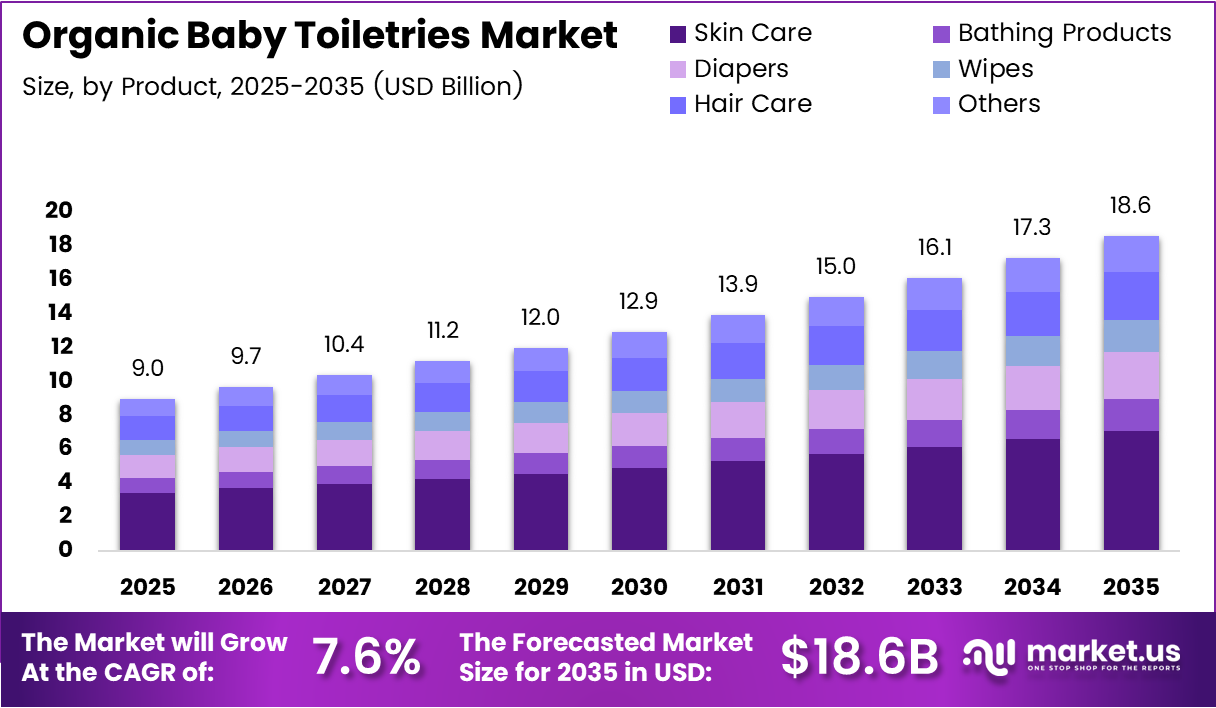
Personal care brands, healthcare providers, and retail distributors drive adoption across global markets. Skin care, bathing products, and diapers lead usage. Moreover, online platforms and supermarkets support product visibility. Consequently, growing awareness among parents increases demand for safer baby care products.
Technology enhances formulation precision and product transparency in this market. Companies use digital platforms to share ingredient details and safety data. Additionally, improved packaging innovations support convenience and sustainability. Therefore, brands strengthen consumer trust through better product design and communication.
Government regulations promote safer product development in baby care categories. Authorities restrict harmful ingredients and require disclosure standards. This regulatory environment supports organic certification growth. Consequently, compliant brands gain competitive advantage and expand market presence globally.
Industry data highlights strong consumer preference for natural products. Indian Retailer reports 61% of parents prefer natural baby products. XJ Beauty research shows 60% of infants experience skin sensitivity. These findings increase demand for organic solutions and strengthen long-term market growth.
Key Takeaways
- The market is valued at USD 9.0 billion in 2025 and will reach USD 18.6 billion by 2035.
- The market will grow at a CAGR of 7.6% during 2026–2035.
- Skin Care leads with 38.2% share due to high sensitivity needs.
- Liquid formulation dominates with 51.5% share due to convenience.
- Infants segment holds 63.7% share due to early-stage usage.
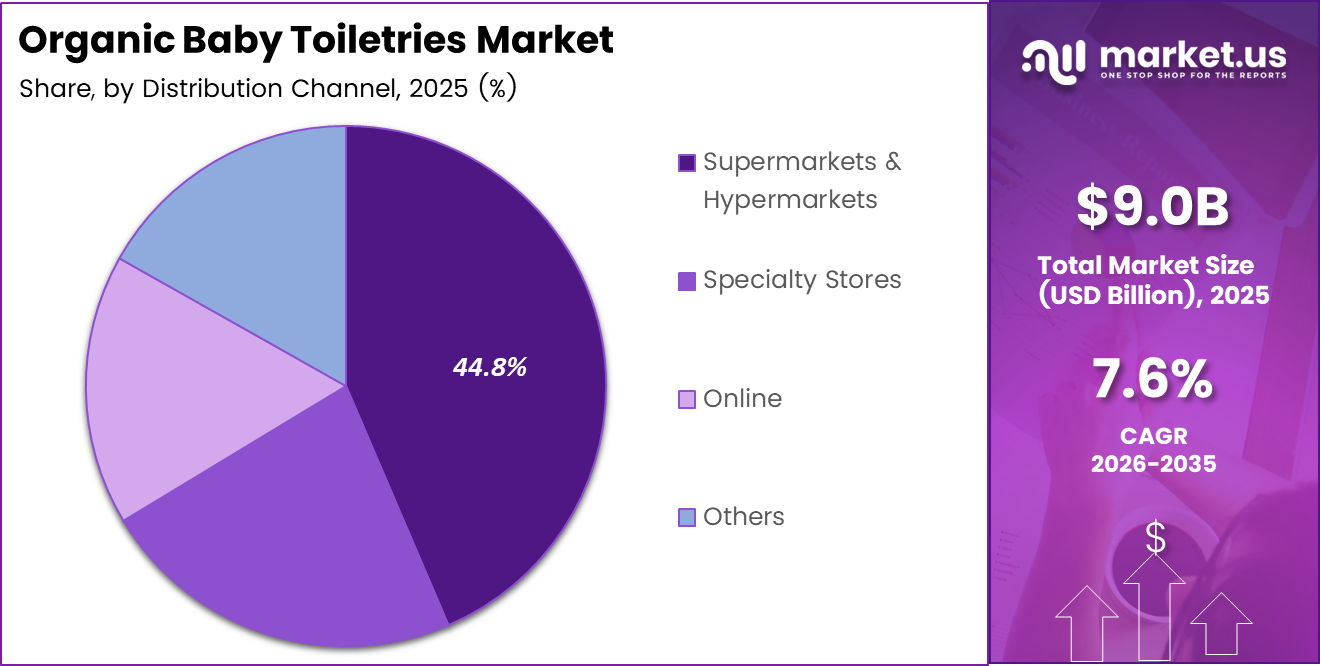
- Supermarkets and hypermarkets lead with 44.8% share.
- North America dominates with 45.30% share valued at USD 4.0 billion.
Market Segmentation Overview
Skin Care dominates the product segment with 38.2% share. This dominance reflects high infant skin sensitivity and clinical demand. Parents prioritize safe formulations for delicate skin. Consequently, brands focus on organic skin care to meet safety expectations and maintain strong product demand.
Moreover, Liquid formulations lead with 51.5% share due to ease of use. Parents prefer rinse-off formats for daily hygiene routines. This convenience supports frequent usage. Therefore, manufacturers prioritize liquid-based products to align with consumer habits and increase repeat purchases.
Additionally, the Infants segment holds 63.7% share due to early-stage product adoption. Parents establish brand preferences during infancy. This behavior drives long-term loyalty. Consequently, companies focus marketing strategies on newborn care to capture high-value customers.
Furthermore, Supermarkets and Hypermarkets dominate distribution with 44.8% share. These outlets provide product comparison and high visibility. Consumers evaluate labels directly before purchase. Therefore, physical retail strengthens trust and supports higher conversion rates.
Drivers
Rising parental awareness about chemical exposure drives market growth. Research shows infants absorb up to 60% more chemicals through skin. This concern encourages safer product choices. Consequently, demand for organic baby toiletries increases as parents prioritize ingredient transparency.
Moreover, clinical recommendations from pediatricians influence purchasing decisions. Healthcare professionals endorse mild formulations for infant care. Parents trust these recommendations strongly. Therefore, clinical validation accelerates adoption of organic products and strengthens brand credibility.
Use Cases
Parents use organic baby toiletries for daily hygiene routines, including bathing and skin care. These products reduce irritation and maintain skin balance. Gentle formulations improve comfort. Consequently, organic products support healthier skin outcomes for infants.
Additionally, healthcare settings use organic toiletries for newborn care. Hospitals prioritize safe formulations to prevent reactions. These products ensure minimal chemical exposure. Therefore, medical usage reinforces product reliability and influences consumer trust.
Major Challenges
High product cost limits adoption among price-sensitive consumers. Organic certification and sourcing increase production costs. Many families cannot afford premium products. Consequently, market penetration remains limited in lower-income regions.
Furthermore, raw material supply constraints affect production stability. Organic ingredients depend on strict sourcing standards. Seasonal variations disrupt availability. Therefore, supply challenges impact pricing and restrict large-scale manufacturing.
Business Opportunities
E-commerce expansion creates strong growth opportunities for organic brands. Online platforms improve product accessibility. Subscription models increase repeat purchases. Consequently, companies benefit from predictable revenue streams and wider market reach.
Additionally, clinical validation strengthens product positioning. Studies show 37% improvement in infant skin hydration with natural products. This evidence builds trust. Therefore, brands using clinical data can attract a broader consumer base.
Regional Analysis
North America leads the market with 45.30% share valued at USD 4.0 billion. Strong regulatory standards and consumer awareness drive demand. High disposable income supports premium purchases. Consequently, the region maintains leadership in organic baby care adoption.
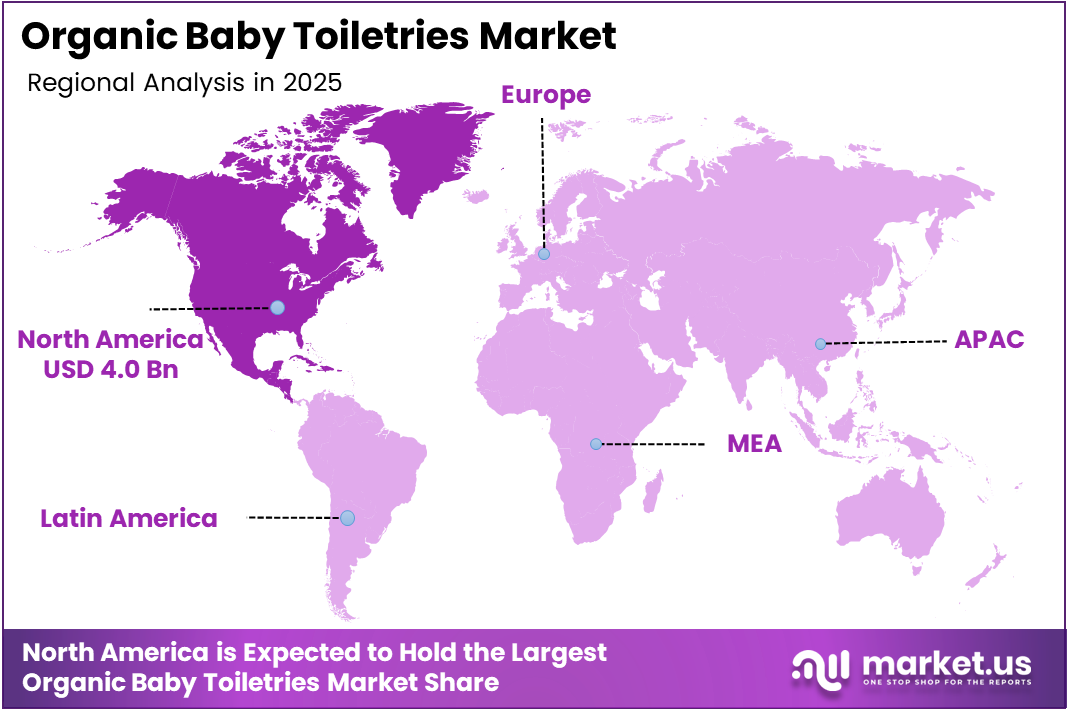
However, Asia Pacific shows strong growth potential due to urbanization. Rising middle-class income increases demand for premium products. Additionally, e-commerce expansion supports accessibility. Therefore, the region offers significant growth opportunities for market players.
Recent Developments
- November 2025 — Johnson’s Baby upgraded products with advanced formulas and 50% recycled packaging.
- 2025 — Ceuticoz launched dermatology-based baby care products, expanding natural product offerings.
- December 2025 — TAKE ME HOME launched natural baby care products in retail stores.
Conclusion
The organic baby toiletries market shows steady growth driven by rising awareness and regulatory support. Parents increasingly demand safer products for infant care. Moreover, digital channels improve product access. These factors collectively support long-term market expansion.
Dominant segments such as skin care and liquid formulations lead due to convenience and safety benefits. North America remains the leading region with strong demand. However, Asia Pacific emerges as a key growth market driven by rising income levels.
Companies must focus on innovation, affordability, and sustainability to remain competitive. Investment in clinical validation and digital channels will drive growth. Therefore, the market is expected to reach USD 18.6 billion by 2035.
Looking for data tailored to your specific market, region, or business need? Request a custom report or consultation — write to us at sales@market.us
Discuss your needs with our analyst
Please share your requirements with more details so our analyst can check if they can solve your problem(s)