Market Overview
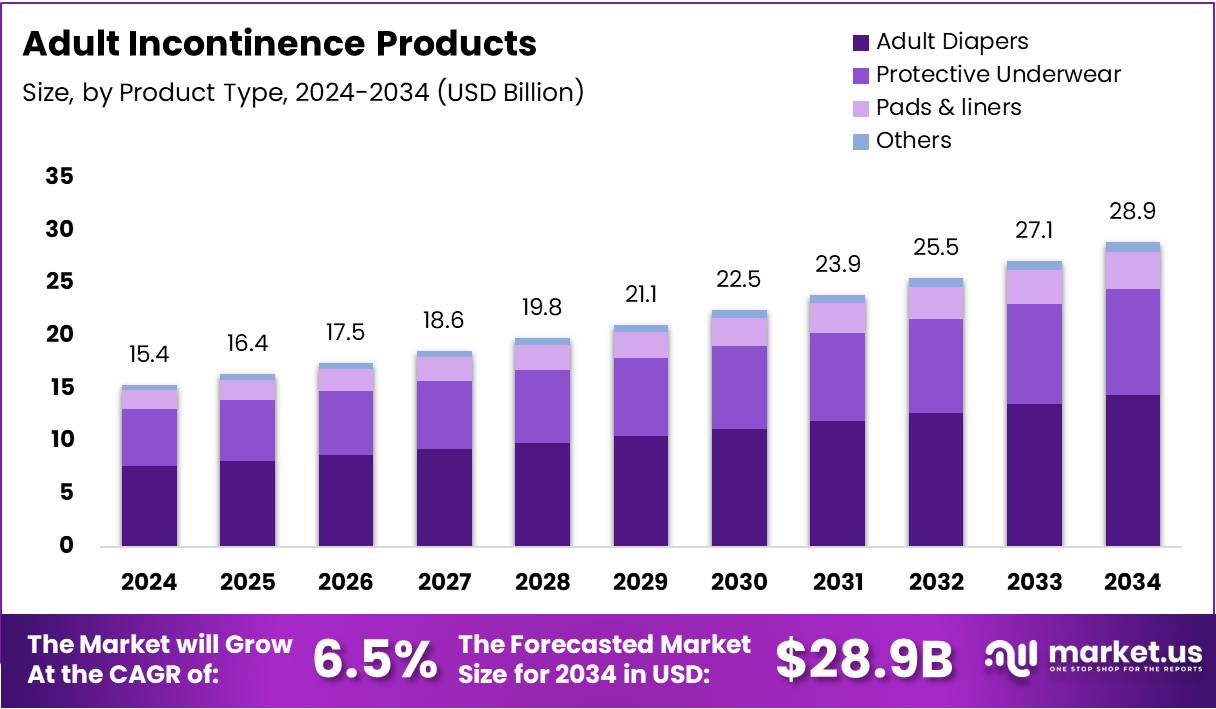
The global Adult Incontinence Products Market is valued at USD 15.4 Billion in 2024 and is projected to reach USD 28.9 Billion by 2034. The market grows at a CAGR of 6.5% during the forecast period from 2025 to 2034. This steady expansion reflects rising demand for hygiene solutions that address bladder and bowel control challenges.
Adult incontinence products include pads, briefs, protective underwear, and skin-friendly essentials. These products improve comfort, dignity, and mobility for users managing incontinence. Caregivers, healthcare institutions, and individual consumers rely on these solutions for daily hygiene management.
Get further insight into the global trends shaping the future of the adult incontinence products industry. Request Sample
Key sectors driving adoption include home healthcare, nursing homes, hospitals, and long-term care facilities. Elderly consumers represent the primary demand base. Additionally, postpartum recovery, surgical aftercare, and neurological conditions extend usage across younger age groups and professional healthcare environments.
Technology improvements are transforming product performance across this market. Manufacturers now integrate super-absorbent polymers, odor-control systems, and breathable fabrics into new designs. Smart moisture indicators and wearable sensors are also emerging, helping caregivers monitor usage and improve patient hygiene outcomes more accurately.
Regulations supporting elderly wellbeing are directly enabling market growth. Public health agencies invest in community hygiene programmes and establish reimbursement frameworks for qualifying incontinence products. These policies expand product access for low-income seniors and motivate manufacturers to improve safety, skin compatibility, and labeling standards.
Prevalence data reinforces sustained product demand across all regions. According to available research, 14 million people in the UK experience some degree of urinary incontinence. Studies also indicate that 10%–30% of women below 64 and 15%–30% of individuals above 65 face urinary incontinence. Furthermore, 50% or more of nursing-home residents experience fecal incontinence, underscoring the scale of institutional need.
Key Takeaways
- The global Adult Incontinence Products Market is expected to reach USD 28.9 Billion by 2034, growing from USD 15.4 Billion in 2024 at a CAGR of 6.5%.
- Adult Diapers dominate the product type segment with a 49.8% market share, driven by superior absorbency and full-coverage protection.
- Female consumers lead the consumer group segment with a 59.6% share, reflecting higher incontinence prevalence due to physiological factors.
- Seniors aged 65 and above represent 69.9% of the market by age group, driven by age-related physiological changes.
- Disposable products hold 91.2% of the category segment, reflecting strong preference for convenience and hygiene.
- Medium-size products capture 41.3% market share by size, aligning with average body dimensions across diverse populations.
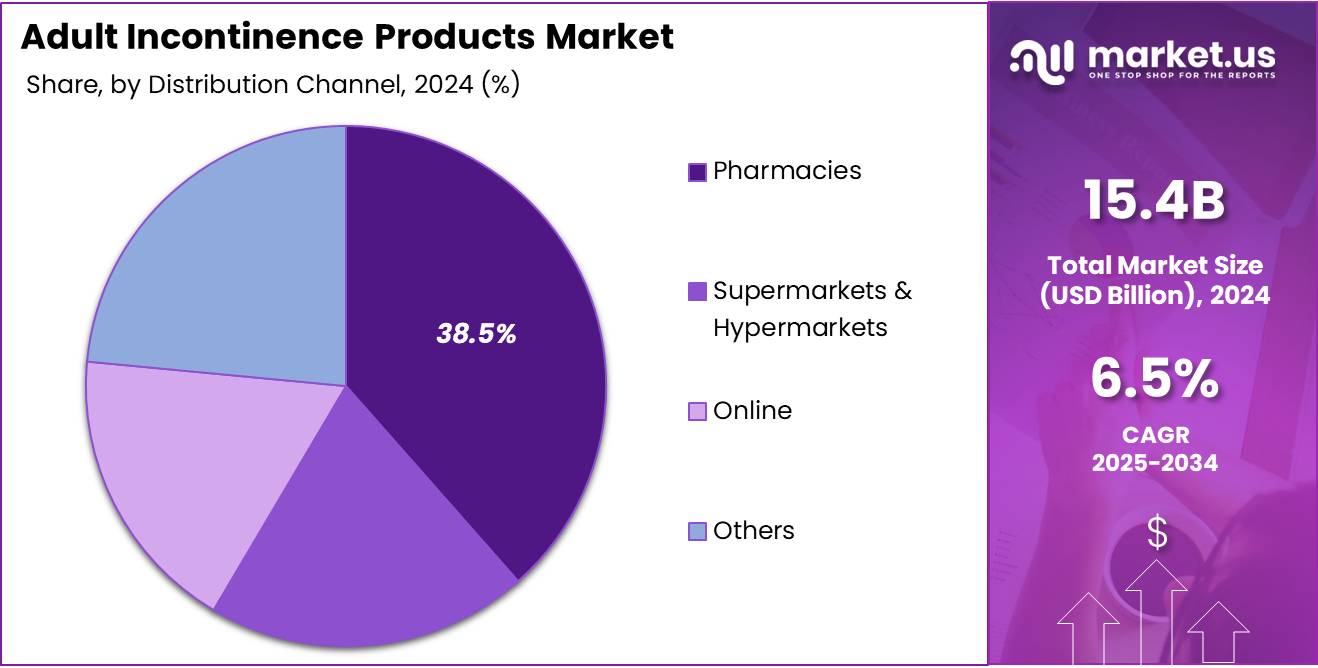
- Pharmacies account for 38.5% of sales by distribution channel, supported by professional guidance and immediate availability.
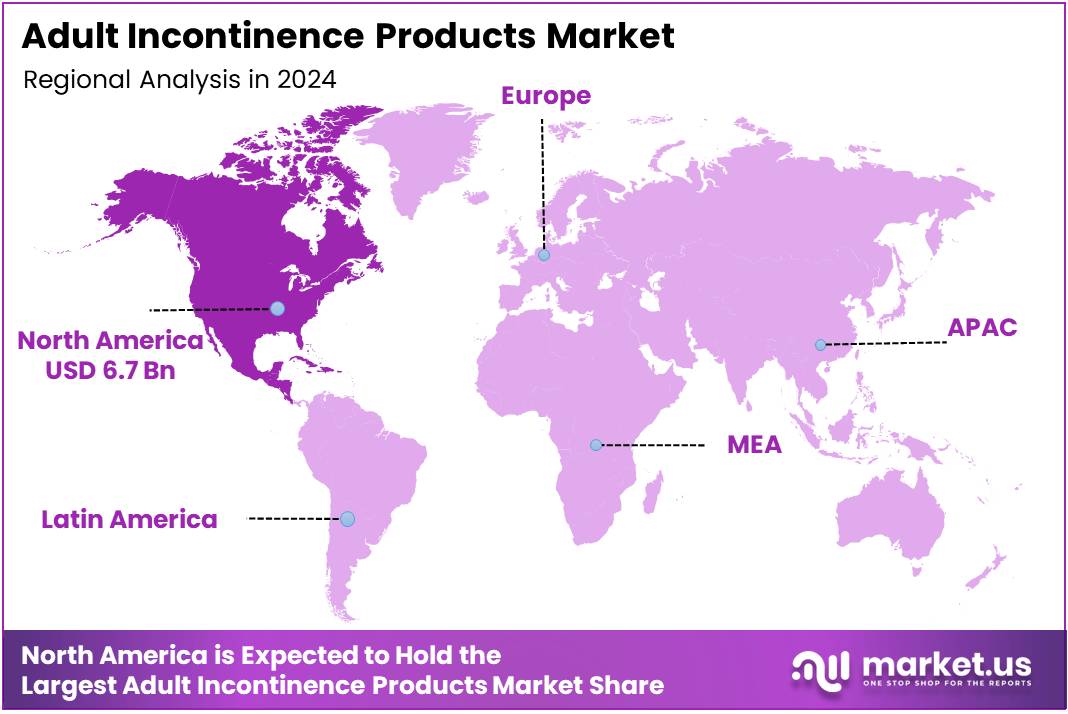
- North America leads all regions with a 43.6% market share, valued at USD 6.7 Billion.
Market Segmentation Overview
Adult Diapers command the largest product-type share at 49.8%, preferred for managing severe incontinence with maximum absorbency and full leak protection. Their tab-style design supports bedridden patients and those needing extended wear. This dominance reflects growing awareness about maintaining user dignity and comfort in both home-care and institutional settings.
Protective Underwear and Pads & Liners serve active adults and those with mild or moderate incontinence. Pull-up styles offer independence and discretion during daily activities. Slim-profile pads appeal to working professionals managing occasional leakage. Moreover, specialized products such as underpads and bedding protection address diverse needs across varied care environments.
Female consumers hold 59.6% of the market by consumer group. Biological factors including pregnancy, childbirth, and menopause drive this dominance. Manufacturers target this segment with gender-specific designs emphasizing discretion and comfort. Male consumers represent a growing share as stigma around male incontinence continues to decrease.
Seniors aged 65 and above account for 69.9% of demand by age group. Age-related muscle weakening and chronic conditions such as diabetes and dementia increase incontinence likelihood. Additionally, middle-aged adults facing hormonal or post-surgical incontinence are also driving adoption of premium protective underwear.
Disposable products hold a dominant 91.2% category share, favored for their convenience, consistent absorbency, and reduced infection risk. Reusable alternatives attract eco-conscious consumers and budget-focused households. However, disposables remain the standard in institutional settings where sanitation protocols demand single-use hygiene solutions.
Medium-size products capture 41.3% of the size segment, fitting the majority of adult consumers and simplifying retail inventory management. Large and extra-large sizes address growing obesity rates and bariatric patients. Small sizes serve petite and elderly individuals experiencing age-related weight loss, ensuring proper fit and effective leak prevention.
Pharmacies lead distribution with a 38.5% channel share. Professional consultation and insurance reimbursement processing encourage consumers to purchase incontinence supplies during routine pharmacy visits. Online channels are growing rapidly, offering discreet home delivery and subscription models that appeal to caregivers and tech-friendly consumers.
Get further insight into the global trends shaping the future of the adult incontinence products industry. Request Sample
Drivers
Aging global populations are a primary growth driver for adult incontinence care. Rising life expectancy increases the proportion of elderly adults who require reliable hygiene solutions. Simultaneously, chronic diseases such as diabetes, neurological disorders, and mobility impairments increase incontinence prevalence. Healthcare providers increasingly recommend advanced absorbent products for long-term home and clinical use.
Technological advancements are accelerating product adoption across consumer and institutional segments. Manufacturers now embed super-absorbent polymers, breathable fabrics, and smart moisture sensors into new product lines. These innovations improve comfort, reduce skin irritation, and support better hygiene management. Consequently, users are transitioning from basic products to more efficient, skin-friendly incontinence solutions.
Use Cases
Home-care settings represent a major real-world application for adult incontinence products. Elderly adults managing bladder or bowel control challenges rely on adult diapers and protective underwear for daily hygiene. Family caregivers depend on high-absorbency products with extended wear capabilities to reduce changing frequency and support dignified, comfortable care at home.
Moreover, hospitals and nursing homes create sustained institutional demand across this market. Facilities prioritize leakage-protection products that minimize infection risks and maintain patient skin health. Studies show that over 50% of nursing-home residents experience fecal incontinence, making reliable absorbent products an essential part of clinical care standards and infection-control protocols.
Major Challenges
Environmental concerns are creating significant pressure on manufacturers of disposable incontinence products. Most products use non-biodegradable materials that contribute to growing landfill waste. Regulators and consumers increasingly demand sustainable alternatives. However, developing eco-friendly products with comparable performance typically requires higher costs and longer innovation timelines, slowing the pace of green product adoption.
Additionally, social stigma around incontinence continues to restrict product uptake in many markets. Many adults avoid seeking help due to embarrassment, leading to delayed product adoption and reduced market penetration. Education about incontinence management remains limited in several regions. Healthcare professionals must play a more active role in normalizing conversations and guiding consumers toward appropriate solutions.
Business Opportunities
Growing consumer interest in sustainable hygiene solutions presents a major opportunity for manufacturers. Demand for biodegradable pads, briefs, and liners is rising as eco-conscious consumers prioritize environmental responsibility. Companies that successfully develop high-performance biodegradable products can differentiate their portfolios, attract premium buyers, and align with tightening regulatory standards on environmental impact.
Therefore, smart technology integration represents another high-growth opportunity across this market. Wearable sensors and digital monitoring tools help caregivers track moisture levels and optimize product usage. As digital health adoption accelerates globally, tech-enabled incontinence solutions are well-positioned to attract both healthcare providers and home-care consumers seeking improved hygiene management and reduced caregiver workload.
Regional Analysis
North America dominates the global Adult Incontinence Products Market with a 43.6% share valued at USD 6.7 Billion. The baby boomer generation entering senior years drives strong product demand across the United States. Favorable reimbursement policies, well-established retail infrastructure, and reduced stigma around incontinence care further reinforce the region’s market leadership.
Get further insight into the global trends shaping the future of the adult incontinence products industry. Request Sample
Asia Pacific is the fastest-growing region, driven by rapidly aging populations in Japan, China, and South Korea. Japan leads as a mature, high-adoption market due to its super-aged society. China and India offer enormous growth potential as awareness improves, healthcare infrastructure expands, and international brands introduce affordable, innovative product options to large elderly consumer bases.
Recent Developments
- May 2025 — NorthShore expanded U.S. manufacturing capacity for premium incontinence products, strengthening domestic supply and enabling faster delivery of high-absorbency solutions across retail and online channels.
- September 2025 — Tulips launched TULIPS Adult Diaper Pants, entering the adult hygiene category to capture rising demand for comfortable, discreet incontinence wear in India and nearby markets.
- February 2025 — First Quality Enterprises signed a definitive agreement to acquire Henkel’s Retailer Brands business in North America, expanding its private-label incontinence and personal care portfolio. The company also announced the formation of First Quality Home Care Products, a new division focused on long-term care and home-use hygiene solutions.
- January 2024 — Boston Scientific acquired Axonics, Inc., integrating advanced minimally invasive technologies for urinary and bowel dysfunction treatment and strengthening its leadership position in urology and continence therapy.
Conclusion
The Adult Incontinence Products Market is on a sustained upward trajectory, driven by aging demographics, rising chronic disease prevalence, and growing product innovation. Manufacturers investing in absorbency, comfort, and skin-friendly materials are capturing consumer loyalty. These combined factors position the market for consistent growth across both developed and emerging economies over the next decade.
Adult Diapers and disposable products dominate their respective segments, reflecting strong institutional and consumer preference for reliable, convenient hygiene solutions. North America leads globally with the highest revenue share, while Asia Pacific offers the strongest growth momentum. Female consumers and seniors represent the largest user bases, guiding product development priorities for manufacturers worldwide.
Companies that align their strategies with eco-friendly innovation, digital health integration, and gender-specific product design will capture the most significant opportunities ahead. Expanding into underserved emerging markets and strengthening e-commerce distribution will also be critical. The global Adult Incontinence Products Market is forecast to reach USD 28.9 Billion by 2034, rewarding brands that act with speed and purpose.
Looking for data tailored to your specific market, region, or business need? Request a custom report or consultation — write to us at sales@market.us
Discuss your needs with our analyst
Please share your requirements with more details so our analyst can check if they can solve your problem(s)