Market Overview
The Global Toothpaste Market was valued at USD 27.4 Billion in 2025 and is projected to reach USD 36.4 Billion by 2035. The market is expected to grow at a CAGR of 2.9% during 2026 to 2035. This growth reflects stable daily demand combined with gradual premium product adoption.
Toothpaste is a daily oral care product used to clean teeth, prevent cavities, and maintain overall dental hygiene. It is available in various formulations such as fluoride-based, herbal, whitening, and sensitivity relief products. Consumers across all income groups rely on toothpaste as a basic hygiene necessity.
Data-Driven Insights for Smarter Business Decisions: Explore the Full Report
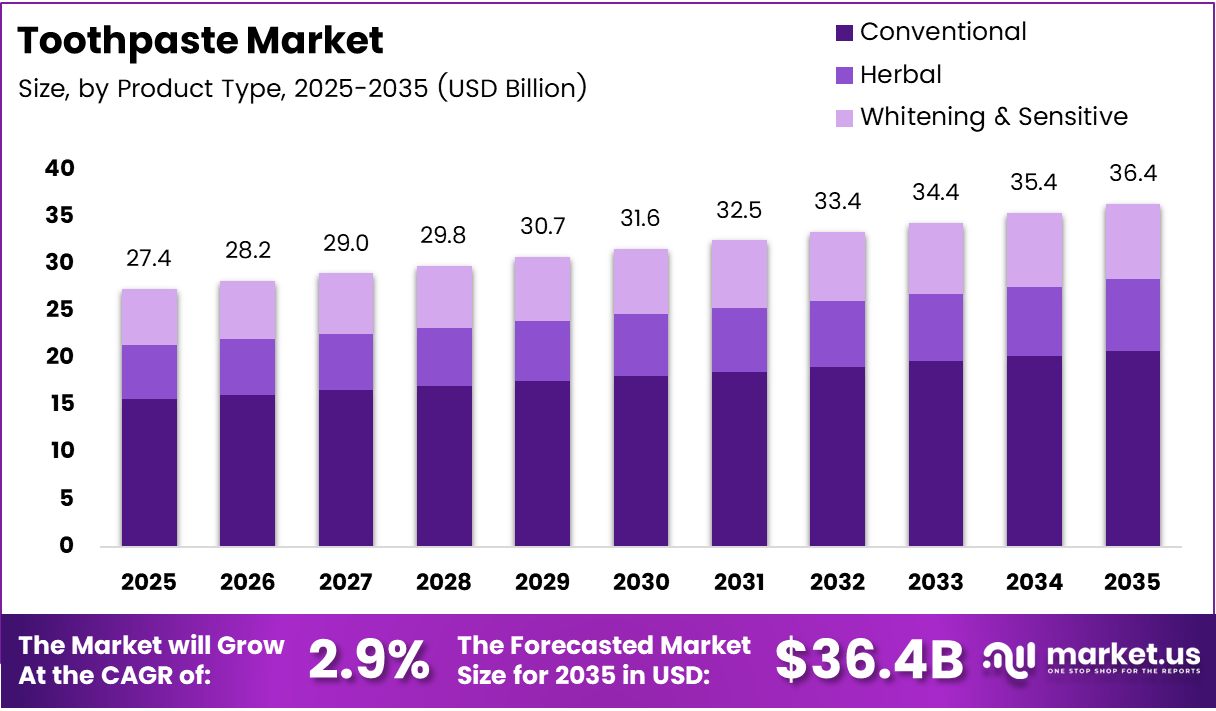
Healthcare, retail, and consumer goods industries drive demand for toothpaste globally. Households, dental clinics, and pharmacies contribute to consistent product consumption. Consequently, universal usage across age groups ensures steady market demand, while specialized products expand revenue opportunities.
Manufacturers are introducing advanced formulations with bio-active ingredients and herbal components. Companies also use digital platforms and AI-driven recommendations to promote suitable products. Therefore, innovation enhances personalization and supports the shift toward premium and functional oral care solutions.
Government-led oral health campaigns play a key role in promoting toothpaste usage. Public health initiatives in countries like India and Brazil encourage regular brushing habits. Consequently, these programs expand the consumer base and reduce barriers to first-time adoption in rural areas.
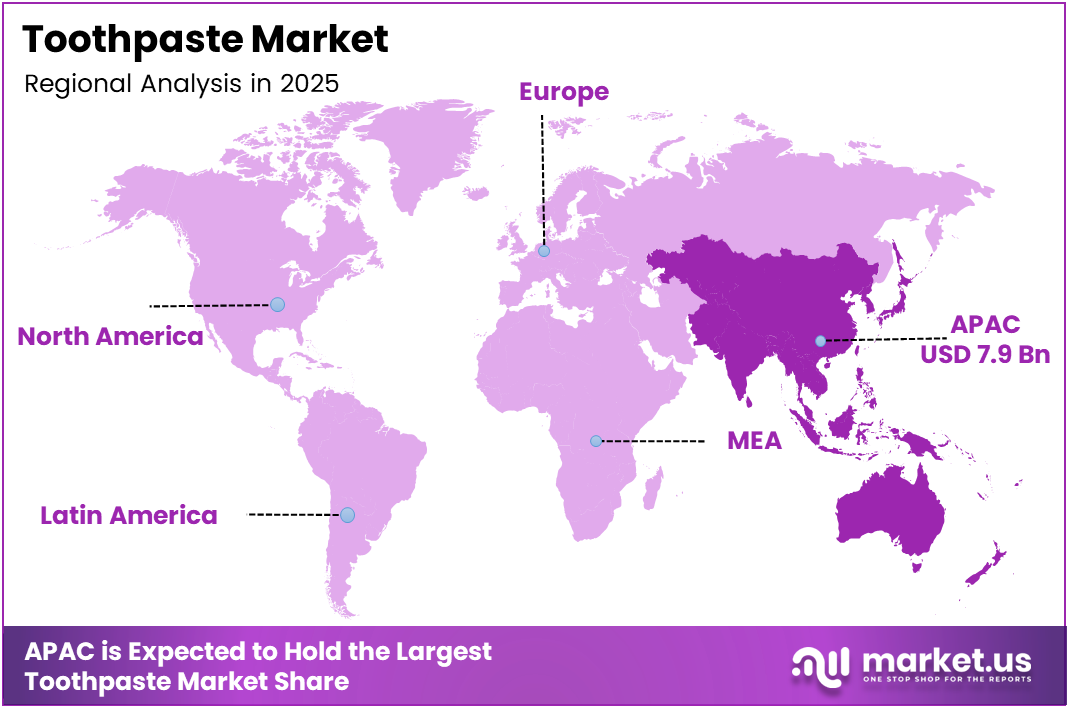
Regional data highlights strong market concentration in Asia Pacific with a 43.70% share valued at USD 7.9 Billion. This dominance reflects population scale and rising incomes. Additionally, the conventional segment holds 57.2%, indicating continued reliance on affordable products while premium segments drive value growth.
Key Takeaways
- The market will grow from USD 27.4 Billion in 2025 to USD 36.4 Billion by 2035 due to steady demand.
- The industry will expand at a CAGR of 2.9% during 2026–2035 reflecting gradual premiumization.
- Conventional toothpaste leads with 57.2% share due to affordability and familiarity.
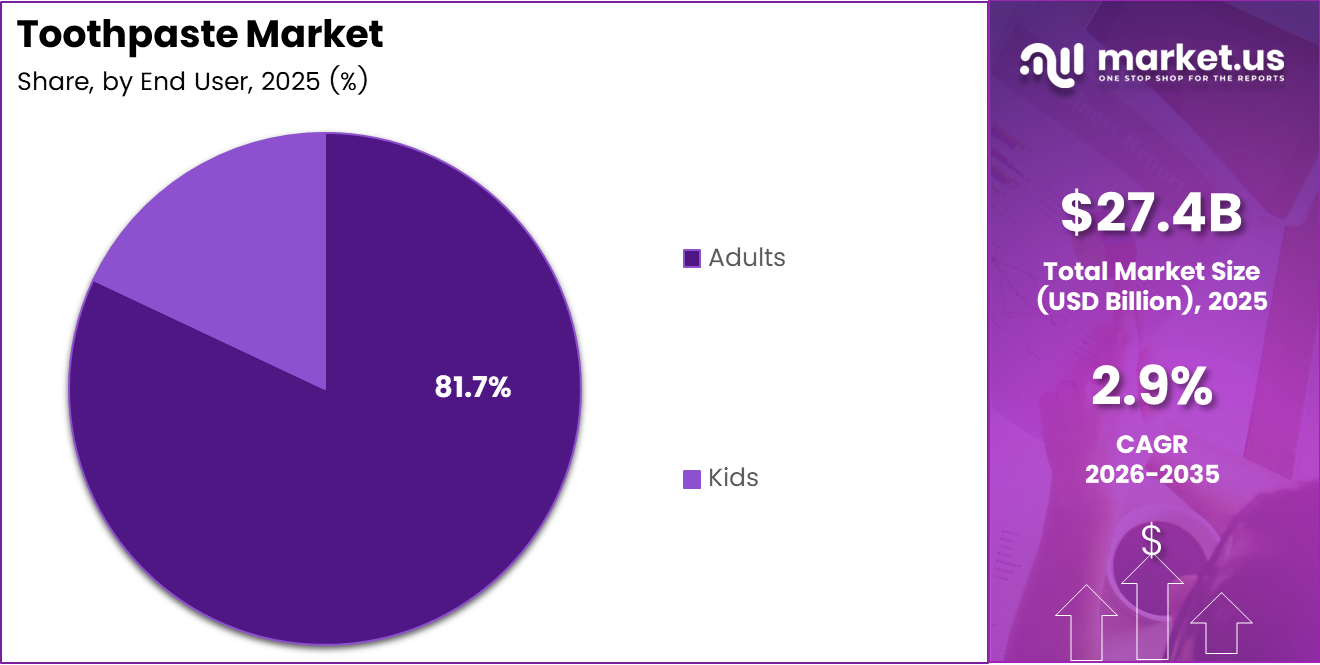
- Adults dominate usage with 81.7% share, reflecting universal daily consumption.
- Supermarkets lead distribution with 45.8% share due to accessibility and visibility.
- Asia Pacific holds 43.70% share, valued at USD 7.9 Billion.
- Premium segments drive value growth despite stable volume demand.
Market Segmentation Overview
Conventional toothpaste dominates the product segment with a 57.2% share. This leadership reflects affordability and strong consumer familiarity. Consequently, this segment ensures volume stability, while premium categories such as herbal and whitening products drive higher revenue growth.
Herbal, whitening, and sensitivity toothpaste segments are expanding rapidly due to increasing consumer awareness. These products offer targeted benefits and command higher prices. Therefore, brands invest heavily in innovation and clinical validation to capture value-driven demand.
Adults lead the end-user segment with a 81.7% share due to daily usage habits. This dominance reflects consistent consumption across working and aging populations. Consequently, adult-focused premium products contribute significantly to market revenue expansion.
Supermarkets and hypermarkets dominate distribution with a 45.8% share due to high footfall and product visibility. Consumers prefer these stores for convenience and price comparisons. Therefore, retail shelf positioning remains critical for brand success.
Drivers
Government-led oral health campaigns significantly increase toothpaste adoption across developing markets. Public awareness programs encourage daily brushing habits. Consequently, these initiatives expand the consumer base and support long-term market growth.
Consumers increasingly prefer specialized toothpaste formulations for whitening and sensitivity relief. These products offer higher perceived value and effectiveness. Therefore, premiumization drives revenue growth without requiring proportional increases in product volume.
Use Cases
Households use toothpaste daily to maintain oral hygiene and prevent dental issues. Regular brushing reduces cavities and improves overall health. Consequently, consistent usage ensures stable demand across global markets.
Dental professionals recommend specialized toothpaste for sensitivity and gum care. Patients rely on these formulations for targeted treatment. Therefore, clinical endorsement strengthens consumer trust and increases adoption of premium products.
Major Challenges
Counterfeit toothpaste products create trust issues in developing markets. Low-cost alternatives reduce brand credibility. Consequently, consumers hesitate to purchase premium products, limiting market growth potential.
High pricing of advanced formulations restricts access for low-income consumers. Premium products remain concentrated in urban markets. Therefore, affordability challenges create a gap between volume and value segments.
Business Opportunities
E-commerce platforms create new growth opportunities by expanding product reach beyond traditional retail. Online channels enable direct-to-consumer sales. Consequently, brands can target niche segments and improve market penetration.
Personalized oral care solutions driven by AI and subscription models offer strong potential. Consumers seek tailored products for specific needs. Therefore, innovation in customization enhances customer loyalty and drives premium pricing.
Regional Analysis
Asia Pacific leads the market with a 43.70% share valued at USD 7.9 Billion. Population growth and rising incomes drive demand. Consequently, the region remains the most important growth area for global toothpaste brands.
North America represents a mature but high-value market driven by premium product demand. Consumers prefer clinically validated formulations. Therefore, strong purchasing power and advanced retail infrastructure support steady growth.
Recent Developments
- September 2024 — Haleon increased stake in China joint venture with USD 637 million investment.
- June 2025 — Haleon acquired TSKF joint venture for £700 million, strengthening market control.
- FY 2025 — Colgate introduced 100% recyclable toothpaste tubes in India.
- January 2025 — Colgate expanded solar capacity generating 350,000 kWh annually.
- FY 2025 — Colgate reduced energy use by 40% through advanced chiller systems.
Conclusion
The toothpaste market shows stable growth driven by consistent daily usage and increasing premiumization. Consumers continue to rely on oral care products as essential items. Consequently, steady demand ensures long-term market sustainability.
Conventional products dominate volume, while premium segments drive value growth. Asia Pacific leads regional demand due to population and income growth. Therefore, companies focus on these segments to maximize revenue potential.
Companies must invest in innovation, digital channels, and sustainability to remain competitive. Expanding premium portfolios and improving accessibility will drive growth. Consequently, the market is expected to reach USD 36.4 Billion by 2035.
Looking for data tailored to your specific market, region, or business need? Request a custom report or consultation — write to us at sales@market.us
Discuss your needs with our analyst
Please share your requirements with more details so our analyst can check if they can solve your problem(s)