Market Overview
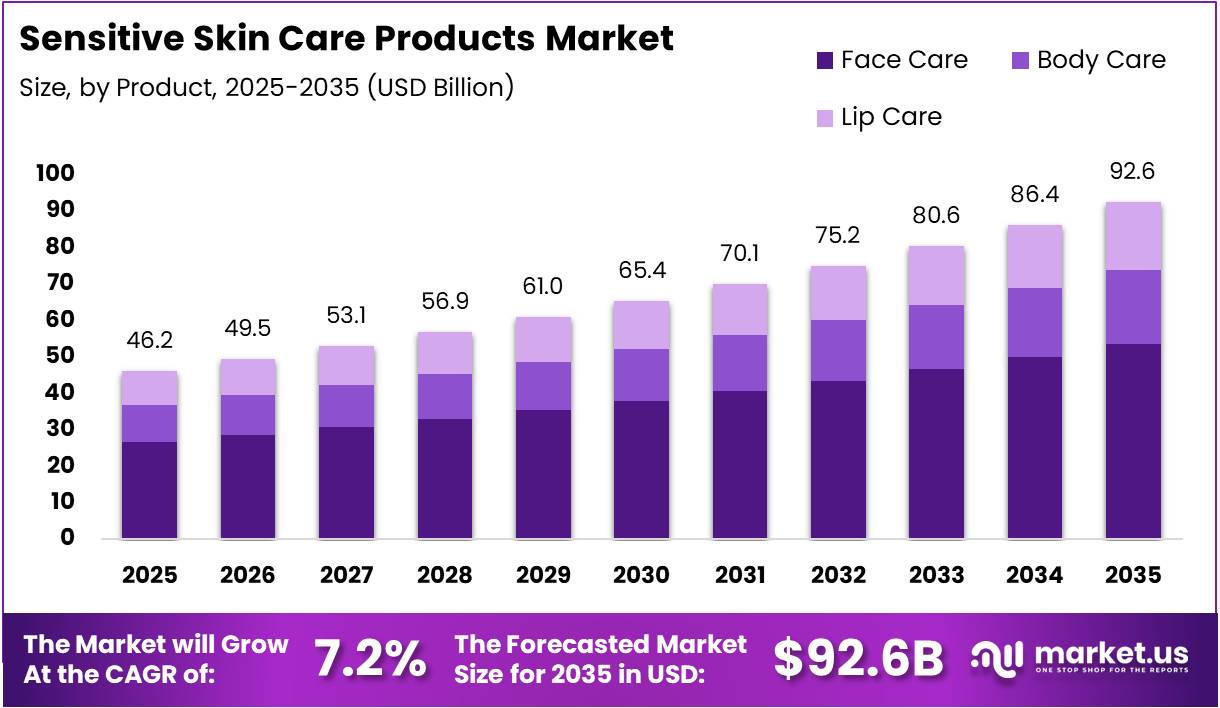
The global Sensitive Skin Care Products Market was valued at USD 46.2 Billion in 2025 and is projected to reach USD 92.6 Billion by 2035. The market is expected to grow at a CAGR of 7.2% during 2026–2035. This growth reflects rising demand for gentle and safe skincare solutions globally.
Sensitive skin care products include creams, cleansers, and body formulations designed for easily irritated skin. These products reduce redness and protect the skin barrier. Consumers with allergies or reactive skin conditions widely use these formulations. Brands focus on minimizing harsh ingredients to ensure comfort and long-term skin health.
Data-Driven Insights for Smarter Business Decisions: Explore the Full Report
Cosmetics, dermatology, and personal care industries drive strong adoption of these products. Beauty brands use these formulations to meet rising consumer expectations for safety. Healthcare providers recommend them for conditions like eczema and rosacea. Additionally, baby care and wellness sectors increasingly use sensitive skin solutions for daily routines.
Technology improvements enhance product effectiveness and safety across this market. Companies use AI tools to analyze skin conditions and recommend personalized products. Advanced sensors and dermatological testing improve formulation accuracy. Consequently, brands deliver targeted solutions that increase consumer trust and product performance.
Regulatory frameworks across North America, Europe, and Asia support safer product development. Authorities restrict harmful cosmetic ingredients and enforce labeling standards. These policies push companies to develop allergen-free and clinically tested formulations. Therefore, regulatory compliance strengthens consumer confidence and encourages innovation in safer skincare products.
Studies highlight strong demand potential for sensitive skin care globally. PubMed reports that 60–70% of women and 50–60% of men experience sensitive skin, creating a large user base. Additionally, Shell states 65% of consumers prefer clean ingredients, driving product reformulation and expanding market opportunities.
Key Takeaways
- Market valued at USD 46.2 Billion in 2025, projected to reach USD 92.6 Billion by 2035.
- Market expected to grow at a CAGR of 7.2% during 2026–2035.
- Face Care segment leads with 57.8% share due to daily skincare demand.
- Female segment dominates with 67.9% share driven by higher product usage.
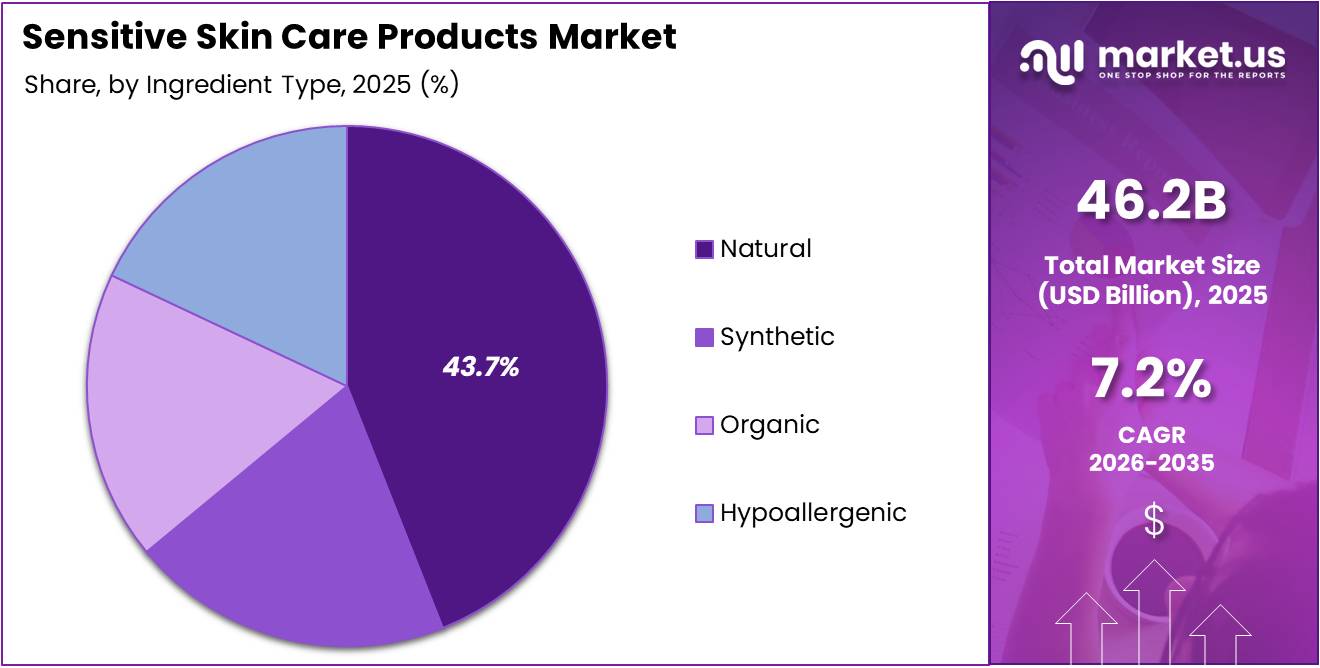
- Natural ingredients lead with 43.7% share reflecting clean beauty trends.
- Supermarkets & Hypermarkets hold 38.4% share due to accessibility.
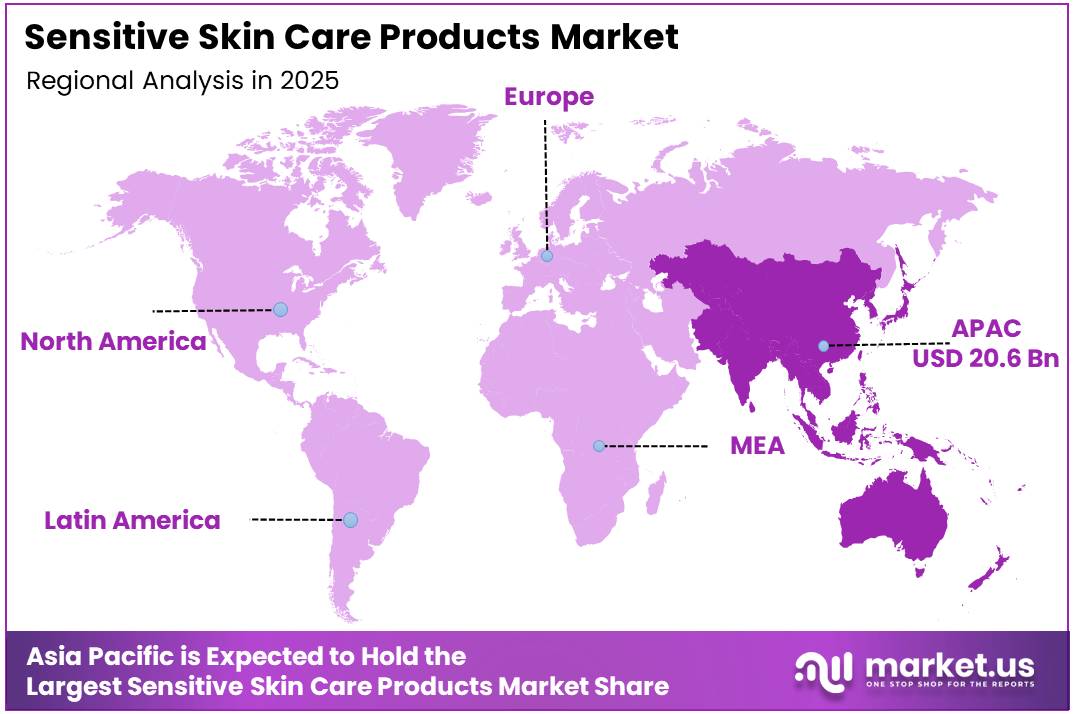
- Asia Pacific dominates with 44.80% share valued at USD 20.6 Billion.
Market Segmentation Overview
Face Care dominates the product segment with a 57.8% share. This leadership reflects strong consumer focus on facial skincare routines and sensitivity management. Daily use products such as cleansers and moisturizers drive demand. Consequently, brands invest heavily in facial formulations to capture consistent and repeat consumer usage.
Female consumers lead the gender segment with a 67.9% share. This dominance results from higher engagement in skincare routines and awareness of skin sensitivity. Targeted marketing campaigns further strengthen this segment. Additionally, male grooming trends are increasing, creating new opportunities for gender-specific product development.
Natural ingredients dominate with a 43.7% share due to rising demand for plant-based products. Consumers prefer chemical-free formulations that reduce irritation risks. Clean beauty trends strongly influence purchasing decisions. Therefore, brands prioritize botanical ingredients to align with consumer expectations and regulatory requirements.
Supermarkets & Hypermarkets lead distribution with a 38.4% share. This dominance reflects strong retail presence and wide product availability. Consumers prefer these stores for convenience and pricing. Moreover, online channels are expanding rapidly, offering personalized experiences and increasing access to global sensitive skincare brands.
Drivers
Rising awareness about skin sensitivity drives strong demand for specialized skincare products. Consumers actively seek solutions that prevent irritation and improve skin health. This trend increases demand for hypoallergenic and dermatologist-tested formulations. Consequently, companies invest in research and product innovation to meet evolving consumer expectations.
Growing demand for natural and clean-label products accelerates market expansion. Consumers avoid synthetic chemicals and prefer plant-based ingredients. This shift encourages brands to reformulate existing products. Therefore, companies that focus on transparency and safe ingredients gain a competitive advantage in the global market.
Use Cases
Dermatology clinics use sensitive skin care products to treat conditions like eczema and rosacea. Doctors recommend these formulations to reduce irritation and improve skin recovery. These products enhance treatment outcomes and patient comfort. Consequently, healthcare adoption strengthens product credibility and drives consistent demand.
Daily personal care routines represent another key application area for these products. Consumers use gentle cleansers and moisturizers to maintain healthy skin. These products prevent long-term damage caused by harsh chemicals. Therefore, routine usage increases product consumption and supports steady market growth.
Major Challenges
Limited perception of product effectiveness challenges market growth. Some consumers doubt whether sensitive skin formulations offer better results than standard products. This uncertainty reduces trial rates. Consequently, brands must invest in clinical validation and marketing to demonstrate product benefits and build consumer trust.
Low awareness in developing regions restricts market expansion. Many consumers do not recognize sensitive skin conditions or rely on traditional remedies. This limits adoption of specialized products. Therefore, companies must focus on education campaigns to increase awareness and encourage product usage.
Business Opportunities
Multifunctional products create strong growth opportunities in this market. Consumers prefer products that combine moisturizing, SPF, and anti-aging benefits. This demand supports innovation in multi-benefit formulations. Consequently, companies that offer convenience-driven solutions can capture a larger customer base.
Collaborations with dermatologists and influencers expand market reach and credibility. Expert endorsements build trust among consumers with sensitive skin. Influencers help brands connect with targeted audiences. Therefore, partnerships play a crucial role in driving product awareness and increasing sales.
Regional Analysis
Asia Pacific leads the market with a 44.80% share, valued at USD 20.6 Billion in 2025. Strong consumer awareness and beauty trends drive demand in countries like China and South Korea. Rising disposable income supports product adoption. Consequently, regional dominance continues to strengthen.
Middle East and Africa represent an emerging market with growing potential. Urbanization and rising purchasing power support demand growth. Consumers increasingly recognize sensitive skin issues. However, limited distribution networks remain a challenge. Therefore, companies investing in retail expansion can unlock significant growth opportunities.
Recent Developments
- December 2025 — L’Oréal increased stake to 20% in Galderma, expanding dermatology expertise.
- October 2025 — All Free Clear partnered with Danielle Jonas for eczema awareness initiatives.
- August 2025 — Doré partnered with Evolved By Nature to introduce biotech skincare innovation.
- January 2025 — L’Oréal acquired Gowoonsesang Cosmetics to strengthen Korean market presence.
Conclusion
The sensitive skin care products market shows strong growth driven by rising awareness and demand for safe formulations. Consumers increasingly prefer gentle and clinically tested products. This trend encourages companies to innovate and expand product offerings. Consequently, the market maintains steady expansion across global regions.
Face care products and natural ingredient formulations dominate the market landscape. Asia Pacific leads regional growth due to strong consumer demand and beauty trends. Additionally, female consumers drive significant market share. Therefore, companies must focus on these segments to maximize growth opportunities.
Companies must invest in innovation, education, and partnerships to capture future growth. Expanding distribution and improving product awareness remain critical strategies. Businesses that align with clean beauty trends will gain competitive advantage. The market is expected to reach USD 92.6 Billion by 2035.
Looking for data tailored to your specific market, region, or business need? Request a custom report or consultation — write to us at sales@market.us
Discuss your needs with our analyst
Please share your requirements with more details so our analyst can check if they can solve your problem(s)