Market Overview
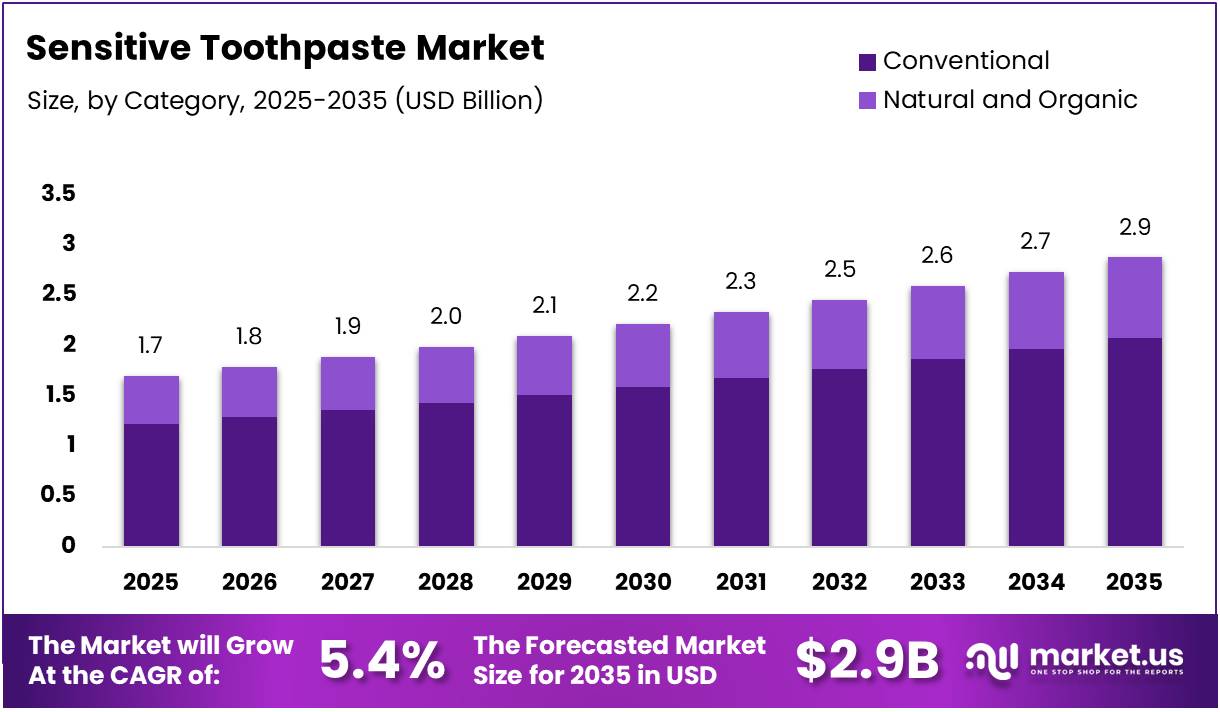
The Sensitive Toothpaste Market reached USD 1.7 Billion in 2025 and is projected to hit USD 2.9 Billion by 2035. The market is expanding at a CAGR of 5.4% during 2026–2035. Rising dental sensitivity cases and preventive oral care adoption continue to support steady global demand growth.
Sensitive toothpaste is a specialized oral care product designed to reduce tooth discomfort caused by exposed dentin. Manufacturers include active ingredients such as potassium nitrate and stannous fluoride. These compounds block nerve signals or seal tubules, helping users manage sensitivity during daily brushing routines.
Data-Driven Insights for Smarter Business Decisions: Explore the Full Report
Healthcare, personal care, and retail industries actively drive demand for sensitivity relief products. Dental clinics recommend these solutions for early-stage treatment, while supermarkets and pharmacies ensure accessibility. Additionally, e-commerce platforms expand consumer reach by offering diverse product variants and subscription-based purchasing options.
Technology advancements improve formulation efficiency and product effectiveness across oral care solutions. Companies integrate remineralization agents like nano-hydroxyapatite and advanced fluoride compounds. These innovations enhance enamel repair and long-term protection, encouraging consumers to shift toward premium and clinically validated sensitivity toothpaste products.
Government agencies and dental associations promote oral hygiene awareness through education programs and preventive care campaigns. Regulatory authorities enforce safety and efficacy standards for desensitizing ingredients. These policies strengthen consumer confidence and encourage adoption across both developed and emerging healthcare markets globally.
ResearchGate reports ≥99.99% microbial reduction within five minutes, showing strong antibacterial performance. Additionally, studies show 98.62% calcium and 87.85% phosphate recovery, indicating enamel repair benefits. MDPI highlights that 41.9% users brush frequently, compared to 18.7% standard users, improving long-term oral health behavior.
Key Takeaways
- Market valued at USD 1.7 Billion in 2025, expected to reach USD 2.9 Billion by 2035
- CAGR projected at 5.4% during 2026–2035
- Conventional category dominates with 72.3% share due to affordability and trust
- Adults segment leads with 84.8% share due to high sensitivity prevalence
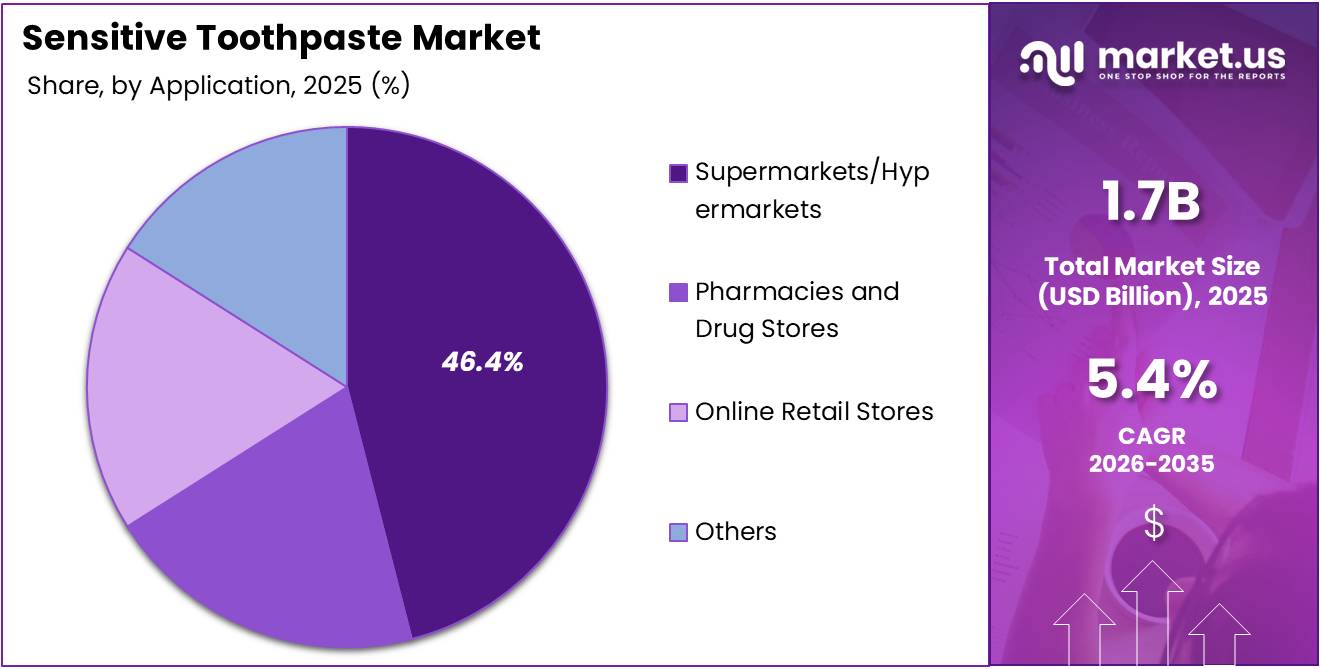
- Supermarkets/Hypermarkets hold 46.4% share due to accessibility
- Asia-Pacific leads with 43.70% share, valued at USD 0.7 Billion
- Growing demand driven by oral health awareness and aging population
- Natural and organic segment gaining traction among health-conscious consumers
Market Segmentation Overview
The category segment is led by conventional products with a share of 72.3%. This dominance reflects strong consumer trust, wide availability, and cost efficiency. Consequently, mass-market buyers prefer these products for daily use, while brands maintain high sales volumes through established retail networks.
Moreover, natural and organic products are gaining popularity due to rising clean-label preferences. Consumers seek herbal ingredients such as neem and nano-hydroxyapatite. This trend indicates growing demand for safer and chemical-free alternatives, creating long-term growth potential in premium oral care segments.
The end-use segment is dominated by adults with 84.8% share. This leadership reflects higher incidence of dentin hypersensitivity among aging populations. Therefore, dentists frequently recommend sensitivity toothpaste to adult patients, strengthening consistent demand across global markets.
Additionally, the children’s segment is expanding due to rising parental awareness. Brands introduce flavored and mild formulations for younger users. This development broadens product adoption and creates new opportunities in family-oriented oral care solutions.
Distribution channels show supermarkets and hypermarkets leading with 46.4% share. High footfall and product visibility drive impulse purchases. Consequently, brands invest in in-store promotions to influence buying behavior and strengthen retail presence.
However, online retail is emerging rapidly due to convenience and wider product selection. Consumers prefer home delivery and subscription models. Therefore, companies increase digital marketing investments to capture online demand and expand global reach.
Drivers
Rising dentin hypersensitivity cases drive demand for specialized oral care products globally. Aging populations and dietary habits increase enamel erosion. Consequently, consumers actively seek effective daily solutions, encouraging steady adoption of sensitivity relief toothpaste across both developed and emerging healthcare markets.
Increasing oral health awareness further accelerates market growth. Dental associations promote preventive care through campaigns and education programs. Moreover, digital platforms provide easy access to information, enabling consumers to make informed decisions and adopt sensitivity-specific oral hygiene practices early.
Use Cases
Dental clinics use sensitivity toothpaste as a first-line treatment for mild hypersensitivity. Dentists recommend it for daily use to reduce discomfort and prevent further enamel damage. Consequently, patients prefer non-invasive solutions before opting for advanced clinical procedures.
Additionally, households use these products for preventive oral care routines. Consumers integrate sensitivity toothpaste into daily brushing habits to avoid long-term dental issues. This behavior improves oral hygiene and reduces dependency on expensive dental treatments.
Major Challenges
Consumer skepticism regarding product effectiveness limits adoption in some regions. Many users experience inconsistent results, reducing brand loyalty. Consequently, manufacturers must provide clinical validation and transparent claims to build long-term consumer trust.
However, availability of alternative dental treatments creates competition for toothpaste products. Procedures such as fluoride applications offer faster relief. Therefore, consumers with severe sensitivity often prefer professional treatments over over-the-counter oral care solutions.
Business Opportunities
Growing demand for natural and herbal formulations creates strong business opportunities. Consumers increasingly prefer fluoride-free and plant-based products. Consequently, brands investing in clean-label innovations can capture premium market segments and expand global presence.
Moreover, e-commerce expansion unlocks access to new consumer groups. Online platforms enable direct-to-consumer sales and personalized marketing. Therefore, companies leveraging digital channels can increase revenue and strengthen customer engagement effectively.
Regional Analysis
Asia-Pacific leads the market with 43.70% share, valued at USD 0.7 Billion in 2025. Large population, rising incomes, and urbanization drive demand. Additionally, strong retail infrastructure and awareness campaigns support widespread adoption across countries such as China and India.
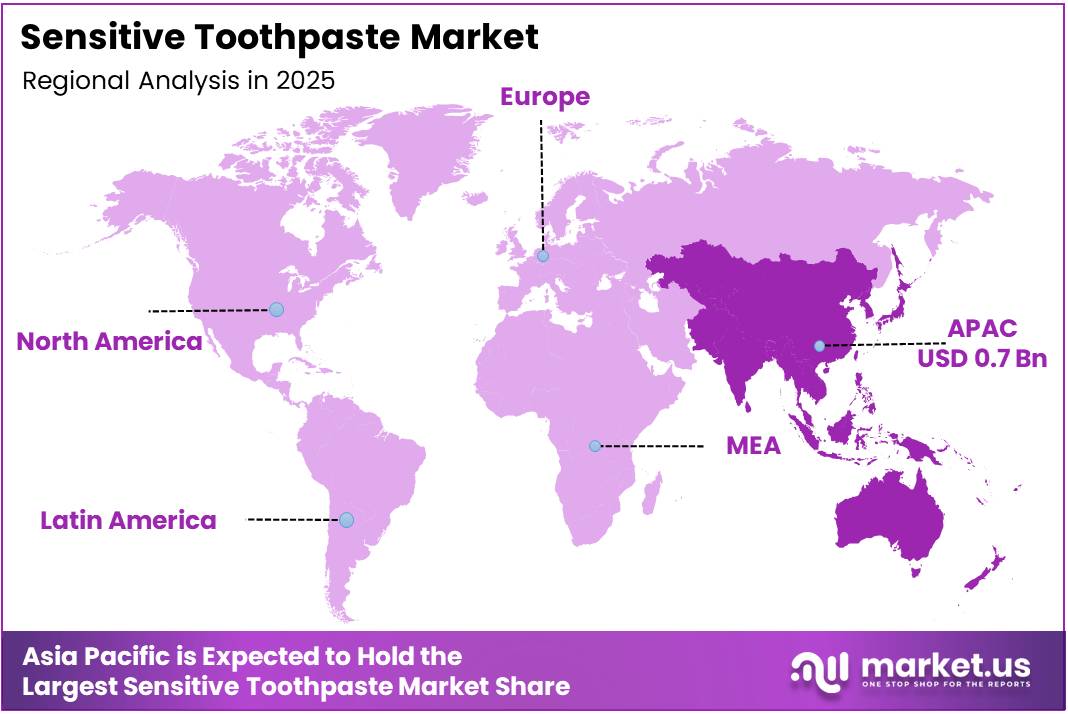
North America represents a mature and high-value market with strong growth potential. High dental care spending and awareness drive demand. Moreover, increasing preference for premium and multi-benefit products supports continuous expansion in the region.
Recent Developments
- January 2026 — Boka launched fluoride-free sensitive toothpaste, expanding clean-label product portfolio
- October 2025 — Sensodyne introduced “Sensitivity Stories” campaign with Jamie Oliver to boost awareness
- May 2025 — Hamsta World partnered with Sensodyne to launch kids’ toothpaste in China
Conclusion
The sensitive toothpaste market shows steady growth driven by rising oral health awareness and increasing dental sensitivity cases. Consumers actively adopt preventive care solutions, while manufacturers invest in advanced formulations to improve product performance and expand global reach.
Dominant segments such as conventional products and adult users continue to drive revenue growth. Asia-Pacific remains the leading region due to strong demand fundamentals. Additionally, online channels and natural formulations create new opportunities for market expansion.
Companies must focus on innovation, affordability, and digital distribution strategies to remain competitive. Clinical validation and sustainable packaging will further influence consumer choices. The market is expected to reach USD 2.9 Billion by 2035, reflecting strong long-term growth potential.
Looking for data tailored to your specific market, region, or business need? Request a custom report or consultation — write to us at sales@market.us
Discuss your needs with our analyst
Please share your requirements with more details so our analyst can check if they can solve your problem(s)