Table of Contents
Market Overview
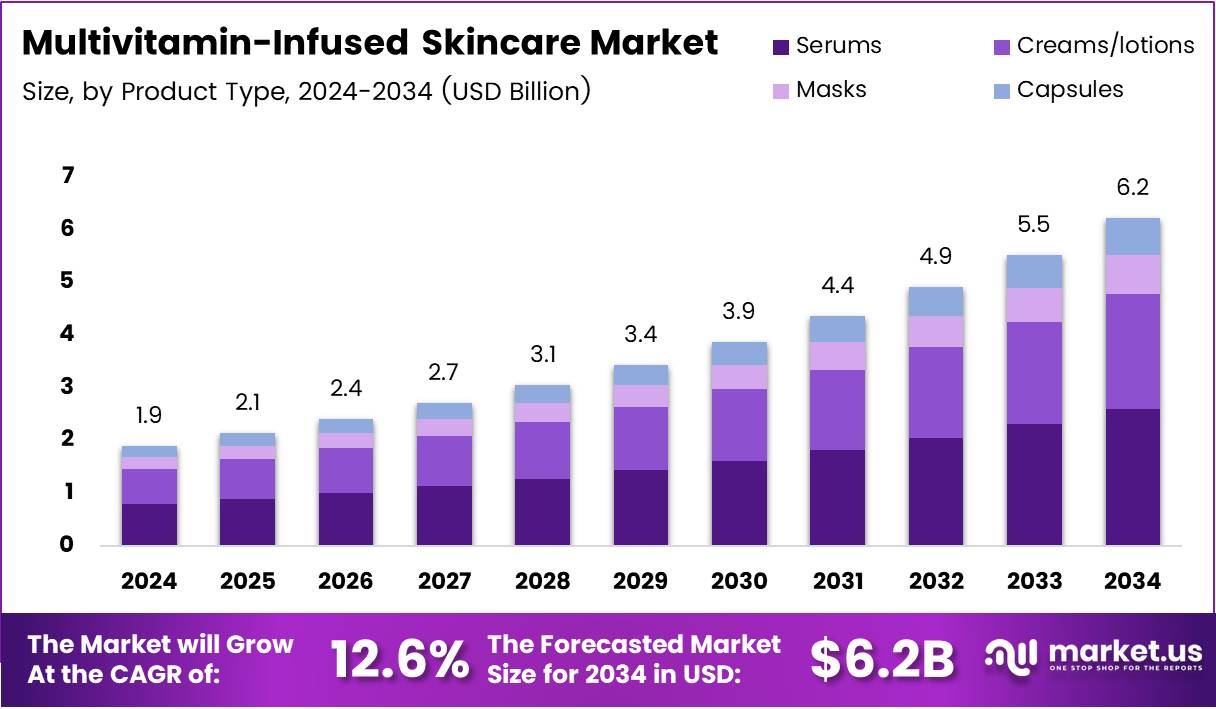
The global multivitamin-infused skincare market is valued at USD 1.9 billion in 2024 and is forecast to reach USD 6.2 billion by 2034. This expansion reflects a compound annual growth rate of 12.6% across the forecast period from 2025 to 2034. Rising consumer appetite for scientifically backed, multi-functional skincare solutions drives this accelerated trajectory.
Multivitamin-infused skincare products combine vitamins C, E, B3, and A derivatives to address multiple skin concerns within a single formulation. Brands engineer these blends to deliver anti-aging, brightening, hydration, and barrier repair benefits simultaneously. Healthcare professionals and beauty experts increasingly recommend them as comprehensive daily skin nutrition solutions. Their multi-benefit positioning distinguishes them clearly from single-ingredient conventional beauty products.
Several major industries and consumer segments actively adopt vitamin-enriched skincare across diverse retail channels. Prestige beauty brands target health-conscious millennials through dermatologist-endorsed formulations. Mass-market retailers reach broader demographics with accessible vitamin-enriched moisturizers and serums. Pharmacies further drive adoption by positioning these products alongside clinically validated skincare regimens recommended by healthcare providers.
Data-Driven Insights for Smarter Business Decisions: Explore the Full Report
Encapsulation and time-release delivery technologies are directly improving vitamin stability and bioavailability. Microencapsulation shields sensitive vitamins like C and A from oxidation until the moment of application. Time-release mechanisms sustain active ingredient delivery across the full day, maximizing skin benefit. These innovations help brands solve formulation stability challenges while differentiating products in an increasingly competitive global marketplace.
Regulatory frameworks in key markets support market growth by establishing clear safety and efficacy standards. Europe’s stringent cosmetic regulations have cultivated consumer trust in vitamin-enriched product claims. Clean-label and dermatologist-tested certifications provide third-party validation that reduces purchase risk for sensitive-skin consumers. These credibility signals allow brands to command premium price points while broadening their addressable market.
Consumer research reinforces strong category momentum across demographics and purchase channels. Survey data shows 35% of consumers say skincare trends directly affect their purchasing decisions, while 23% report trends somewhat influence buying behavior. This trend sensitivity rewards brands that innovate consistently with new vitamin complexes and functional claims. Consequently, vitamin-infused skincare occupies an increasingly central role within the broader personal care industry.
Key Takeaways
- The global multivitamin-infused skincare market will grow from USD 1.9 billion in 2024 to USD 6.2 billion by 2034, at a 12.6% CAGR.
- Europe leads all regions with 45.7% market share, valued at USD 0.8 billion in 2024.
- Serums dominate the product type segment with 43.8% share, driven by superior absorption and concentrated active delivery.
- Vitamin C + E complexes hold 48.2% of the vitamin blend segment, reflecting proven synergistic antioxidant efficacy.
- Clean-label products account for 33.6% of claims-based segmentation, supported by rising ingredient transparency demands.
- Anti-aging function leads functional segmentation with 37.9% share as aging populations prioritize preventive vitamin routines.
- E-commerce captures 45.4% of channel-based distribution, enabling direct brand-to-consumer engagement at scale.
Market Segmentation Overview
Serums lead the product type segment with 43.8% market share in 2024. Their lightweight, fast-absorbing textures deliver concentrated vitamin complexes deep into skin layers more effectively than heavier formats. Consumers value their compatibility with layered multi-step routines. This versatility drives consistent serum adoption across prestige, masstige, and direct-to-consumer brand portfolios globally.
Creams and lotions serve as the second-largest product format, combining vitamins with moisturizing agents for simultaneous hydration and nutrition. Masks deliver periodic intensive treatments favored by consumers seeking at-home spa-equivalent results. Capsules address efficacy-focused buyers by providing pre-measured, oxidation-protected single doses. Moreover, each format serves a distinct usage occasion and skin type, expanding the total addressable consumer base.
Vitamin C + E complexes dominate the vitamin blend segment with 48.2% share. Their synergistic antioxidant action — where vitamin E stabilizes vitamin C to extend photoprotective benefits — delivers proven brightening and anti-aging outcomes. This combination’s well-documented clinical track record builds consumer confidence. Therefore, brands across all price tiers anchor their vitamin portfolios around C + E as the foundation complex.
Niacinamide (Vitamin B3) blends are gaining rapid ground for barrier repair and sebum regulation. Vitamin A derivatives including retinol target cellular turnover and collagen stimulation for visible anti-aging correction. Multi-antioxidant formulations combine botanical extracts with multiple vitamins for comprehensive environmental defense. Additionally, each blend sub-segment opens targeted product positioning opportunities aligned with specific consumer skin concerns and routine preferences.
Clean-label claims lead the claims segment with 33.6% share as consumers actively scrutinize ingredient transparency. Anti-aging remains the dominant functional category at 37.9%, driven by aging demographics and a growing preventive skincare culture among younger consumers. E-commerce channels account for 45.4% of distribution by enabling direct brand storytelling, ingredient education, and personalized recommendations that physical retail cannot replicate at scale.
Drivers
Rising consumer awareness of the link between skin nutrition and visible skin health directly fuels demand for multivitamin skincare. Shoppers increasingly seek topical formulations that deliver vitamins C, E, and B3 where conventional diets or supplements fall short. Dermatologists amplify this demand by recommending vitamin-based routines as preventive skin health protocols. Consequently, both younger and older demographics now integrate vitamin-enriched products into daily skincare regimens.
Advanced encapsulation and time-release delivery technologies give brands powerful tools to overcome formulation instability challenges. Microencapsulated vitamins retain full potency until application, solving oxidation issues that previously limited product quality. Sustained-release mechanisms extend active ingredient delivery throughout the day, improving measurable skin outcomes. These technological gains attract premium brands investing in clinical substantiation and consumers demanding visible, evidence-backed results.
Use Cases
Anti-aging vitamin serums represent the market’s highest-demand application, combining vitamins C, E, and A derivatives in concentrated formulations. Consumers apply these serums daily to target fine lines, loss of firmness, and uneven skin tone. Clinical studies substantiate visible improvements within weeks of consistent use. This evidence-driven use case justifies premium pricing and sustains repeat purchases among aging and preventive-skincare demographics.
Additionally, vitamin C-rich brightening formulations address hyperpigmentation, dark spots, and dull complexions across global markets. Asian consumers in particular prioritize luminous, even-toned skin, making brightening the dominant functional claim in that region. These products inhibit melanin production while promoting cellular renewal for sustained radiance. Their appeal spans mass-market and prestige segments, making brightening one of the broadest commercial use cases in the category.
Major Challenges
Formulation instability presents a persistent technical barrier to multivitamin skincare product development. Vitamins C and A derivatives oxidize rapidly when exposed to light, air, or incompatible co-ingredients. This degradation shortens shelf life, reduces efficacy, and erodes consumer trust when products fail to deliver promised results. Solving these stability issues requires specialized packaging and manufacturing investments that raise production costs substantially.
However, elevated production costs translate directly into premium retail prices that restrict accessibility in mass-market and emerging-economy segments. Price-sensitive consumers in developing markets often choose single-vitamin alternatives over more expensive multivitamin formulations. Smaller brands face particular difficulty absorbing these costs while remaining competitive. Therefore, pricing remains a structural challenge preventing wider market penetration beyond affluent and health-conscious consumer segments.
Business Opportunities
Developing age-specific multivitamin skincare lines creates significant portfolio expansion potential for brands targeting distinct life stages. Younger consumers need lightweight, preventive formulations compatible with acne-prone skin. Mature demographics require intensive anti-aging blends with higher concentrations of retinol and peptide co-actives. This segmentation approach allows brands to serve broader audiences while commanding category-appropriate price premiums across each life-stage product tier.
Moreover, direct-to-consumer e-commerce models and subscription platforms unlock powerful new growth pathways for vitamin skincare brands. Digital distribution bypasses traditional retail intermediaries, reducing margin pressure and enabling personalized product recommendations. Subscription models drive repeat purchases and extend customer lifetime value substantially. Emerging markets in Asia and Latin America offer additional upside as middle-class populations expand and digital commerce infrastructure continues maturing rapidly.
Regional Analysis
Europe commands the global multivitamin-infused skincare market with 45.7% share and revenues of USD 0.8 billion in 2024. Sophisticated consumer preferences for clinically validated formulations and strong regulatory oversight underpin this leadership. European shoppers demonstrate high willingness to invest in premium vitamin-enriched products backed by dermatological evidence. Established beauty retail infrastructure and influential professional communities sustain consistent product innovation and commercial momentum.
Asia Pacific emerges as the fastest-growing regional market, driven by K-beauty and J-beauty trends emphasizing multi-step vitamin routines. Consumers in China, South Korea, and Japan prioritize brightening and anti-aging vitamin serums as core daily essentials. Rising disposable incomes and expanding urban middle-class populations accelerate premiumization across the region. Additionally, growing private-label and local brand innovation ensures Asia Pacific will capture an increasingly significant share of global market revenue through 2034.
Recent Developments
- January 2024 — Jones Road Beauty launched its Multi-Vitamin Serum formulated with vitamins C, B, and E, expanding its clean beauty portfolio with a nourishing hydration-focused product.
- March 2024 — Singapore-based Allies of Skin secured a USD 20 million strategic growth investment from Meaningful Partners to support U.S. market expansion.
- December 2024 — L’Oréal Groupe signed an agreement to acquire South Korean skincare brand Dr.G from Swiss retailer Migros, strengthening its position in Asian premium skincare markets.
- March 2025 — IT Cosmetics launched the Do It All Radiant Concealer, a serum-concealer hybrid infused with vitamins B3, B5, and E delivering multivitamin skincare benefits in a single product.
- June 2025 — L’Oréal Groupe agreed to acquire a majority stake in British skincare brand Medik8, reinforcing its premium dermocosmetics and vitamin-focused formulation portfolio.
- December 2025 — L’Oréal announced an increased ownership stake in Swiss dermatology firm Galderma, doubling its holding to 20%, with the transaction expected to close in Q1 2026.
Conclusion
The global multivitamin-infused skincare market is on a high-growth trajectory supported by deep structural demand drivers. Rising health consciousness, ingredient transparency expectations, and proven vitamin efficacy collectively underpin the market’s 12.6% CAGR through 2034. Continued innovation in delivery technologies further strengthens the category’s competitive position within the broader personal care industry.
Serums and vitamin C + E complexes dominate their respective segments, reflecting consumer preference for concentrated, evidence-backed formulations. Europe leads regional market share at 45.7%, while Asia Pacific accelerates rapidly on the back of K-beauty influence and rising urban incomes. Anti-aging and brightening functions remain the most commercially potent applications, commanding strong repeat purchase loyalty across global demographics.
Brands that invest in age-specific product lines, advanced encapsulation technologies, and digital-first distribution will be best positioned to capture emerging share. Clean-label certification and dermatologist partnerships will remain essential credibility tools for premium positioning. The market is projected to reach USD 6.2 billion by 2034, and companies acting strategically today will define the category’s next decade of growth.
Looking for data tailored to your specific market, region, or business need? Request a custom report or consultation — write to us at sales@market.us
Discuss your needs with our analyst
Please share your requirements with more details so our analyst can check if they can solve your problem(s)