Table of Contents
Overview
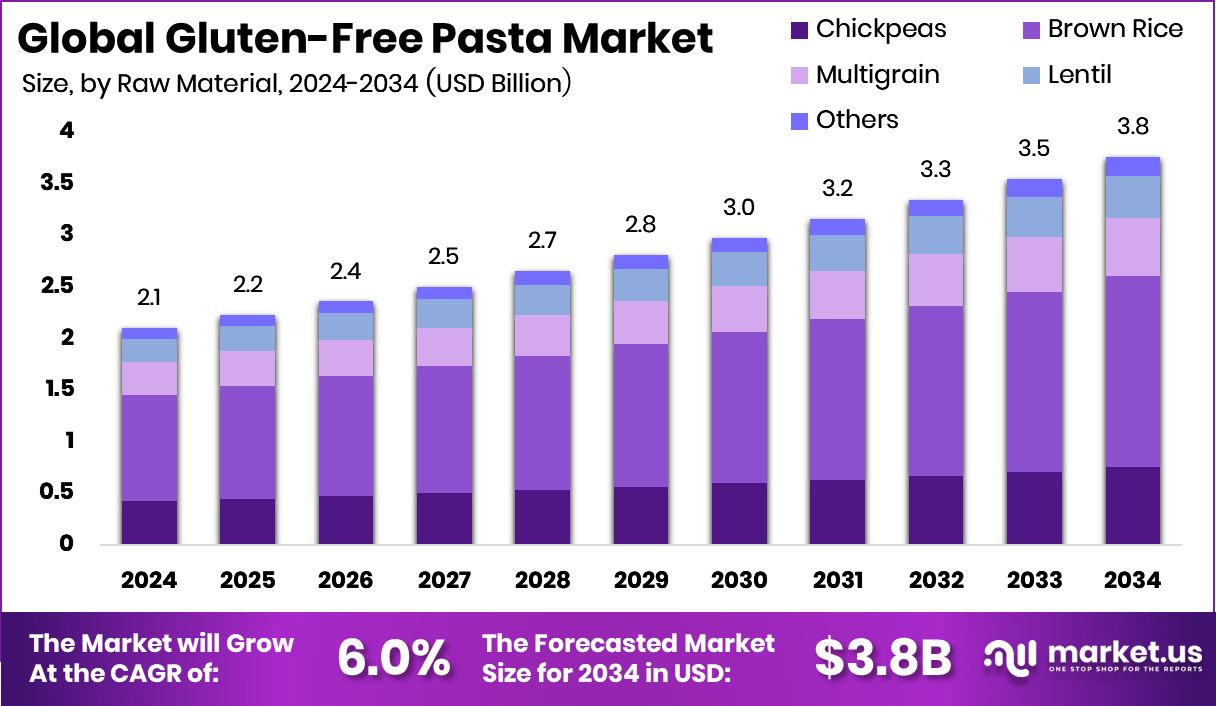
New York, NY – December 24, 2025 – The global gluten-free pasta market is expanding steadily as more consumers look for wheat-free options that fit health-focused and flexible eating styles. Valued at USD 2.1 billion in 2024, it is projected to reach USD 3.8 billion by 2034 at a 6.0% CAGR, with Europe holding a strong 45.9% share worth USD 0.9 billion.
Gluten-free pasta, made from rice, corn, lentils, chickpeas, quinoa, and blended grains, has evolved from a medical necessity into a mainstream pantry choice as shoppers embrace clean labels, higher-protein ingredients, and gentler digestion.
Funding activity continues to accelerate innovation. Start-ups and manufacturers have attracted USD 11.5 million, USD 20 million, and several early-stage rounds of USD 1.3 million, helping expand production capacity, introduce new formats, and support pulse-based protein technologies. In Europe, a long-established pasta producer is planning a UK manufacturing facility supported by USD 1.5 million in regional backing, signaling confidence in long-term demand.
As gluten-free pasta appears more consistently on retail shelves, foodservice menus, and online platforms, its perception has shifted to a versatile everyday staple. Growth opportunities are emerging in private-label offerings, fortified recipes, and regional manufacturing, which can further improve taste, affordability, and supply reliability.
➤ Click the sample report link for complete industry insights: https://market.us/report/global-gluten-free-pasta-market/request-sample/
Key Takeaways
- The Global Gluten-Free Pasta Market is expected to be worth around USD 3.8 billion by 2034, up from USD 2.1 billion in 2024, and is projected to grow at a CAGR of 6.0% from 2025 to 2034.
- In the Gluten-Free Pasta Market, brown rice dominates raw materials, accounting for a 49.2% share globally today.
- Within the Gluten-Free Pasta Market, dried products lead product types, representing 69.4% of overall demand worldwide currently.
- Spaghetti remains the most preferred shape in the Gluten-Free Pasta Market, holding 76.5% market share globally.
- Supermarkets and hypermarkets dominate distribution channels in the Gluten-Free Pasta Market, capturing 52.6% of sales volume worldwide.
- Growing health awareness across Europe supported the Gluten-Free Pasta Market at 45.9% share and USD 0.9 Bn.
➤ Directly purchase a copy of the report – https://market.us/purchase-report/?report_id=169263
Report Scope
| Report Features | Description |
|---|---|
| Market Value (2024) | USD 2.1 Billion |
| Forecast Revenue (2034) | USD 3.8 Billion |
| CAGR (2025-2034) | 6.0% |
| Segments Covered | By Raw Material (Chickpeas, Brown Rice, Multigrain, Lentil, Others), By Product Type (Dried, Instant, Canned and Frozen), By Shape (Spaghetti, Penne, Fusilli, Macaroni, Other), By Distribution Channel (Supermarkets/Hypermarkets, Specialty Stores, Convenience/Grocery Stores, E-commerce) |
| Competitive Landscape | Barilla G. e R. F.lli S.p.A., Jovial Foods Inc., Banza LLC, Doves Farm Foods Ltd, Rummo S.p.A, The Kraft Heinz Company, ZENB, Cappello’s |
Key Market Segments
By Raw Material Analysis
In 2024, Brown Rice dominated the raw material segment of the gluten-free pasta market with a 49.2% share, driven by its familiarity, natural gluten-free profile, and balanced nutritional value. Consumers prefer brown rice because it offers a mild taste, reliable texture, and whole-grain benefits that fit clean-label and health-focused eating habits.
Its widespread acceptance has encouraged manufacturers to use it as a primary ingredient due to steady supply, consistent processing behavior, and predictable quality outcomes.
As gluten-free pasta increasingly becomes an everyday choice rather than a specialty product, brown rice-based options remain a trusted household staple across retail and foodservice channels, reinforcing its leadership in this segment.
By Product Type Analysis
In 2024, Dried gluten-free pasta held a commanding 69.4% market share, supported by its practicality, long shelf life, and strong consumer preference for easy-to-store pantry staples.
Dried formats suit daily cooking needs, offering convenient preparation, reliable texture, and compatibility with a wide variety of recipes. Their resilience during transport, lower spoilage risk, and flexible packaging options also make them attractive for producers and retailers.
As gluten-free consumption becomes more routine, dried pasta continues to meet expectations for affordability and consistency. Its ability to serve both home kitchens and foodservice operations keeps demand high, securing its leading position within the product type segment of the gluten-free pasta market.
By Shape Analysis
In 2024, Spaghetti dominated the gluten-free pasta market by shape with a 76.5% share, driven by its universal familiarity and wide culinary use. For consumers transitioning from wheat-based pasta, spaghetti provides a familiar and comfortable choice that performs well during cooking and suits everyday meals.
Its straightforward shape helps manufacturers achieve consistent quality with gluten-free ingredients, maintaining expected texture and appearance. Retailers and restaurants favor spaghetti due to strong turnover, stable demand, and broad menu applicability.
As gluten-free diets shift from occasional to regular practice, spaghetti remains the most dependable and preferred format, firmly holding its top position in the shape-based segmentation.
By Distribution Channel Analysis
In 2024, Spaghetti-style gluten-free pasta led the distribution channel segment with a 52.6% share, reflecting its strong visibility and consistent availability across retail and foodservice networks. Its familiarity makes it a go-to option for both new and repeat gluten-free consumers, supporting steady sales volume.
Standardized packaging and easy shelf placement boost in-store prominence, while its versatility encourages frequent household purchases. Retailers prioritize stocking spaghetti because it drives predictable footfall and serves as a core pantry item for gluten-free buyers.
As mainstream adoption increases, spaghetti’s reliable performance, accessibility, and everyday relevance help maintain its dominant share across distribution channels.
Regional Analysis
Europe leads the Gluten-Free Pasta Market with a 45.9% share valued at USD 0.9 billion, driven by strong consumer adoption of gluten-free diets, broad product availability, and steady household and foodservice demand. North America follows as a mature market where gluten-free foods are well integrated into everyday eating habits, supporting consistent retail sales
. In Asia Pacific, rising awareness of food sensitivities, urbanization, and exposure to global cuisines are gradually increasing gluten-free pasta acceptance. The Middle East & Africa show early-stage but growing demand, mainly concentrated in urban areas with access to specialty and health-focused products.
Latin America is still developing, with gluten-free pasta gaining traction largely through premium retail shelves. Overall, while all regions show varying levels of progress, Europe remains the clear leader, supported by strong consumer interest and an established gluten-free culture.
Top Use Cases
- For People With Celiac Disease: Some people have a medical condition called celiac disease, where gluten causes serious harm to the small intestine. These people must avoid gluten, and gluten-free pasta lets them enjoy pasta dishes safely without triggering symptoms like pain or bloating.
- For People With Gluten Sensitivity/Intolerance: Many people feel uncomfortable after eating gluten, with bloating, gas, tiredness, or stomach troubles. Choosing gluten-free pasta can help reduce these symptoms and make digesting meals easier.
- For Easier Digestion and Less Bloating: Gluten-free pasta is usually easier on the stomach. Many people find it causes less bloating and discomfort compared with wheat pasta, especially those who are sensitive or want lighter meals.
- As a High-Protein or Nutrient-Rich Alternative: Some gluten-free pasta is made from chickpeas, lentils, quinoa, or brown rice. These ingredients can provide more protein and fiber than regular pasta, helping keep you full longer or adding nutrients to meals.
- For Special Diets (Weight or Wellness Focus): People working on weight goals or overall wellness might choose gluten-free pasta because it can come from ingredients that release energy slowly, help manage appetite, or simply fit better with their chosen diet style.
- To Replace Traditional Pasta in Favorite Recipes: Gluten-free pasta now comes in many familiar shapes (spaghetti, penne, fusilli, etc.) so it can be used just like regular pasta in soups, salads, sauces, and comfort dishes — letting people enjoy favorite recipes without gluten.
Recent Developments
- In July 2025, Barilla opened applications for the 7th edition of its “Good Food Makers” program — a startup innovation initiative. While this program isn’t only about gluten-free pasta, it encourages food innovators, including those working with healthy and gluten-free products, to develop new ideas and technologies.
- In July 2025, Banza expanded its gluten-free pasta range with a new brown rice pasta line. This product mixes brown rice and chickpeas to offer a better texture and flavor compared with traditional gluten-free pasta, and holds up well even in reheated meals like soups. It launched initially at Whole Foods in the U.S., with plans for availability at more stores like Target, Sprouts, and Amazon Fresh later in the year.
- In 2024, Doves Farm Foods expanded its production operations by opening its own dedicated gluten-free pasta and spaghetti manufacturing facility in northern Italy under the name Gfree Alimentare. This facility helps the company make certified gluten-free pasta using naturally gluten-free ingredients like maize, rice, buckwheat, and quinoa, strengthening product quality and supply for retail and foodservice channels.
Conclusion
The Gluten-Free Pasta Market continues to grow as more consumers look for healthier and easier-to-digest alternatives to wheat-based products. With wider product availability, improved taste, and more ingredient options, gluten-free pasta has moved from a niche item to a regular household choice.
Rising interest in clean labels, plant-based eating, and digestive wellness further supports long-term adoption. Companies are investing in better formulations and expanding their product lines, making gluten-free pasta more accessible across retail and foodservice channels. Overall, the market is set for steady expansion as consumers seek convenient, nutritious, and inclusive food options suitable for diverse dietary needs.
Discuss your needs with our analyst
Please share your requirements with more details so our analyst can check if they can solve your problem(s)