Table of Contents
Overview
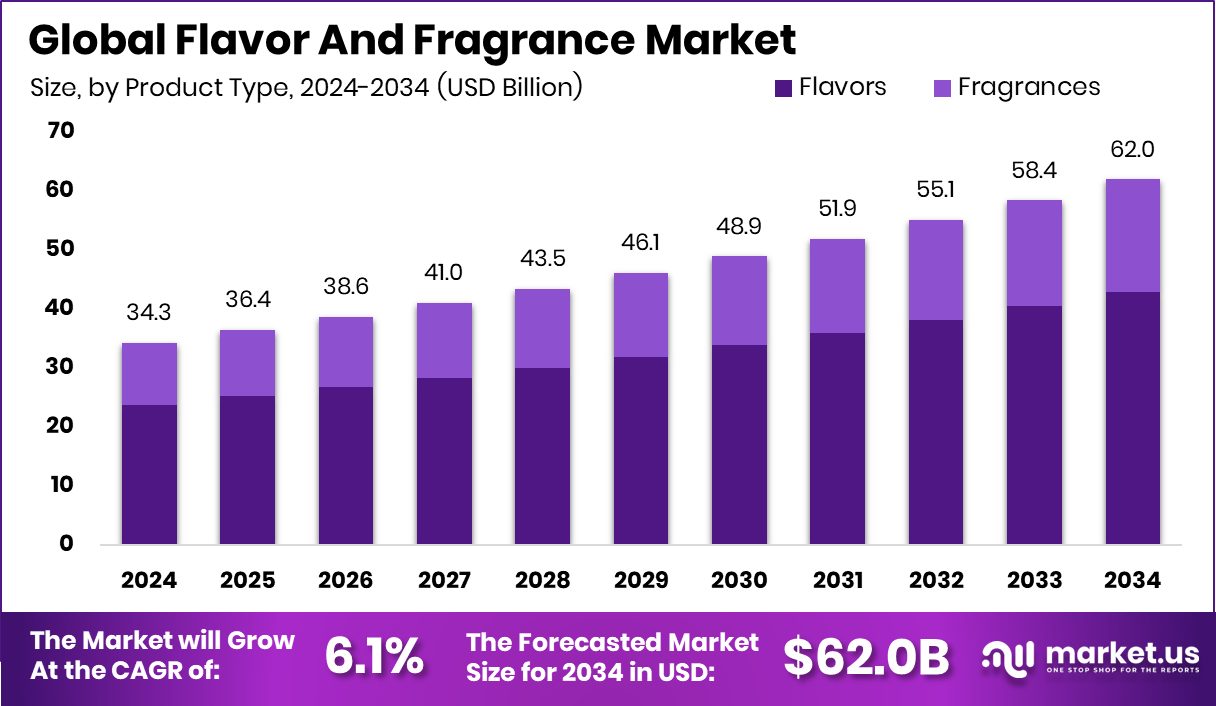
New York, NY – March 11, 2026 – The global flavor and fragrance market is projected to reach around USD 62.0 billion by 2034, rising from USD 34.3 billion in 2024, with an expected CAGR of 6.1% from 2025 to 2034. The Asia Pacific region leads the market, holding a 38.4% share valued at USD 13.1 billion.
Flavor and fragrance ingredients are essential in shaping the taste and scent of products used in food, beverages, personal care, and household goods. Flavors enhance the taste of products such as confectionery, bakery items, snacks, and beverages, while fragrances create appealing scents for perfumes, cosmetics, soaps, and home care products. Together, they enhance consumer sensory experiences, influence brand recognition, and encourage repeat purchases while maintaining stability during processing, storage, and use.
The market includes the development, production, and supply of taste and scent solutions for industries like food, beverages, confectionery, cosmetics, and personal care. Its growth is closely tied to rising packaged food consumption, evolving lifestyles, and the demand for differentiated product experiences. Investment activity in taste-driven businesses highlights this momentum. Fireside Ventures invested INR 20 crore in Oroos Confectionery, Doughlicious secured $5 million to expand its offerings, and Khoya Mithai raised over ₹6 crore in a pre-seed round.
Similarly, Awake chocolate obtained $8 million, while Go Desi raised $5 million led by Aavishkaar Capital. In addition, David closed a $75 million funding round, and Mars introduced a $250 million green investment fund, reflecting sustainability and innovation trends. Another funding round also saw Khoya raise over ₹6 crore from Riga Foods and other investors.
➤ Click the sample report link for complete industry insights: https://market.us/report/global-flavor-and-fragrance-market/request-sample/
Key Takeaways
- The Global Flavor And Fragrance Market is expected to be worth around USD 62.0 billion by 2034, up from USD 34.3 billion in 2024, and is projected to grow at a CAGR of 6.1% from 2025 to 2034.
- Flavors dominate the Flavor and Fragrance Market, holding 69.2% share due to food and adoption.
- Liquid form leads the Flavor and Fragrance Market with 63.8% share, supported by easy blending.
- Synthetic sources command the Flavor and Fragrance Market at 74.1% share, driven by cost efficiency.
- Bakery applications contribute 26.9% to the Flavor and Fragrance Market, fueled by consistent demand globally.
- Asia Pacific accounts for 38.4% of the flavor and fragrance market, reaching USD 13.1 Bn.
➤ Directly purchase a copy of the report – https://market.us/purchase-report/?report_id=174178
Market Segments
By Product Type Analysis
In 2024, flavors held the largest share of the Flavor and Fragrance Market, accounting for 69.2% of the product type segment. This dominance is mainly driven by strong demand for taste enhancement across food, beverages, and oral care products. Food manufacturers rely on advanced flavor systems to maintain consistent taste, mask unwanted notes, and meet changing consumer preferences for familiar yet indulgent flavors. The growth of packaged foods, ready-to-drink beverages, and confectionery products has further increased the use of flavor ingredients.
Urban lifestyles and premium food trends have also encouraged the introduction of ethnic, seasonal, and functional flavors. In comparison with fragrances, flavors benefit from more frequent consumption cycles and repeated purchasing, ensuring steady demand. As brands compete through unique taste experiences, flavors continue to remain the primary revenue contributor in the global market.
By Form Analysis
In 2024, liquid formats dominated the Flavor and Fragrance Market by form with a 63.8% share, mainly due to their technical and operational advantages in manufacturing processes. Liquid flavors disperse quickly, dissolve efficiently, and blend easily with ingredients used in beverages, dairy products, syrups, and bakery fillings. These properties reduce formulation errors and improve production efficiency. Manufacturers also prefer liquids for their accurate dosing, consistent sensory output, and compatibility with automated production systems.
The growing use of ready-to-use concentrates and emulsions has further strengthened liquid adoption. Liquids also allow rapid flavor adjustments during reformulation, which is important for sugar reduction and clean-label initiatives. Compared with powdered forms, liquids generally show better performance in cold applications, reinforcing their widespread use across food, beverage, and personal care manufacturing globally.
By Source Analysis
Synthetic ingredients led the Flavor and Fragrance Market by source in 2024, representing 74.1% of total demand. Their dominance is largely due to cost efficiency, reliable supply, and consistent quality at an industrial scale. Unlike natural ingredients, which depend heavily on crop yields and climatic conditions, synthetic compounds offer stable availability and predictable pricing. Large food and fragrance manufacturers prefer synthetic sources because they provide standardized sensory profiles, longer shelf life, and easier regulatory compliance.
Continuous advancements in aroma chemistry and molecular engineering have further improved performance while lowering production costs. Synthetic ingredients also support large-scale applications where affordability and volume are critical. Although interest in natural and bio-based alternatives is increasing, synthetics remain essential for meeting global demand efficiently due to their established production infrastructure and technical familiarity.
By Application Analysis
The bakery segment emerged as a major application area in the Flavor and Fragrance Market in 2024, holding 26.9% share. High global consumption of bread, cakes, pastries, and biscuits has significantly increased the need for flavor solutions in bakery products. Flavor ingredients help enhance freshness perception, maintain taste consistency, and mask ingredient variations during large-scale production.
Rising demand for packaged bakery goods, particularly in urban markets, has further strengthened the use of flavor systems that preserve taste throughout product shelf life. Innovation in popular profiles such as butter, vanilla, chocolate, and fruit has also supported premium and artisanal bakery positioning. Frequent product launches, seasonal variations, and indulgent offerings contribute to steady demand, making the bakery sector one of the most reliable and high-volume application segments for flavor manufacturers worldwide.
Regional Analysis
Asia Pacific leads the global Flavor and Fragrance Market with a 38.4% share valued at USD 13.1 billion, driven by expanding food processing industries, increasing packaged food consumption, and rapid urbanization across major economies. Strong demand for flavored beverages, bakery items, and convenience foods continues to support the region’s market dominance, while large-scale manufacturing ensures a steady supply.
North America follows with stable demand supported by well-established food, beverage, and personal care industries that prioritize product consistency and efficient formulations. Europe also maintains a strong position due to the presence of established flavor houses and continuous demand from bakery, dairy, and confectionery sectors.
Meanwhile, the Middle East & Africa market is gradually expanding with rising food imports and local production growth, while Latin America contributes steadily through increasing consumption of processed foods and beverages in urban markets.
Top Use Cases
- Food and Beverage Taste Improvement: Flavors are widely used in foods and drinks to make them taste better and more enjoyable. Companies add flavors to products such as snacks, ice cream, chocolates, soft drinks, yogurt, and baked goods. These ingredients help create consistent taste and make food more appealing to consumers. For example, vanilla flavor (vanillin) is widely used in ice cream and chocolate products to enhance sweetness and aroma.
- Perfumes and Personal Fragrance Products: Fragrances are a key ingredient in perfumes, body sprays, deodorants, and colognes. They create pleasant scents that improve personal grooming and help people feel fresh and confident. Many perfumes combine multiple scent notes such as floral, fruity, or sweet aromas to create unique fragrances.
- Cosmetics and Beauty Products: Fragrances are commonly added to cosmetics to improve the user experience. Products like lotions, shampoos, creams, and soaps use fragrance ingredients to create pleasant smells and make the product more attractive to customers. Good fragrance can also influence consumer buying behavior and brand preference.
- Household Cleaning Products: Many cleaning products contain fragrances so that homes smell fresh after use. Fragrance ingredients are used in detergents, dishwashing liquids, air fresheners, and surface cleaners. These scents help remove unpleasant odors and leave a lasting fresh smell in living spaces.
- Oral Care Products: Flavor ingredients are used in oral care products to make them pleasant to use. Toothpaste, mouthwash, and chewing gum often contain mint, fruit, or herbal flavors. These flavors help create a refreshing taste while encouraging people to maintain daily oral hygiene.
- Medicines and Pharmaceutical Products: Flavors are sometimes added to medicines to mask unpleasant tastes, especially in syrups and chewable tablets. This makes medicine easier to consume, particularly for children. Some fragrance compounds are also used to hide strong chemical odors in pharmaceutical products.
Notable Company Developments
- In November 2025, Sensient announced that Sensient Natural Ingredients would be renamed Sensient Agricultural Ingredients. The change highlights the company’s focus on sustainably sourced ingredients grown with local farmers. The update also included the development of new culinary chile varieties to expand the company’s flavor ingredient portfolio.
- In October 2024, Givaudan started building a new production facility in Cikarang, Indonesia to strengthen its Taste & Wellbeing business. The facility will help produce flavor ingredients for foods and beverages in Southeast Asia. The company invested about CHF 50 million in this project to support regional demand and future expansion.
- In March 2024, Symrise announced a joint venture with Virchow Group, an Indian pharmaceutical company. The new company, Vizag Care Ingredients Private Limited, will manufacture cosmetic and personal care ingredients from Symrise’s portfolio in India. This partnership helps Symrise expand its production of fragrance and cosmetic ingredients in the region and supply them to global beauty brands.
Conclusion
The Flavor and Fragrance Market continues to grow as consumer products increasingly focus on sensory experience and product differentiation. Flavors enhance the taste of foods and beverages, while fragrances improve the scent of personal care, cosmetic, and household products. Rising demand for convenient foods, premium products, and unique sensory experiences is encouraging companies to invest in innovation and new ingredient development.
Natural and sustainable ingredients are also gaining attention as consumers become more aware of product origins and environmental impact. As manufacturers compete through taste, aroma, and brand identity, flavor and fragrance solutions remain essential components across food, beauty, and home care industries worldwide.
Discuss your needs with our analyst
Please share your requirements with more details so our analyst can check if they can solve your problem(s)