Table of Contents
Overview
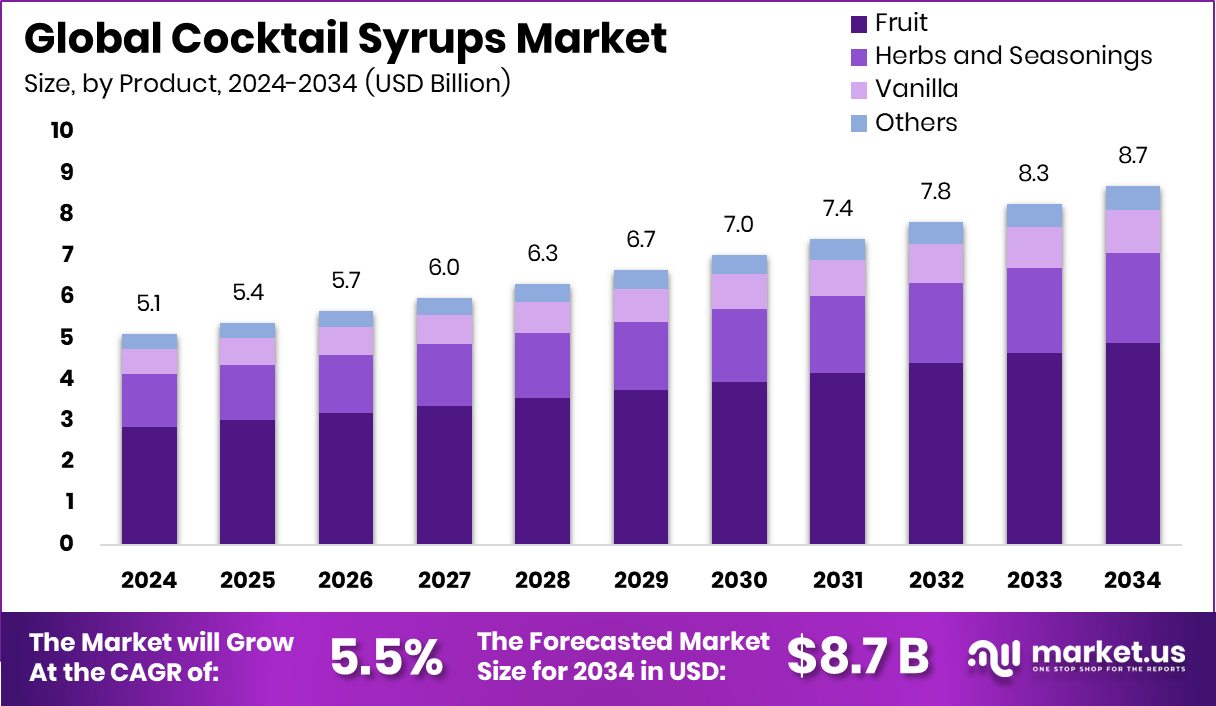
New York, NY – March 16, 2026 – The global cocktail syrups market is projected to reach USD 8.7 billion by 2034, growing from USD 5.1 billion in 2024 at a 5.5% CAGR between 2025 and 2034. North America currently leads the market, accounting for 37.4% of global revenue, valued at about USD 1.9 billion.
Cocktail syrups are flavored liquid sweeteners made from fruits, herbs, spices, or botanical ingredients. They are widely used to enhance sweetness, aroma, and flavor balance in cocktails and mocktails while ensuring consistent taste and quick preparation. Their convenience and versatility have expanded their use beyond alcoholic beverages to drinks like iced teas, lemonades, and other creative non-alcoholic beverages across bars, cafés, restaurants, and home settings.
The cocktail syrups market includes the commercial production and distribution of these flavored syrups through both on-trade and off-trade channels. Demand comes from professional mixologists as well as consumers preparing drinks at home. Growing interest in personalized beverages, premium ingredients, and unique drinking experiences is strengthening the role of syrups in modern beverage culture.
Investment activity across the beverage and food innovation ecosystem also reflects this trend. Cann raised USD 27 million to expand into Canada, while Vanilla secured USD 35 million to advance flavor-focused products. Sustainability efforts are supported by Notpla’s £20 million funding for plastic-free solutions. Innovation programs like the Scottish EDGE Awards distributed £1.5 million to 35 winners, highlighting industry support.
Additional funding for ingredient and food innovation includes a USD 600,000 USDA grant to JUA Technologies International, Liberation Labs raising USD 50.5 million, OCELL securing USD 10 million, and Pluri acquiring lab-grown cocoa technology, all of which contribute to a stronger future supply ecosystem for beverage ingredients.
➤ Click the sample report link for complete industry insights: https://market.us/report/global-cocktail-syrups-market/request-sample/
Key Takeaways
- The Global Cocktail Syrups Market is expected to be worth around USD 8.7 billion by 2034, up from USD 5.1 billion in 2024, and is projected to grow at a CAGR of 5.5% from 2025 to 2034.
- In 2024, fruit syrups captured 56.2% share, reflecting strong consumer preference for familiar flavors globally.
- In 2024, sweet variants held 49.5% share, driven by broad acceptance among diverse consumers globally.
- In 2024, offline distribution accounted for 67.3% share, reflecting strong store-based purchasing behavior globally today.
- North America accounts for 37.4% of the cocktail syrups market, reaching a USD 1.9 Bn value region.
➤ Directly purchase a copy of the report – https://market.us/purchase-report/?report_id=174293
Market Segments
By Product Analysis
In 2024, fruit-based cocktail syrups accounted for 56.2% of the market. Their dominance is mainly due to their extensive use in both alcoholic and non-alcoholic beverages. Popular flavors such as strawberry, mango, lime, and cranberry are widely used in bars, cafés, restaurants, and at home. Fruit syrups offer advantages such as consistent flavor, vibrant color, and easier mixing than fresh fruit. They also help hospitality businesses maintain standardized drink recipes while reducing preparation time and ingredient waste.
Increasing consumer interest in tropical and exotic fruit flavors, along with the growing popularity of mocktails and creative beverages, continues to strengthen demand for fruit-based cocktail syrups globally.
By Flavor Analysis
Sweet flavors accounted for 49.5% of the cocktail syrups market in 2024, making them the leading flavor category. These syrups play a key role in balancing acidity and bitterness in cocktails while improving texture and overall taste. Common sweet flavors include vanilla, caramel, grenadine, and honey-based syrups, which are widely used in classic cocktails, coffee-based drinks, and dessert beverages. Their versatility makes them essential for both professional mixologists and home users. The rising popularity of ready-to-mix beverages and the growth of at-home cocktail preparation have further increased demand. Sweet profiles also attract a broad consumer audience, including younger and first-time cocktail drinkers.
By Distribution Channel Analysis
Offline channels dominated the cocktail syrups market in 2024 with a 67.3% share. Physical retail outlets such as supermarkets, liquor stores, specialty beverage shops, and horeca suppliers remain the main purchasing points for these products. Bars, restaurants, and cafés prefer buying offline because it allows them to verify product quality, maintain reliable supply, and purchase in bulk. In-store product visibility and promotional offers also encourage higher sales volumes.
Although e-commerce platforms are growing, particularly for premium and specialty syrups, traditional retail continues to lead due to established distribution networks and strong relationships with hospitality businesses across global markets.
Regional Analysis
North America leads the global cocktail syrups market, holding 37.4% of total demand and valued at about USD 1.9 billion. Its dominance is supported by a well-established cocktail culture, high consumption in bars and restaurants, and growing at-home drink mixing. Strong distribution through retail and horeca channels further supports steady demand.
Europe maintains stable growth due to its long café culture, premium cocktail offerings, and consistent use of syrups in both alcoholic and non-alcoholic beverages. Asia Pacific is experiencing rising momentum as urbanization, expanding café chains, and interest in mocktails and Western-style drinks increase among younger consumers.
In the Middle East & Africa, demand is largely driven by non-alcoholic syrups used in hotels and cafés, while Latin America shows steady growth supported by its vibrant foodservice culture and fruit-based beverage traditions.
Top Use Cases
- Making Cocktails in Bars and Restaurants: Cocktail syrups are widely used by bartenders to add sweetness and flavor to mixed drinks. They help balance sour or bitter ingredients and improve the taste of cocktails. Syrups also mix easily with alcohol and other liquids, making drinks smoother and consistent every time. Classic drinks like tropical cocktails or drinks with grenadine often use flavored syrups as key ingredients.
- Preparing Mocktails (Non-Alcoholic Drinks): Cocktail syrups are very popular in mocktails because they add flavor and sweetness without alcohol. People mix them with soda, fruit juice, or sparkling water to create refreshing drinks. Syrups can include fruit, herbs, or spices, giving mocktails a complex taste similar to cocktails.
- Flavoring Coffee and Tea: Many cafés use flavored syrups in beverages like lattes, iced coffee, and tea. Syrups such as vanilla, caramel, or hazelnut add sweetness and aroma quickly without needing extra ingredients. They dissolve easily, which makes them convenient for baristas and home drink makers.
- Enhancing Desserts: Cocktail syrups can also be used in desserts. They are often drizzled over ice cream, pancakes, waffles, and cakes to add flavor and sweetness. Bakers sometimes use syrups to glaze or moisten cakes, improving texture and taste.
- Mixing with Carbonated Drinks: Flavored syrups can be combined with sparkling water or soda to create simple flavored beverages. Fruit syrups are especially common for making refreshing drinks at home or in cafés. These drinks can also be used as a base for cocktails later.
- Creating Custom Drink Flavors: Bartenders and beverage creators often make their own syrups using fruits, herbs, or spices. This allows them to create unique drink flavors and signature beverages. Homemade syrups help bars experiment with ingredients and make cocktails more creative.
Notable Company Developments
- In January 2025, Kerry Group plc introduced its 2025 Taste Charts, a tool designed to help beverage companies identify trending flavors and develop new products. These insights support innovation in beverages such as cocktails, mocktails, flavored syrups, and other drinks.
- In February 2024, MONIN introduced Ube Syrup as its Flavor of the Year 2024. Ube is a purple yam from the Philippines known for its sweet and slightly nutty taste. The syrup was created to help bartenders and beverage makers add a unique purple color and flavor to cocktails, mocktails, and desserts.
Conclusion
The cocktail syrups market continues to grow as consumers explore more creative beverage experiences at home and in hospitality settings. These syrups play an important role in adding flavor, color, and balance to cocktails, mocktails, and other drinks. Their convenience and consistent taste make them popular with bartenders, cafés, and everyday users.
Demand is also supported by interest in premium ingredients, unique flavors, and customizable beverages. Producers are focusing on natural ingredients, sustainable packaging, and innovative flavor combinations to meet changing preferences. As drink culture evolves and non-alcoholic beverages gain popularity, cocktail syrups are expected to remain an essential ingredient in modern beverage preparation.
Discuss your needs with our analyst
Please share your requirements with more details so our analyst can check if they can solve your problem(s)