Table of Contents
Overview
New York, NY – March 12, 2026 – The global carbonated beverages market continues to expand as fizzy drinks remain a popular choice for refreshment and flavor variety. Carbonated beverages contain dissolved carbon dioxide, creating bubbles and a distinctive sparkling texture. These drinks include sodas, sparkling water, flavored fizzy drinks, and newer functional carbonated options. They are widely consumed during meals, social occasions, and everyday breaks, making them a consistent part of daily beverage habits across different age groups.
The market represents the worldwide production, distribution, and sale of carbonated drinks through retail stores and foodservice channels. While traditional sodas remain important, companies are increasingly introducing lighter formulas, fruit-based flavors, and functional ingredients to meet changing consumer preferences. This evolution helps keep carbonation relevant as people look for cleaner labels and more diverse taste experiences.
Investment activity is also driving market momentum. Culture Pop Soda secured $15 million in equity funding, adding to the $21 million it raised previously, demonstrating growing investor interest in healthier carbonated drinks. Functional soda brand Olipop has also gained strong traction, reaching a valuation of nearly $2 billion after its latest funding round.
Regional and emerging brands are also attracting capital to expand distribution. Xoxo Soda raised £4 million to grow within UK retail markets, while Dash Seltzer secured £8.7 million in Series A funding. In South Asia, beverage company Lahori is targeting Rs 400 crore in funding, aiming to triple its valuation to Rs 2,700 crore. Additionally, Sanzo, an Asian-inspired sparkling water brand, raised $1.3 million in seed funding to support distribution expansion.
➤ Click the sample report link for complete industry insights: https://market.us/report/global-carbonated-beverages-market/request-sample/
Key Takeaways
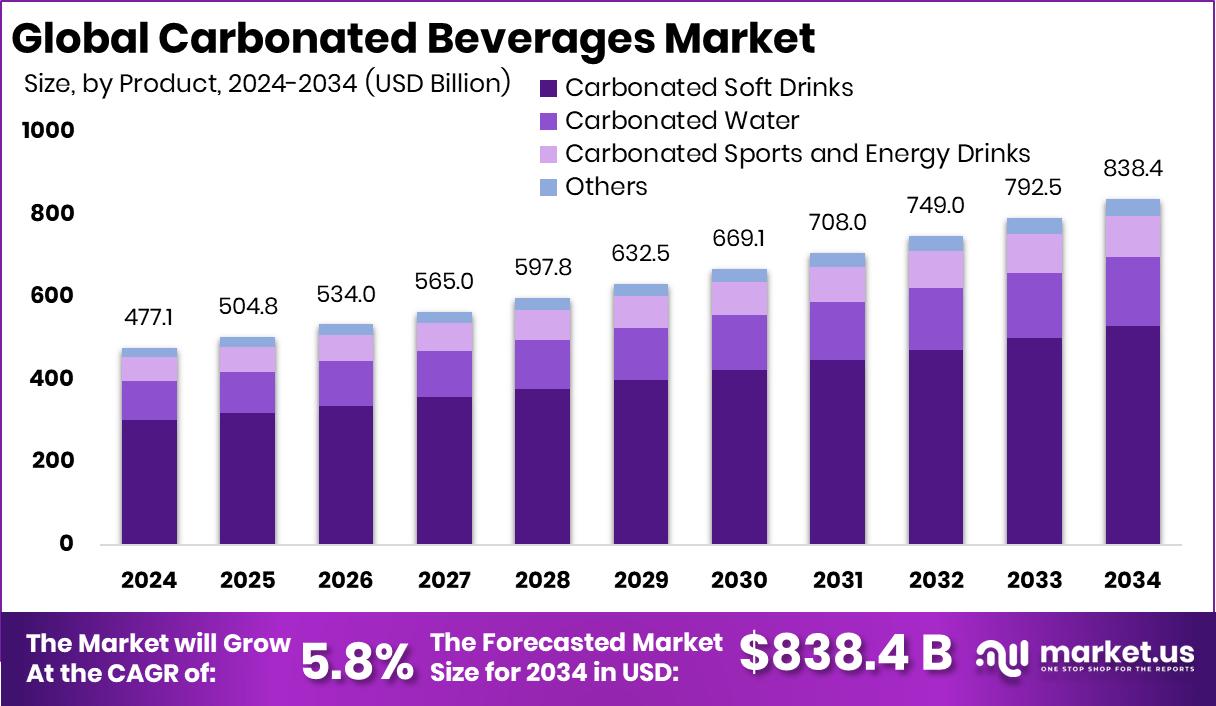
- The Global Carbonated Beverages Market is expected to be worth around USD 838.4 billion by 2034, up from USD 477.1 billion in 2024, and is projected to grow at a CAGR of 5.8% from 2025 to 2034.
- In the Carbonated Beverages Market, carbonated soft drinks dominate with 63.2% share, driven by consumption.
- Cola remains the leading flavor in the Carbonated Beverages Market, capturing 49.9% due to loyalty.
- Hypermarkets and supermarkets lead distribution in the Carbonated Beverages Market, holding 38.1% through wide availability.
- In North America, strong brand loyalty supported 38.5% market share, reaching USD 183.6 Bn overall.
➤ Directly purchase a copy of the report – https://market.us/purchase-report/?report_id=174205
Market Segments
By Product Analysis
In 2024, carbonated soft drinks remained the leading product segment in the carbonated beverages market, accounting for 63.2% of total demand. Their strong position is driven by widespread consumer preference, refreshing taste, and strong brand familiarity across global markets. These beverages are commonly consumed during meals, social gatherings, and celebrations, making them a regular part of daily consumption for many people.
Easy availability across retail outlets and affordable pricing further support their dominance in both urban and semi-urban areas. Even with growing health awareness, demand has remained stable as manufacturers introduced portion-controlled packaging, improved formulations, and balanced flavor profiles. These strategies help maintain consumer interest while keeping carbonated soft drinks positioned as an accessible and enjoyable everyday beverage choice worldwide.
By Flavor Analysis
In 2024, cola flavor led the carbonated beverages market with a 49.9% share, maintaining its position as the most widely consumed flavor category. Cola continues to dominate due to its familiar taste, strong brand heritage, and deep emotional connection with consumers worldwide. Many consumers associate cola with refreshment, leisure, and social moments, making it a frequent choice within the fizzy drinks segment.
Consistent marketing, brand loyalty, and global availability further reinforce its leadership. Although fruit-based and specialty flavors are gradually gaining attention, cola maintains its edge by adapting to evolving consumer preferences. Beverage companies have introduced lighter taste profiles, reduced-sugar options, and modern variations, allowing cola to remain relevant and appealing across both established markets and rapidly growing regions.
By Distribution Channel Analysis
In 2024, hypermarkets and supermarkets dominated the distribution of carbonated beverages, accounting for 38.1% of total sales. These retail formats attract consumers by offering a broad selection of beverage brands, competitive pricing, and the convenience of one-stop shopping. Many shoppers prefer purchasing carbonated drinks from these stores because they can buy in bulk and benefit from promotional deals or discounts.
Strategic shelf placement, seasonal campaigns, and strong in-store visibility also help boost beverage sales through these outlets. In addition, hypermarkets and supermarkets provide beverage companies with an effective platform to introduce new products and reach a large customer base quickly. Their wide reach and consistent foot traffic make them a key distribution channel supporting global carbonated beverage sales.
Regional Analysis
In 2024, North America led the carbonated beverages market with a 38.5% share, reaching a value of USD 183.6 billion. This leadership is supported by a mature consumer base, strong retail networks, and consistent demand across households and foodservice outlets. Long-standing consumption habits and wide product availability continue to sustain the region’s dominance.
Europe represents a stable market, where carbonated drinks remain common in daily meals and social occasions, particularly in urban areas. Asia Pacific is experiencing steady expansion due to large populations, urbanization, and growing demand for ready-to-drink beverages.
Meanwhile, the Middle East & Africa show gradual growth with improving retail infrastructure, while Latin America maintains strong consumption as fizzy drinks remain closely tied to local food culture and everyday beverage habits.
Top Use Cases
- Everyday Refreshment Drink: The most common use of carbonated beverages is for refreshment and hydration. The dissolved carbon dioxide creates bubbles that give drinks a fizzy and refreshing feeling. Many people enjoy these beverages during meals, hot weather, or leisure time because the bubbles stimulate taste and sensory nerves, creating a pleasant sensation. Carbonated water or soda is often consumed as a light alternative to still water or sugary drinks. The sparkling texture makes drinking more enjoyable and can encourage people to drink more fluids throughout the day.
- Mixer for Mocktails and Cocktails: Carbonated beverages are widely used as mixers in beverages, especially in bars, restaurants, and homes. Soda water or sparkling drinks are mixed with juices, syrups, or alcohol to create cocktails and mocktails. The fizz helps balance flavors and adds lightness to drinks. Because soda water has a neutral taste, it blends easily with other ingredients and enhances the overall drinking experience.
- Energy and Performance Drinks: Many energy drinks are carbonated, combining fizz with caffeine and stimulants. These beverages are popular among students, workers, and athletes who want a quick boost of energy or alertness. The carbonation gives the drink a stronger and more refreshing taste while the added ingredients provide stimulation and energy. This makes carbonated energy drinks a common choice during long work hours, studying, or sports activities.
- Cooking and Food Preparation: Carbonated water is sometimes used in cooking and baking. The bubbles add air into batters, making foods lighter and fluffier. For example, adding soda water to pancake or waffle batter can create a softer texture. It can also be used in recipes like scrambled eggs or frying batter to improve texture. The carbonation works similarly to leavening agents by trapping air in the mixture.
- Household Cleaning and Stain Removal: Carbonated beverages like club soda can be used as a cleaning solution at home. The mild carbonic acid and bubbles help break down stains and loosen dirt from surfaces. For example, club soda can help remove wine stains from fabrics or clean glass and stainless-steel surfaces. It can also help remove odors and residue from drinkware.
- Science Experiments and Education: Carbonated beverages are often used in science demonstrations, especially to show how gases behave in liquids. A well-known experiment mixes Mentos candy with soda to create a large fountain reaction caused by rapid carbon dioxide release. This experiment helps students understand gas pressure, bubble formation, and chemical reactions in a fun way.
Notable Company Developments
- In January 2025, Anadolu Group’s beverage arm continued strengthening its sparkling beverage portfolio in early 2025, focusing on low- and no-sugar carbonated drinks and smaller pack sizes to match changing consumer preferences and increase on-premise sales channels.
- In October 2024, Keurig Dr. Pepper announced it would acquire a 60% stake in energy drink brand GHOST for about $990 million, with plans to buy the remaining share by 2028. The deal helps expand the company’s fast-growing refreshment beverage portfolio.
- In 2024, Danone presented the next stage of its “Renew Danone” strategy, focusing on innovation and portfolio management across nutrition and water brands, including sparkling and mineral water products such as Evian and Badoit.
Conclusion
The carbonated beverages market continues to remain an important part of the global beverage industry due to its strong consumer appeal and wide availability. Fizzy drinks are widely enjoyed for their refreshing taste, variety of flavors, and convenience across daily occasions such as meals, gatherings, and leisure moments. Continuous innovation in flavors, formulations, and packaging helps brands stay relevant as consumer preferences evolve.
Companies are also introducing lighter options and creative flavor combinations to attract diverse consumer groups. Strong retail presence and expanding distribution networks further support steady demand. Overall, carbonation remains a key sensory feature that keeps these beverages popular across different regions and lifestyles.
Discuss your needs with our analyst
Please share your requirements with more details so our analyst can check if they can solve your problem(s)