Table of Contents
Overview
New York, NY – March 25, 2026 –
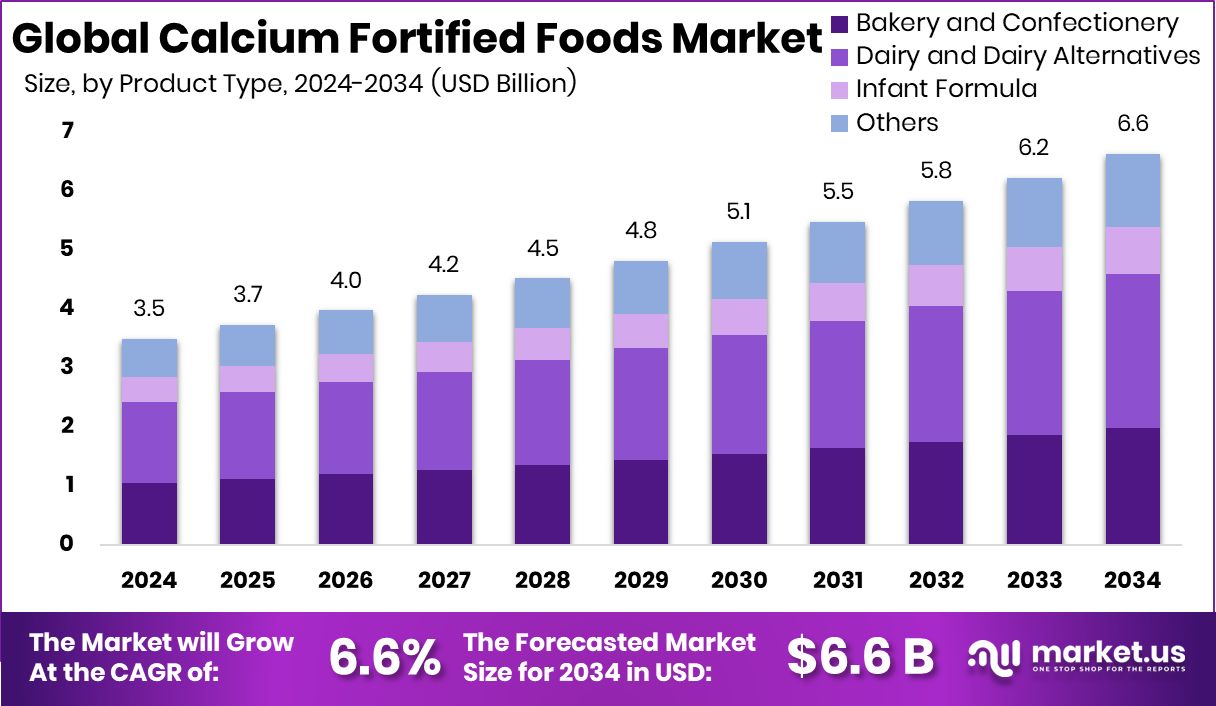
The global calcium-fortified foods market is projected to grow steadily, rising from USD 3.5 billion in 2024 to about USD 6.6 billion by 2034, reflecting a CAGR of 6.6% between 2025 and 2034. North America remains a key region, accounting for 38.1% of growth and reaching USD 1.3 billion, highlighting its continued leadership.
Calcium-fortified foods are everyday products enriched with additional calcium to support bone health and overall wellness. These include items such as plant-based milk, cereals, baked goods, snacks, and confectionery. Such products help consumers meet daily calcium requirements, particularly those with dietary restrictions or insufficient natural intake.
The market covers the full value chain—from production to distribution—across both mass-market and premium offerings. It caters to a wide demographic, including children, working adults, and aging populations seeking convenient nutrition without major dietary changes.
Growth is driven by innovation in functional snacks and indulgent products. Notable investments include Fireside Ventures’ INR 20 Cr funding in Oroos Confectionery, Candytoy Corporate’s INR 110 Cr Series A round, Khoya Mithai’s Rs 6 Cr pre-seed funding, and Doughlicious securing $5 million. Additionally, plant-based innovation is gaining traction, supported by The Protein Brewery’s $2.7M EU grant, Itz Nutz raising $535K, and Taaleri Bioindustry investing €10 million.
➤ Click the sample report link for complete industry insights: https://market.us/report/global-calcium-fortified-foods-market/request-sample/
Key Takeaways
- The Global Calcium Fortified Foods Market is expected to be worth around USD 6.6 billion by 2034, up from USD 3.5 billion in 2024, and is projected to grow at a CAGR of 6.6% from 2025 to 2034.
- Conventional products dominate Calcium Fortified Foods Market, holding 87.2% share due to affordability and availability.
- Dairy and dairy alternatives lead the Calcium Fortified Foods Market by product type, capturing 39.3% demand.
- Calcium carbonate remains the primary source in the calcium-fortified foods market, accounting for 49.4% usage.
- Hypermarkets and supermarkets dominate distribution in the Calcium Fortified Foods Market, contributing 41.8% overall sales globally.
- North America reached USD 1.3 Bn, driven by fortified dairy beverages demand growth.
➤ Directly purchase a copy of the report – https://market.us/purchase-report/?report_id=174719
Market Segments
By Nature Analysis
In 2024, conventional products dominated the Calcium Fortified Foods Market with a strong 87.2% share, driven by consumer preference for familiar ingredients, affordability, and easy availability. Beverages, cereals, snacks, and bakery items remained widely consumed, especially among middle-income households. Manufacturers’ enhanced formulations with better calcium absorption and cleaner labels. Rising health awareness, particularly among women and aging populations, further supported demand for safe, regulated, and cost-effective conventional fortified foods across both developed and emerging markets.
By Product Type Analysis
Dairy and dairy alternatives dominated the Calcium Fortified Foods Market with a 39.3% share in 2024, supported by growing interest in bone health and plant-based nutrition. Calcium-enriched milk, yogurt, cheese, and alternatives like almond and oat beverages remained popular among younger and health-conscious consumers. Manufacturers focused on clean-label, low-sugar, and sustainable options. The increasing adoption of vegan and flexitarian diets further strengthened this segment’s dominance across supermarkets and online platforms, ensuring continued growth and consumer appeal.
By Source Analysis
Calcium carbonate dominated the Calcium Fortified Foods Market by source, accounting for 49.4% in 2024. Its widespread use was driven by high bioavailability, cost-effectiveness, and ease of integration into various food products. It was commonly used in beverages, cereals, and baked goods due to its stability and neutral taste. Manufacturers preferred it for maintaining product quality while delivering effective calcium levels. Increasing consumer focus on preventive nutrition and bone health further reinforced its dominance across both mass and premium categories.
By Distribution Channel Analysis
Hypermarkets and supermarkets dominated the Calcium Fortified Foods Market distribution with a 41.8% share in 2024. Their leadership was driven by wide product variety, competitive pricing, and strong consumer trust. Shoppers preferred these stores for comparing products and discovering new brands. Retailers expanded shelf space for fortified foods and introduced private-label options. In-store promotions, bundled offers, and nutrition awareness initiatives further boosted sales, ensuring these large-format stores maintained dominance despite the growing presence of online channels.
Regional Analysis
North America dominated the Calcium Fortified Foods Market with a 38.1% share, valued at USD 1.3 billion, driven by strong consumer awareness of bone health, high adoption of fortified dairy, beverages, and cereals, and well-developed retail networks. Europe showed steady growth due to rising interest in preventive nutrition and the aging population’s needs. Asia Pacific experienced increasing demand fueled by urbanization and changing dietary habits. Meanwhile, the Middle East & Africa saw gradual adoption, while Latin America expanded as local producers introduced products addressing nutritional gaps and wellness trends.
Top Use Cases
- Stronger Bones and Teeth: Calcium-fortified foods help build and maintain strong bones and teeth. This is important for children, adults, and older people to avoid weak bones or diseases like osteoporosis.
- Support During Pregnancy: Pregnant women need more calcium for their baby’s growth. Fortified foods help the baby develop bones, teeth, heart, and muscles properly. They can also reduce risks like high blood pressure in pregnancy.
- Nutrition for Lactose-Intolerant or Vegan People: People who don’t consume dairy can still get calcium from fortified foods like plant-based milk, cereals, and tofu. These products help meet daily calcium needs easily.
- Improves Muscle and Nerve Function: Calcium is not only for bones—it also helps muscles move properly and supports nerve signals in the body. Fortified foods help maintain these functions daily.
- Prevents Calcium Deficiency: Many people don’t get enough calcium from regular food. Fortified foods like juices, cereals, and snacks help fill this gap and prevent health issues like weak bones or fatigue.
- Convenient Daily Nutrition: Calcium-fortified foods make it easy to get nutrients without changing eating habits. Common foods like cereals, drinks, and snacks already include added calcium for everyday intake.
Notable Company Developments
- In June 2025, both Arla Foods and DMK officially approved the merger plan, moving toward final approval.
This step strengthens Arla’s ability to develop and supply healthy dairy products globally, including calcium-rich foods - In May 2024, Nestlé, a global food and nutrition company producing dairy, cereals, and beverages, launched “Nestlé Goodness” plant-based drinks made from oat and almond. These drinks are fortified with calcium and vitamins (D, B2, B3) to support bone health and daily nutrition.
- In February 2024, Danone launched a new Greek-style plant-based yogurt under its Silk brand in Canada. This product uses pea protein and is designed for people looking for healthy, dairy-free nutrition options, often including added nutrients like calcium in plant-based ranges.
Conclusion
The Calcium Fortified Foods Market is growing steadily as consumers increasingly focus on bone health and overall nutrition. Rising awareness, busy lifestyles, and demand for convenient health solutions are driving the adoption of fortified products such as dairy, plant-based beverages, cereals, and snacks. Innovation in clean-label, low-sugar, and plant-based options is further expanding consumer appeal.
Strong demand from children, adults, and aging populations continues to support market growth. Additionally, expanding retail access and product variety make these foods more accessible. Overall, calcium-fortified foods are becoming an essential part of everyday diets, supporting long-term health and wellness globally.
Discuss your needs with our analyst
Please share your requirements with more details so our analyst can check if they can solve your problem(s)