Table of Contents
Overview
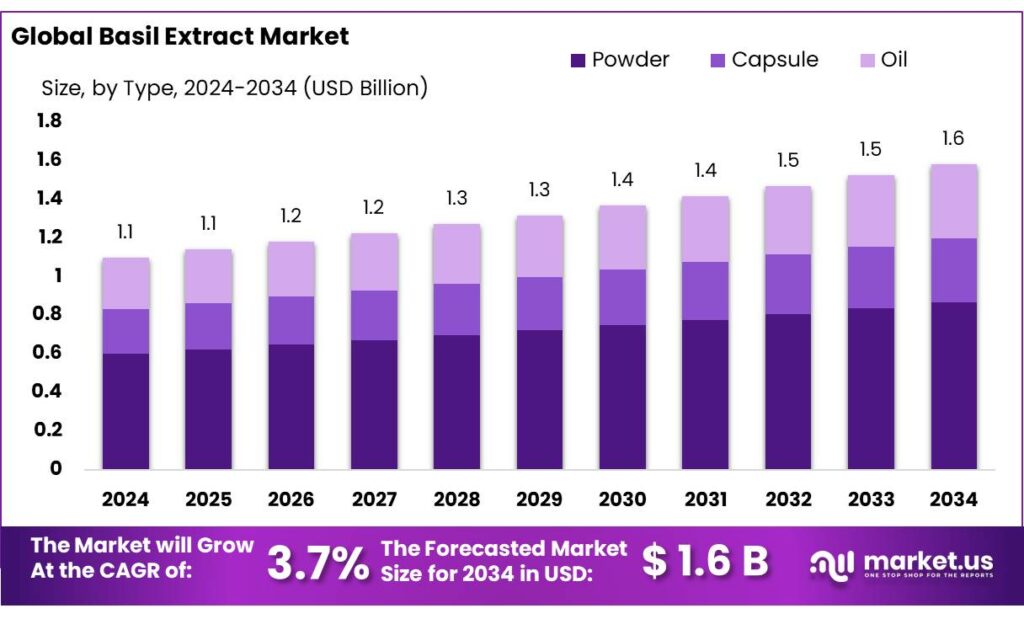
New York, NY – September 25, 2025 – The Global Basil Extract Market is projected to reach approximately USD 1.6 billion by 2034, rising from USD 1.1 billion in 2024, at a CAGR of 3.7% between 2025 and 2034. In 2024, Asia-Pacific (APAC) dominated the market, accounting for over 48.9% share, with revenues of USD 0.5 billion.
Basil extract, obtained from Ocimum basilicum, contains essential oils, phenolics, and flavonoids, which provide antioxidant, anti-inflammatory, and antimicrobial properties. Owing to these characteristics, it is widely utilized across the food, pharmaceutical, cosmetic, and nutraceutical industries. Scientific reviews highlight its potential in pharmaceutical applications and natural medicine development, driven by increasing demand for safe, plant-based alternatives.
Further research demonstrates its strong antibacterial action, as basil extracts can disrupt bacterial cell walls and help address antimicrobial resistance. In India, the basil extract sector is gaining momentum with organic and sustainable cultivation practices. Hydroponic farming, for example, allows up to 8–10 harvest cycles annually, delivering yields of 6–10 kilograms per square meter.
This approach enhances both productivity and the availability of pesticide-free basil to meet rising consumer demand. Government support also plays a vital role in strengthening the industry. The Ministry of AYUSH provides financial incentives for promoting Indian herbal products globally. These include reimbursement of up to 50% of registration fees with international regulatory authorities, capped at INR 50 lakhs, encouraging wider adoption of basil-derived products in global markets.
Key Takeaways
- Basil Extract Market size is expected to be worth around USD 1.6 Billion by 2034, from USD 1.1 Billion in 2024, growing at a CAGR of 3.7%.
- Powder held a dominant market position, capturing more than a 54.8% share of the global basil extract market.
- Pharmaceutical held a dominant market position, capturing more than a 49.4% share of the global basil extract market.
- Asia‑Pacific (APAC) firmly stands as the leading region in the global basil extract market, accounting for 48.9 % of total regional revenue, translating to approximately USD 0.5 billion.
➤ Curious about the content? Explore a sample copy of this report – https://market.us/report/basil-extract-market/request-sample/
Report Scope
| Report Features | Description |
|---|---|
| Market Value (2024) | USD 1.1 Billion |
| Forecast Revenue (2034) | USD 1.6 Billion |
| CAGR (2025-2034) | 3.7% |
| Segments Covered | By Type (Powder, Capsule, Oil), By Application (Pharmaceutical, Personal Care Products, Others) |
| Competitive Landscape | Amoretti, Arjuna Natural Pvt. Ltd., International Flavors & Fragrances Inc., Kefiplant, Mountain Rose Herbs, Nature’s Answer, NOW Foods, Nutra Green Biotechnology Co., Ltd., OliveNation, Synthite Industries Ltd |
➤ Directly purchase a copy of the report – https://market.us/purchase-report/?report_id=156993
Key Market Segments
By Type Analysis
In 2024, the powdered form of basil extract commanded a 54.8% share of the global basil extract market. Its dominance stems from ease of storage, user-friendliness, and a long shelf life without refrigeration needs. Food processing, herbal product, and cosmetics industries favor powder for its consistent quality and concentration in bulk applications. Its adaptability makes it ideal for capsules, teas, seasonings, skincare, and supplements, seamlessly integrating without affecting product texture.
Demand for powdered basil extract is projected to grow steadily, fueled by rising interest in herbal wellness and clean-label products. As consumers in North America, Asia-Pacific, and Europe increasingly prioritize natural ingredients, the powdered form remains a versatile, scalable solution for both retail and industrial applications.
By Application Analysis
In 2024, the pharmaceutical segment captured a 49.4% share of the global basil extract market, propelled by its increasing use in natural and plant-based medicines. Basil’s anti-inflammatory, antioxidant, and antimicrobial properties make it a key ingredient in herbal formulations addressing respiratory, digestive, and skin conditions. Widely valued in Ayurvedic and traditional medicine, basil extract is recognized as a safe, reliable component in pharmaceutical products.
The shift toward herbal remedies and away from synthetic drugs continues to boost basil extract’s role in modern pharmaceuticals. This segment is expected to see steady growth as companies invest in clinical research to validate basil’s health benefits. In markets like India and China, where herbal medicine is culturally significant, pharmaceutical firms are expanding basil-based offerings, including capsules, syrups, and ointments.
Regional Analysis
APAC dominates with a 48.9% share, generating USD 0.5 billion in sales
In 2024, the Asia-Pacific (APAC) region led the global basil extract market, accounting for 48.9% of total revenue, equivalent to roughly USD 0.5 billion. This leadership is driven by APAC’s rich culinary traditions and deep trust in herbal wellness, with India and China as key markets.
Rising disposable incomes, growing demand for botanical health solutions, and strong export capabilities further solidify APAC’s position. Regional businesses are leveraging advanced extraction techniques and cross-sector partnerships in food, beverage, pharmaceuticals, and cosmetics to meet both domestic and global demand.
Top Use Cases
- Flavor Enhancement in Food and Beverages: Basil extract adds a fresh, aromatic taste to sauces, dressings, and drinks without overpowering other ingredients. Food makers love it for creating natural flavors in ready meals and herbal teas, appealing to shoppers who want clean labels and tasty options. This keeps products exciting and helps brands stand out in crowded grocery aisles, boosting sales through everyday cooking appeal.
- Natural Preservative in Culinary Products: As a gentle antimicrobial, basil extract extends shelf life in condiments and marinades by fighting off spoilage naturally. Brands use it to replace synthetic additives, meeting the demand for wholesome foods. This simple swap builds trust with health-focused buyers and simplifies production, making meals safer and more inviting for family tables.
- Stress Relief in Nutraceuticals: Basil extract calms nerves and eases tension, making it a go-to for supplements that support daily wellness. People turn to it in capsules for quick relief during busy lives, drawn by its soothing vibe. Companies blend it into herbal blends to tap into the growing self-care trend, helping users feel more balanced without harsh chemicals.
- Skin Soothing in Cosmetics: With its anti-inflammatory touch, basil extract calms irritated skin in lotions and masks, promoting a clearer glow. Beauty brands mix it into natural creams for acne-prone folks, riding the wave of clean beauty. This gentle ingredient attracts eco-conscious shoppers seeking simple, effective routines that nurture skin health over time.
- Aromatherapy for Relaxation: Basil extract’s uplifting scent freshens the air in diffusers and massage oils, creating a peaceful escape at home or spas. Wellness seekers use it to unwind after long days, loving its refreshing aroma. Marketers package it in easy kits to fuel the home relaxation boom, turning ordinary moments into calming rituals.
Recent Developments
1. Amoretti
Amoretti has recently expanded its artisanal extract line with a Cold-Pressed Basil Extract, targeting the craft beverage and culinary industries. This method preserves the fresh, volatile aroma compounds, offering a more authentic flavor profile compared to traditional extracts. Their focus is on providing high-intensity, water-soluble options for chefs and mixologists seeking clean-label ingredients for innovative cocktails, syrups, and gourmet foods.
2. Arjuna Natural Pvt. Ltd.
Arjuna Natural has intensified its research on the anti-inflammatory and antioxidant properties of Holy Basil (Ocimum sanctum), leading to the development of its branded ingredient. Recent developments highlight clinical studies validating its benefits for stress relief and metabolic health. The company is focusing on supplying standardized extracts for the global nutraceutical market, emphasizing science-backed, organic-certified ingredients for stress management and immune support formulations.
3. International Flavors & Fragrances Inc (IFF)
IFF’s recent work on basil extract is centered within its Health & Biosciences division, leveraging biotechnology for sustainability. A key development is the use of enzymatic extraction to create highly soluble and stable basil extracts with improved bioavailability of active compounds. This approach meets the demand for natural flavor enhancers and preservatives in clean-label processed foods, allowing for reduced sodium and synthetic additive use.
4. Kefiplant
Kefiplant’s recent development is its proprietary fermented Holy Basil extract. The fermentation process, using specific lactic acid bacteria, is shown to enhance the bioavailability of key bioactive compounds like ursolic acid and rosmarinic acid. This innovation aims to improve the efficacy of their basil extract in dietary supplements targeting stress reduction, cognitive function, and blood sugar management, positioning it as a superior, bio-optimized ingredient.
5. Mountain Rose Herbs
Mountain Rose Herbs has recently emphasized the ethical sourcing and organic certification of its bulk Holy Basil (Tulsi) for extract manufacturing. Their development focuses on providing sustainably wildcrafted and Fair for Life-certified basil to smaller supplement brands and herbalists. They have enhanced their product documentation with comprehensive botanical assays, ensuring transparency and purity for clients who prioritize ecological and social responsibility in their supply chain.
Conclusion
Basil extract shines as a versatile gem in today’s market, blending fresh flavors with gentle wellness perks that shoppers crave in their daily lives. From sprucing up kitchen staples to soothing skin and minds, it fits seamlessly into the push for natural, feel-good products across food, beauty, and health aisles. As more folks chase simple, plant-powered routines, this humble ingredient opens doors for brands to connect deeply with eco-savvy crowds, fostering loyalty through trustworthy, everyday magic that feels both familiar and fresh.
Discuss your needs with our analyst
Please share your requirements with more details so our analyst can check if they can solve your problem(s)